

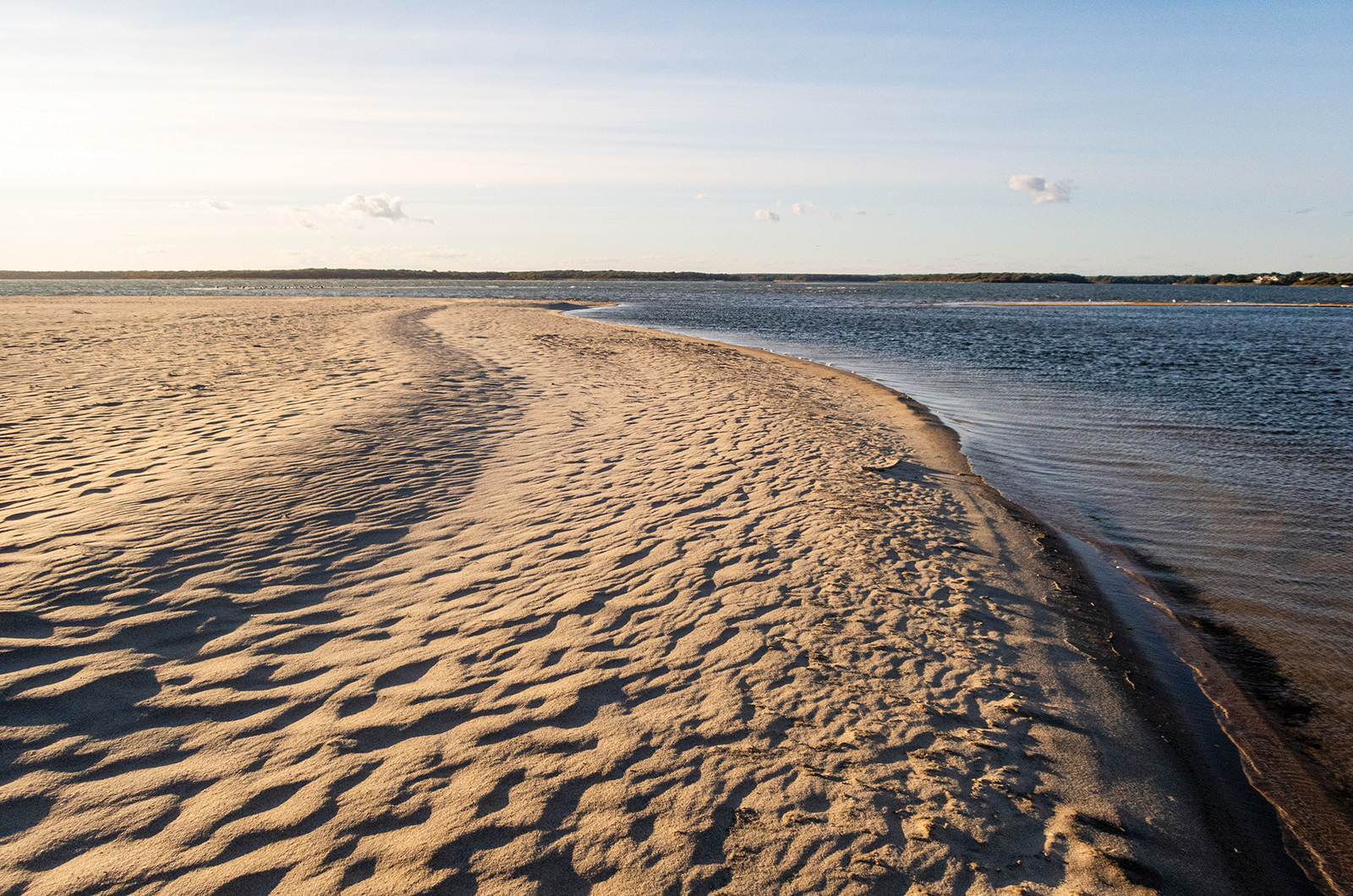


Look for her downwind. That’s the advice a lifeguard gave my parents when they reported me missing at a beach when I was a young child. The wise guard recognized that, in most cases, people wander with the wind at their back, so that is the best direction to start the search.
My four-year-old self just wanted to find the prettiest, shiniest shell or maybe a wriggly creature along the sandy New Jersey shoreline. I scoured the ground and meandered, taking it all in until I looked up and my blanket and my parents were nowhere to be found. I began to cry and was scooped up by kind beachgoers, brought to the lifeguard shack and retrieved by my worried parents.
Then and now, I never miss an opportunity to roam the beach, eyes to the ground, up in the sky, out over the water and all around — to take in the sights, smells and sounds of the powerful place where land meets water.
Martha’s Vineyard is the largest island in Massachusetts and the third largest island on the East Coast, behind New York’s Long Island and Mount Desert Island in Maine. With miles of coastline to explore, discovery awaits you. Here are five findables to inspire your next seaside stroll.
The Sands of Time
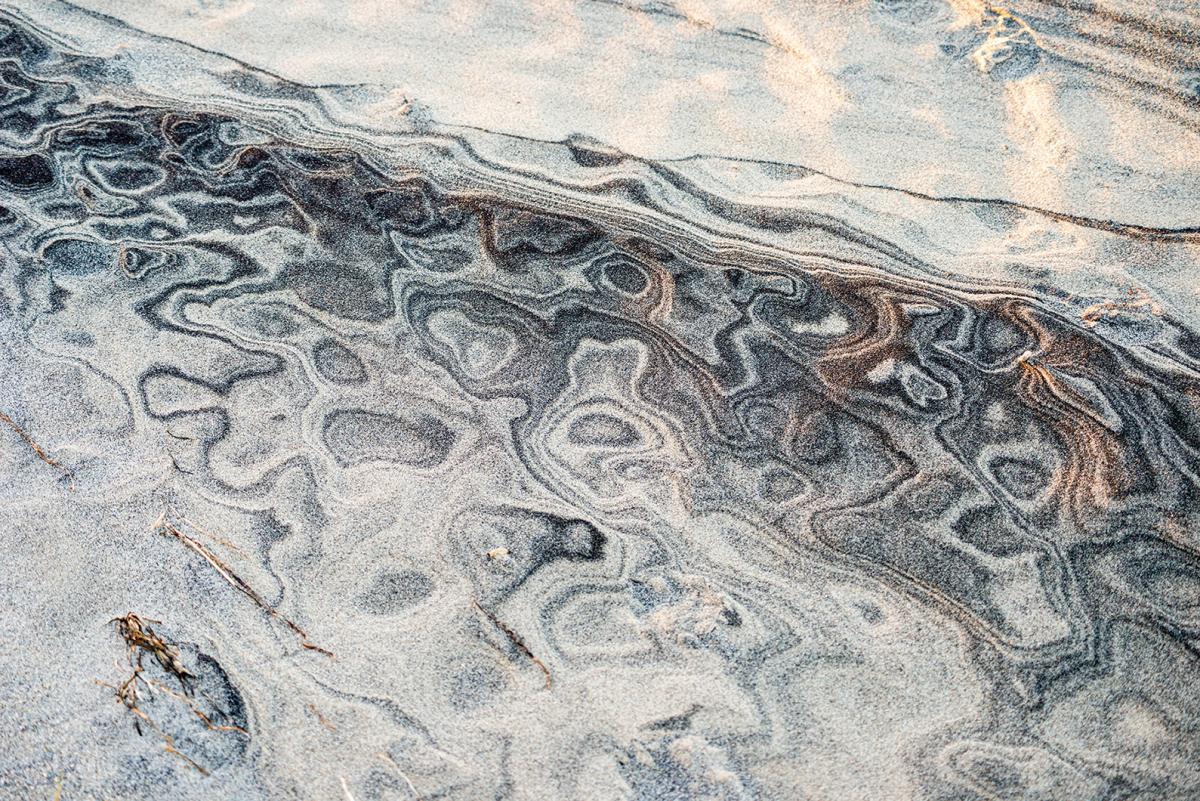
Working its way between your toes and into your bathing suit, sand is the most ubiquitous thing on the beach. Yet sand — and its cousin, pebbles — are much more than meets the eye. Sand is made up mainly of minerals, the most common on our beaches being quartz. Quartz comes in a rainbow of colors, including clear, white, pink, red, brown and green. Black or silver particles in sand might be shimmery mica or ironrich magnetite (yes, it’s magnetic). Sand also contains biogenic bits — materials from marine creatures such as seashells, fins, bones or other faunal debris that has been ground up into tiny pieces. Take a magnifying glass and a sifter with you to the beach to uncover the mystery of the grains.
Tern Around
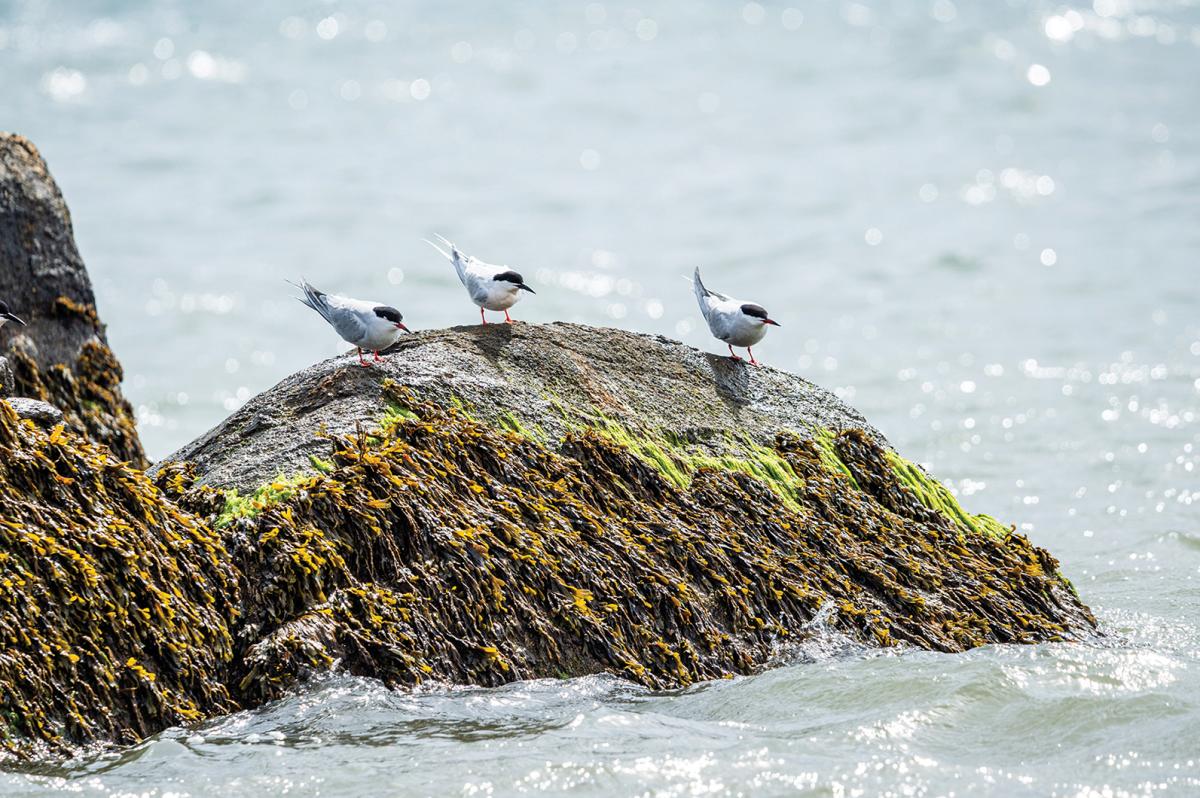
If you tire of looking down, lift your eyes to the sky. Overhead among the gulls, fly terns, those small, angular, white, gray and black birds that provide the soundtrack of summer. Listen for the least tern’s high-pitched, squeaky calls and the common tern’s harsher and more throaty vocalizations.
Least and common terns are the species most most often seen here; they occur in small and large flocks. Both species nest in colonies on the beach, and even without binoculars you can observe fascinating behaviors and see some of the cutest babies ever. (No offence, piping plovers.)
Highly acrobatic aerialists, these birds swoop and dive for fish, congregating aloft and on the beach. For a special treat, try to observe them as they dip their bills into the surface of the water when they eat (or drink) on the wing. Salt and fresh water are equally welcome to quench their thirst.
Don’t get too close as these birds will aggressively defend their nests and their unfledged young. As any birder learns on their first outing near a tern colony, a sturdy hat is a must, because if you get too close, one or more birds will dive-bomb and defecate on you. Late summer is an especially good time to see terns; they congregate on Island beaches to ready themselves for migration. Norton Point Beach in Edgartown is a hotspot for them.
A Seal of Approval

You’re not the only one having a terrific time at the beach — especially the south shore of Martha’s Vineyard. Look out in the water and you may spot a seal splashing in the waves or sunning on the rocks.
You’ll occasionally see them on land too. But remember, finding a beached seal is not always a cause for alarm. Seals on the beach are often just resting and need their space. Safeguarded in 1972 by the Marine Mammal Protection Act, these beasts require a hundred-yard buffer, so please don’t get too close to them. If you come upon a visibly and obviously injured seal, the National Oceanic and Atmospheric Administration’s (NOAA) Greater Atlantic Marine Mammal stranding hotline 866-755-6622 is the place to call.
As mammals, these animals breathe as we do, through their nostrils and into their lungs, taking in oxygen in the process. Seals cannot respire under water, but surprisingly will exhale before diving (contrary to the practice of humans, who usually inhale). Some seal species can be submerged for up to two hours without coming up for air.
The most common seals in our waters are harbor and gray seals. Gray seals are larger, with a bigger, heavier face. Harbor seals are smaller, often spottier, have v-shaped nostrils and a shorter, rounder head.
Come Out of Your Shell
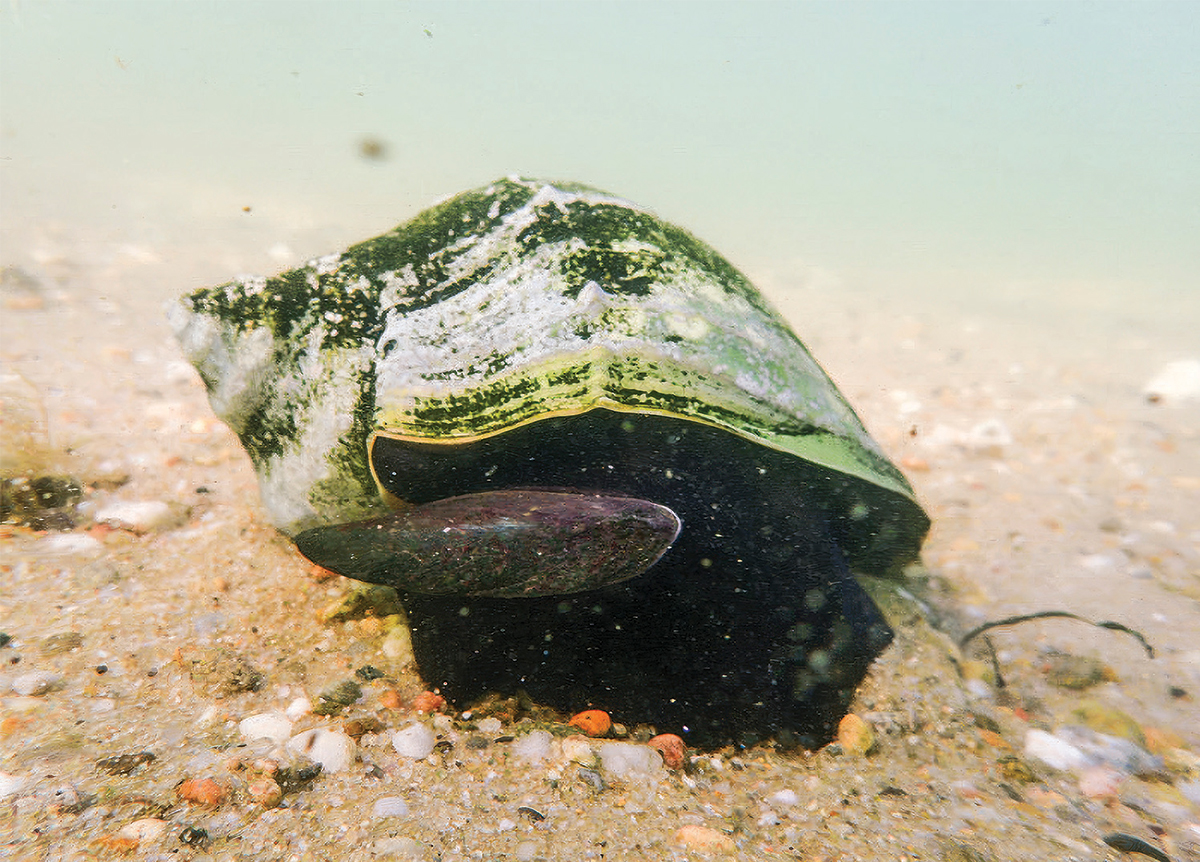
Back on the beach, another wild wonder is a giant snail called a whelk. Locally they are called conchs, but scientifically conchs are a southern species of herbivorous snails. Our northern whelks are carnivores. With their size and strength, they wedge the lip of their shell or their muscular fleshy foot into bivalves, such as clams, mussels or oysters, then use their radula, or rasping tongue, to eat the soft flesh of their prey.
While the live whelks live in the ocean, their shells (without the soft snail inside) often wash up on the beach. Most often we see channeled and knobbed whelks, identified by the tops of the shells. Their fist-plus sized spiraled shells coil clockwise and then open to the right of the rest of the spiral.
Whelks spawn two bonuses for beachcombers — egg cases and trap doors. The egg cases, sometimes called mermaids’ necklaces, are strings of beige, disk-like capsules attached by a stem of sorts. Within each capsule are dozens of miniature whelks that will eventually leave their natal containers and grow to adulthood (if the egg cases are in the water). An egg string on the beach that has dried baby whelks inside will rattle.
When a live whelk underwater wants to protect itself, it will pull its body into its shell and close itself off with a chitinous covering. This stiff, dark brown, paisley-shaped plate is called an operculum, or a trap door, and is an even rarer beach find.
Heads or Tails
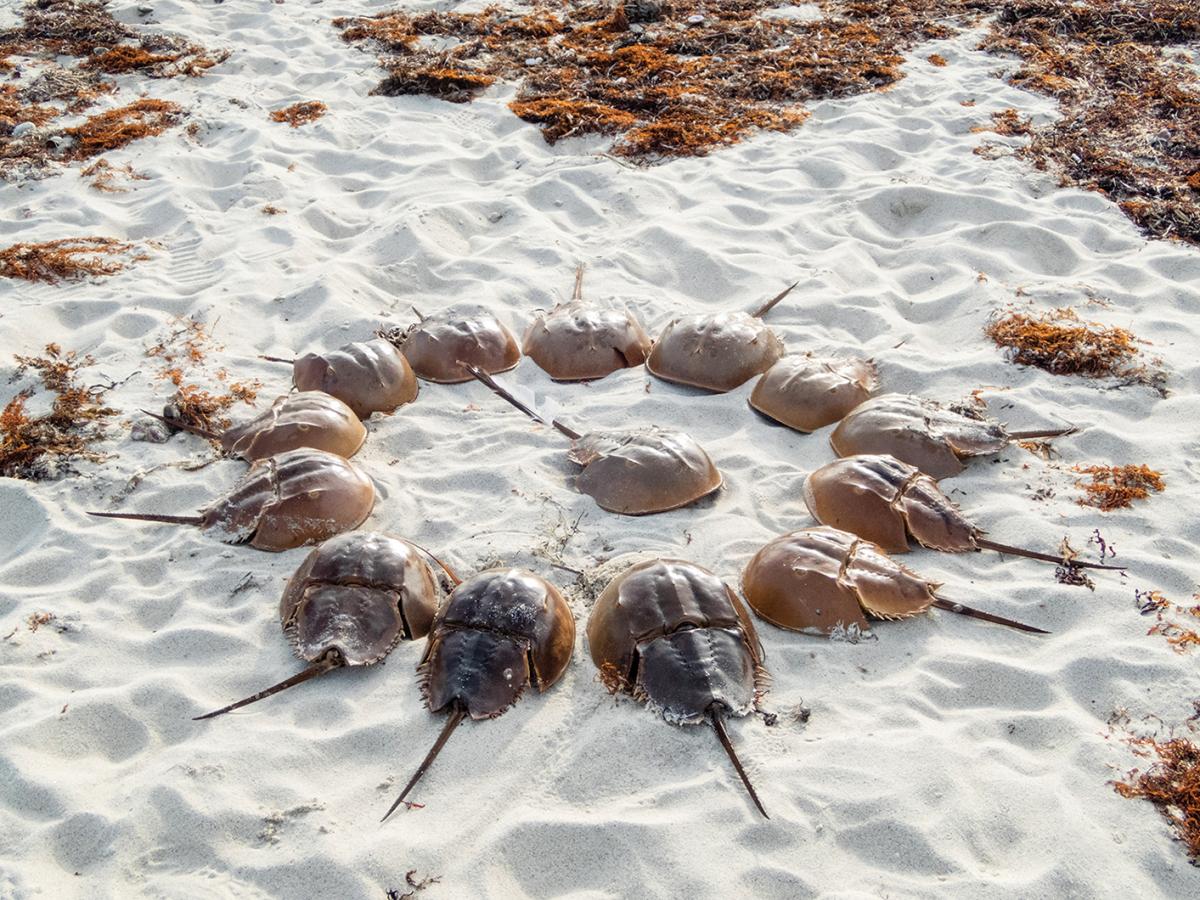
The royalty of the beach are true bluebloods: horseshoe crabs. They really do have blue blood, which contains a protein called hemocyanin that is copper-based (blue), as opposed to our iron-based (red) hemoglobin. Horseshoe-crab blood is incredibly valuable to the biomedical industry, and regionally horseshoe crabs are bled and released to obtain it.
It’s a lovely thing if you see horseshoe crabs in the water. These ancients are gentle and don’t seek to harm you with their tail. That appendage, called a telson, helps them steer, swim and flip themselves over when on their backs. If you choose to handle a live crab, hold it with both hands, each on one of the sides of the largest part of the shell and never by that telson, which can break and leave the animal vulnerable.
On the underside of the creature, you can see its mouth in the middle of its legs, its book gills on the smaller section of the carapace (shell), and five pairs of legs. The first set of legs indicates the sex of the horseshoe crab. Males have rounded first legs that look like boxing gloves, while the females' legs all look similar.
If you find a horseshoe crab on the beach, you’ll know if it is dead by its scent. And usually it will be only partially intact due to various predators.
However, you might also see a molt. Molts are shells that have been shed as the horseshoe crab grows. They are clean, odorless and light colored. They are true treasures, as delicate and beautiful as the animals that left them. Leaving them behind for the next beachgoer will help others get lost in their wonder.
Which is not the same as getting lost during your wander. Years after worrying my parents and scaring myself, it’s rare that I get lost or frightened during my beach explorations. But I haven’t forgotten the passion and curiosity that set me to scampering along the dunes so many years ago. Wherever your beach wanderlust or wonderlust takes you, be sure to make observation and adventure as important as sunbathing and swimming.
Suzan Bellincampi is director of the Felix Neck Wildlife Sanctuary in Edgartown, and author of Martha’s Vineyard: A Field Guide to Island Nature and The Nature of Martha’s Vineyard.




Comments