

Under a microscope, cyanobacteria look harmless — a pattern of swirls and dots that come together in the shape of a rope. The blue-green algae is a vital part of a pond ecosystem, producing oxygen and converting nitrogen to keep nutrient cycles in balance.
But in high concentrations, the bacteria creates algal blooms that spread toxins in the water. If ingested, those toxins can cause sickness and, in extreme cases, death for humans and animals.
For years, the Vineyard has been dealing with cyanobacteria blooms in its ponds. This summer, the green algal crust has gathered along shorelines and created a murky cloud below the surface of Tisbury Great Pond and Chilmark Pond – leaving areas unsafe for recreational use.
But one pond has escaped the worst of the blooms.

“The outlier this year is Edgartown Great Pond, and that’s because the pond is showing resilience,” said Emily Reddington, executive director of the Great Pond Foundation. “The seagrass is fighting back.”
The Vineyard’s boards of health and scientists from the Great Pond Foundation have teamed up on a collaboration known as MV Cyano. The group collects, tests and analyzes water samples from stations at 11 different ponds across the Island.
The Great Pond Foundation’s fluoroprobe measures cyanobacteria concentration in a given sample. From there, clumps of the blue-green algae are observed under the microscope to identify the cyanobacteria and whether or not it can produce toxins.
Based on cyanobacteria concentration and potential toxicity, pond stations are categorized by color: green for bloom not present, yellow for cyanobacteria alert, orange for cyanobacteria bloom watch and red for cyanobacteria bloom advisory.
Ms. Reddington said that typically, cyanobacteria concentrations peak during July, August and September, since the blooms need warm, stagnant and nutrient-rich water to thrive. Recent data collected at Edgartown Great Pond defies this trend.
This summer, the pond has cultivated an army of nutrient-absorbing seagrass, Ms. Reddington said, depriving the blooms of the nitrogen and phosphorus they need to grow. Now, it boasts near-zero concentrations of cyanobacteria—green dots were present across the board as of July 27.
“To have undetectable cyanobacteria concentrations in mid-July, we haven’t seen that since 2021 when we had hundreds of acres of seagrass,” said Ms. Reddington.
The Vineyard saw a decline in seagrass in 2022 as excess nitrogen began to pollute pond water. The nitrogen came primarily from wastewater, Ms. Reddington said, but also from fertilizer runoff.
Pond cuts have, at times, worked well for managing nitrogen levels in Edgartown Great Pond. During this process, the town digs a trench in the barrier beach between the pond and the ocean, allowing seawater to rush in and nitrogen to flush out. Higher salinity and a lower concentration of nitrogen make the pond an affable host to seagrass.
Seagrass is still slow to grow back in other ponds across the Island. Residents of Tisbury Great Pond have reported inconsistent growth, and Chilmark Pond lacks the salinity to grow some types of seagrass, making it a hotspot for cyanobacteria blooms.
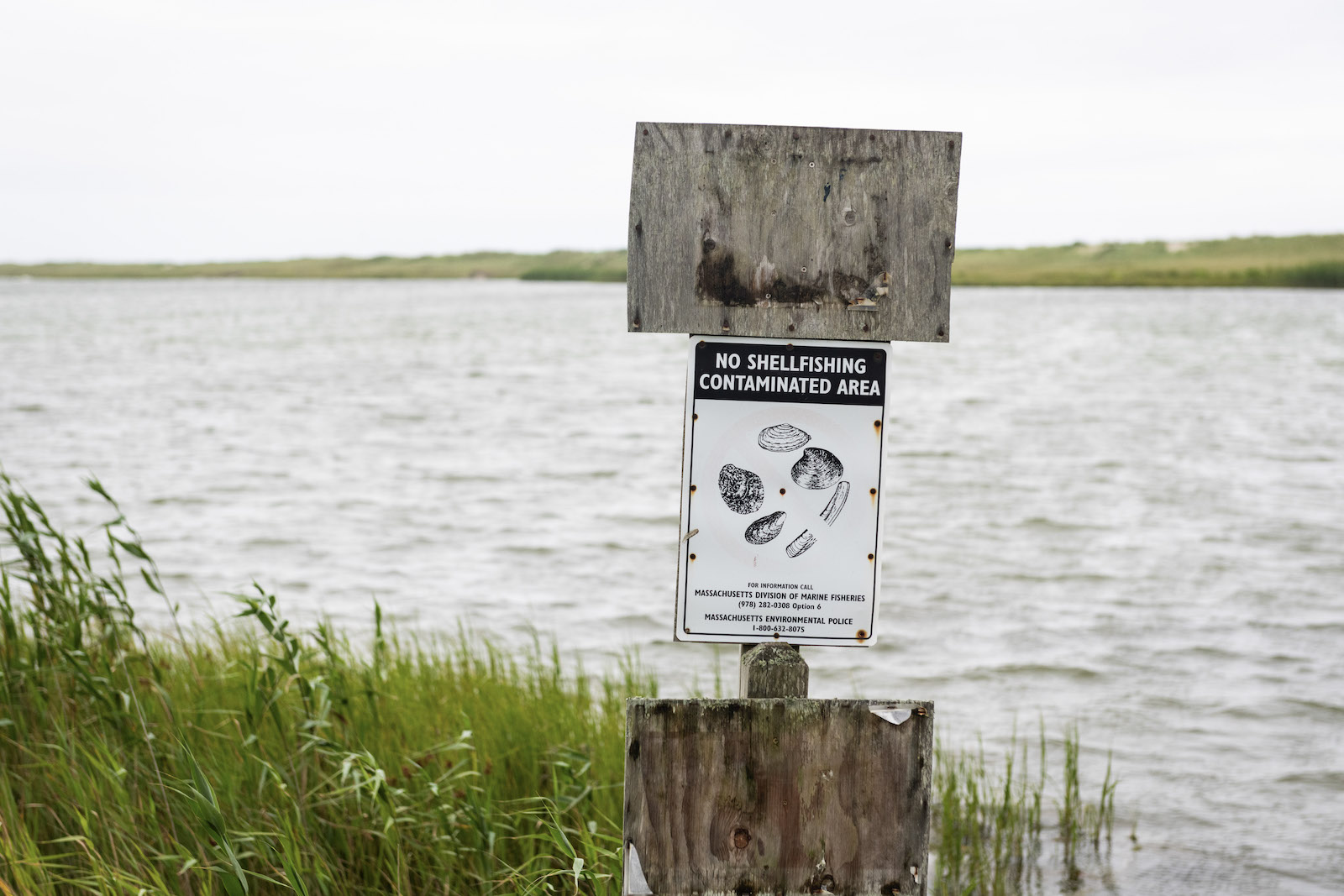
MV Cyano has experimented with different remediation strategies to manage the blooms. Aside from pond cuts and dredging, which help to remove excess nitrogen, sonic buoys have improved the situation at Chilmark Pond. By sending out ultrasonic frequencies, the buoy prevents the blue-green algae from migrating—either to the surface to soak up daylight, or to the bottom to get nitrogen and phosphorus for growth.
When tested, the buoy showed signs of success.
“The bloom died off within five days, where normally it was several weeks,” Ms. Reddington said.
Still, these methods are mere bandages on the wound, she pointed out. Only addressing the problem at its source — excess nitrogen in the watershed — can save the ponds.
“We’re right at that edge of the balance of life,” said Ms. Reddington. “The pond is fighting back, but we need to do everything we can to keep it on that positive end of the spectrum.”





Comments
Comment policy »