
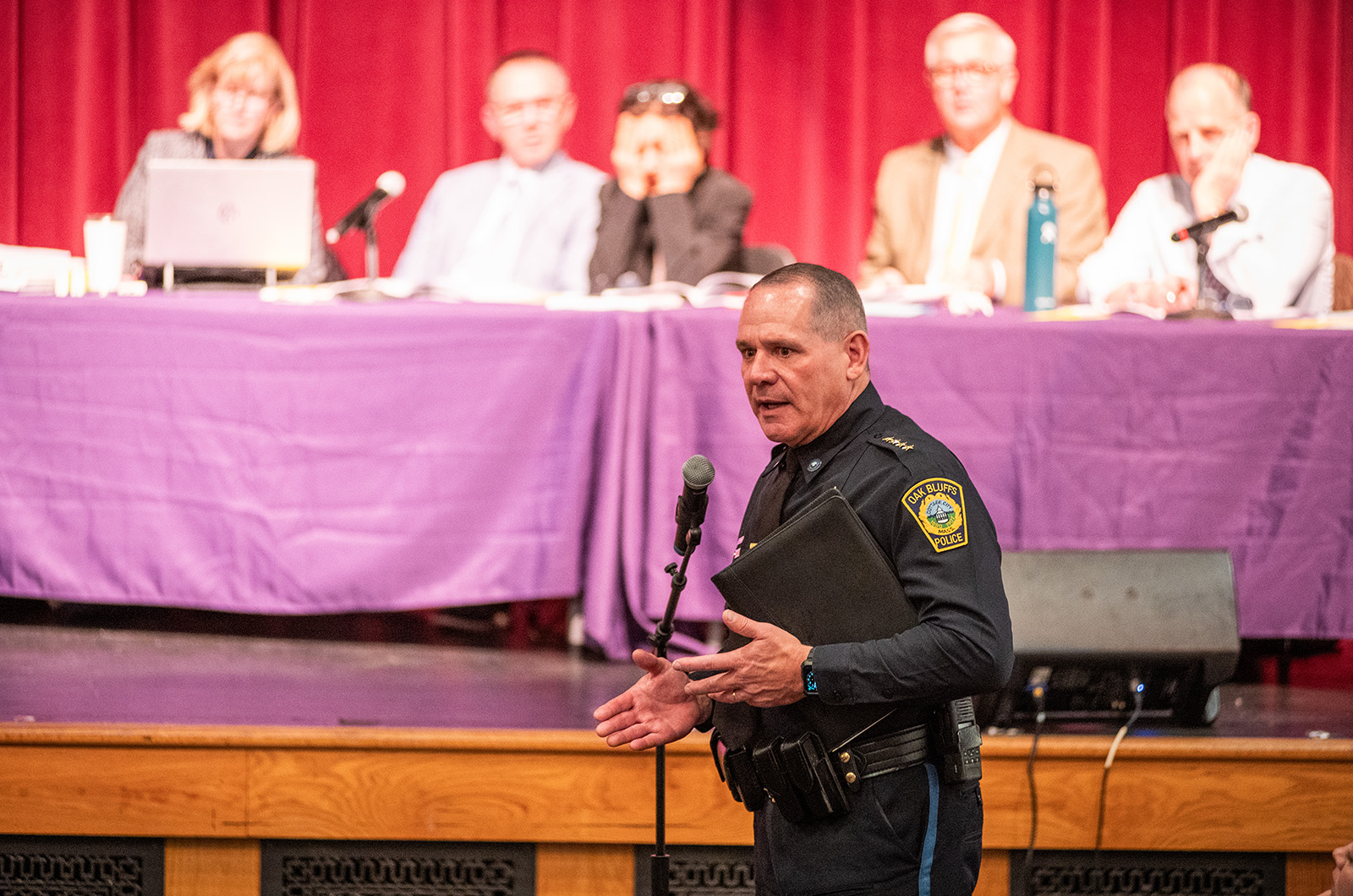
Oak Bluffs police Chief Jonathan Searle and officer support specialist Amy Carter met by chance. Ms. Carter was speaking at a national conference on psychological resilience and suicide prevention, and Chief Searle pulled her aside to ask for advice on how to help his officers work through the stress and trauma of policing.
Now, Ms. Carter provides mental health support for first responders all over the Vineyard — including police, firefighters and emergency medical services personnel — through a new counseling program she and Chief Searle created with Martha’s Vineyard Community Services.
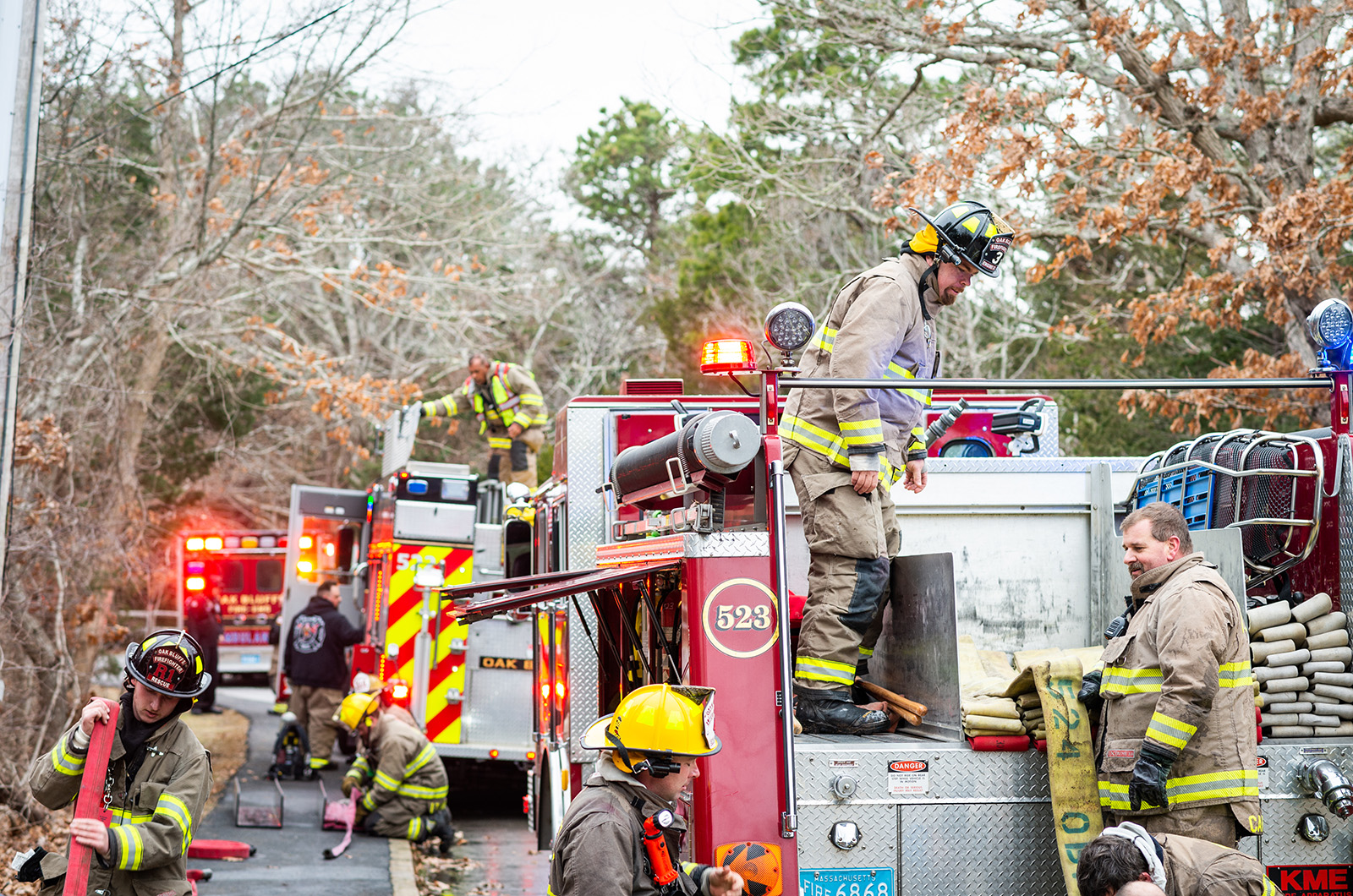
The program formally started three weeks ago but has been operating since July, and offers counseling to first responders in crisis and in their everyday life. An anonymous donor pledged $1 million for five years to cover all costs, making the program possible.
It’s a program that could save lives, Chief Searle said.
Police officers are more likely to die from suicide than in the line of duty, and first responders are two to three times more likely than the general public to experience PTSD, according to the Centers for Disease Control and Prevention.
“I am of the generation that did not have systems like this in place for us, and through the years I saw the negative effects that it had on first responders,” Chief Searle told the Gazette. “The culture needed to change, and the stigma needed to change.”
Chief Searle said that police officers and other first responders are often hesitant to seek the care that they need to cope with the intensity of their work, fearing judgement or professional blowback. But when first responders maintain their mental health, it makes for better performance and safer communities.
“If we had to buy a police car, and that car had to last for 20 years, we would make sure it was maintained regularly,” he said. “But for some reason, in law enforcement, we didn’t do that with the actual humans that work for us.”
Ms. Carter has a background in psychology, police academy training and speaks nationally on mental health and suicide prevention in law enforcement. Her early career in law enforcement spaces showed her that officers were not receiving the care they needed to stay mentally healthy.
“I was looking through a psych lens [at] the cumulative trauma they would incur, and I wasn’t really seeing a lot of support,” she said. “That changed my path.”
Ms. Carter said that after meeting with Chief Searle, she was given permission by the police department she worked for at the time to provide mental health support to Oak Bluffs officers. Soon, officers from other Island towns started reaching out to inquire about Ms. Carter’s services.
Ms. Carter and Chief Searle, along with agencies across the Island and the anonymous donor, decided that the program should expand to include fire and EMS as well as police. They tapped Community Services to help behind the scenes.
“It was really important to us, and to the anonymous donor who donated the money for this program, to expand it to all first responders across the Island,” said Abby Foley, chief clinical officer at Community Services. “Obviously, law enforcement officers respond to incidents, but so do EMS [and] fire.”
Ms. Foley said that vicarious trauma, which stems from experiencing a major crisis secondhand, can erode overall well-being if left unchecked. She praised the program for chipping away at the stigma around counselling for Island first responders, who are exposed constantly to crisis.
“Every first responder who needs [mental health care] can access the services in a compassionate, empathetic, strength-based way,” she said.
Ms. Carter lives in Haverhill and commutes to the Island four days a month for in-person services. She said not being an Island resident is actually a comfort to first responders, who value discretion when seeking care.
Whether or not she’s on Island, she makes herself available 24 hours a day, seven days a week. If it’s Christmas morning and an officer is in crisis, she’ll pick up the phone.
“This is not a nine-to-five thing,” she said. “You have to live this job, and I do, with humility and gratitude.”
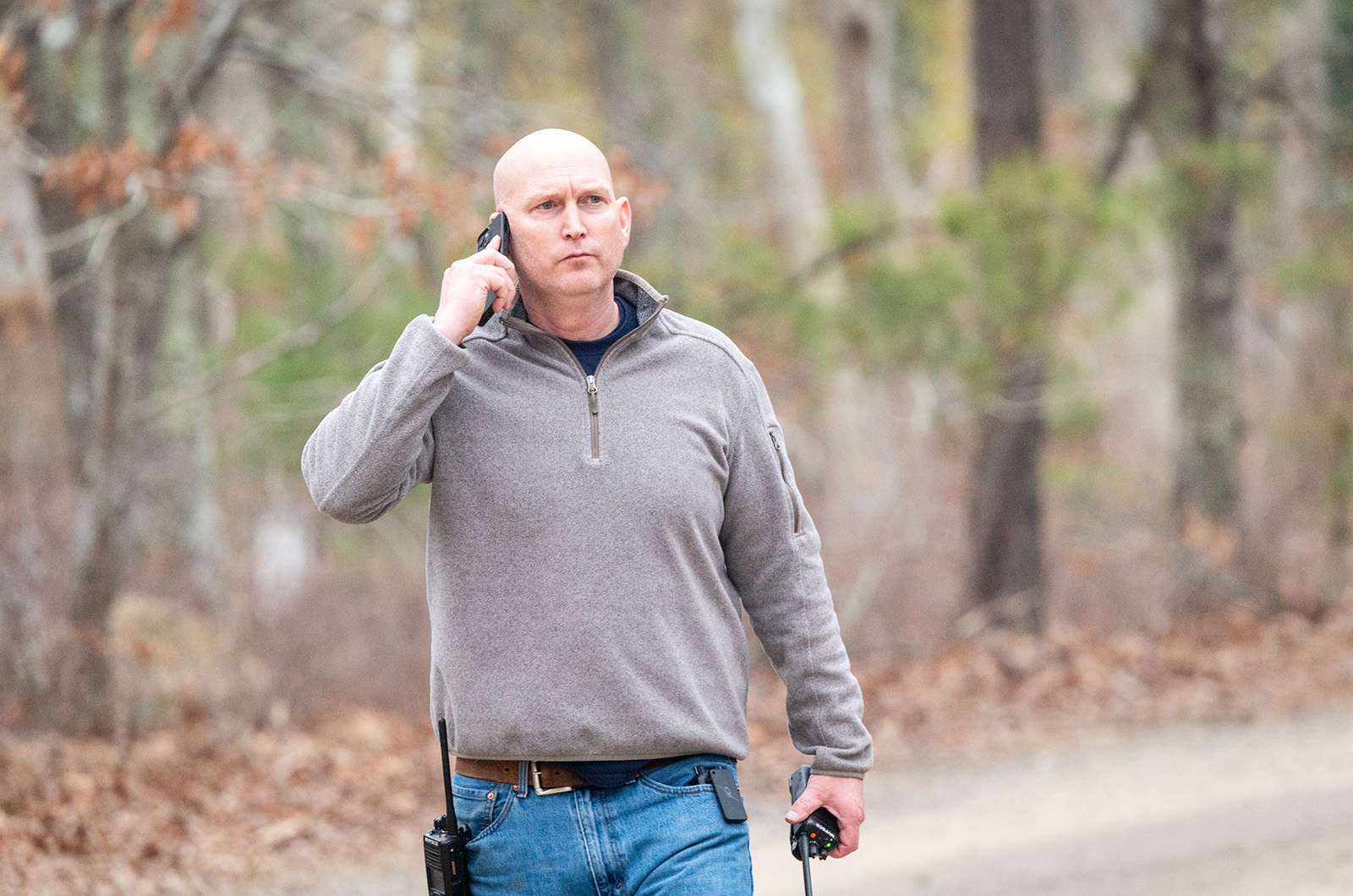
The program works, she said, because the first responders she works with are committed to taking care of themselves.
“The credit goes to them,” she said.
The Edgartown Fire Department is one of the many Island agencies involved with the program. Edgartown fire Chief Alex Schaeffer told the Gazette he’s glad that his team has access to the new program and is eager to break down the industry’s mental health stigma.
“We are exposed to seeing people in some of their worst days, and that has a compounding effect,” he said. “Sometimes we need to offload... and work through those feelings.”
“I think all of our public safety partners are really fortunate to have a program like this offered to us,” he added.
Tisbury fire chief Patrick Rolston said the same.
“I think it’s something that the Island has needed for many years...” he said. “I would be shocked to hear anybody that’s not excited about this.”
Both Ms. Carter and Chief Searle have already seen the program have a lasting positive impact on those who use it. And they think it could help other communities, too.
In two months, Ms. Carter will give a presentation of this Island program, which she named the Martha’s Vineyard Model of Officer Support, at the annual International Association of Chiefs of Police conference.
“In time, with a culture change and [by] normalizing this throughout our profession, we’re going to see a much better profession,” Chief Searle said.





Comments
Comment policy »