

At the final event of this year’s Charles Ogletree Public Forum Series, renowned Black women journalists participated in a discussion of President Donald Trump’s targeted attacks on the press, the deterioration of First Amendment freedoms and their personal responsibilities to ask questions on behalf of the American people.
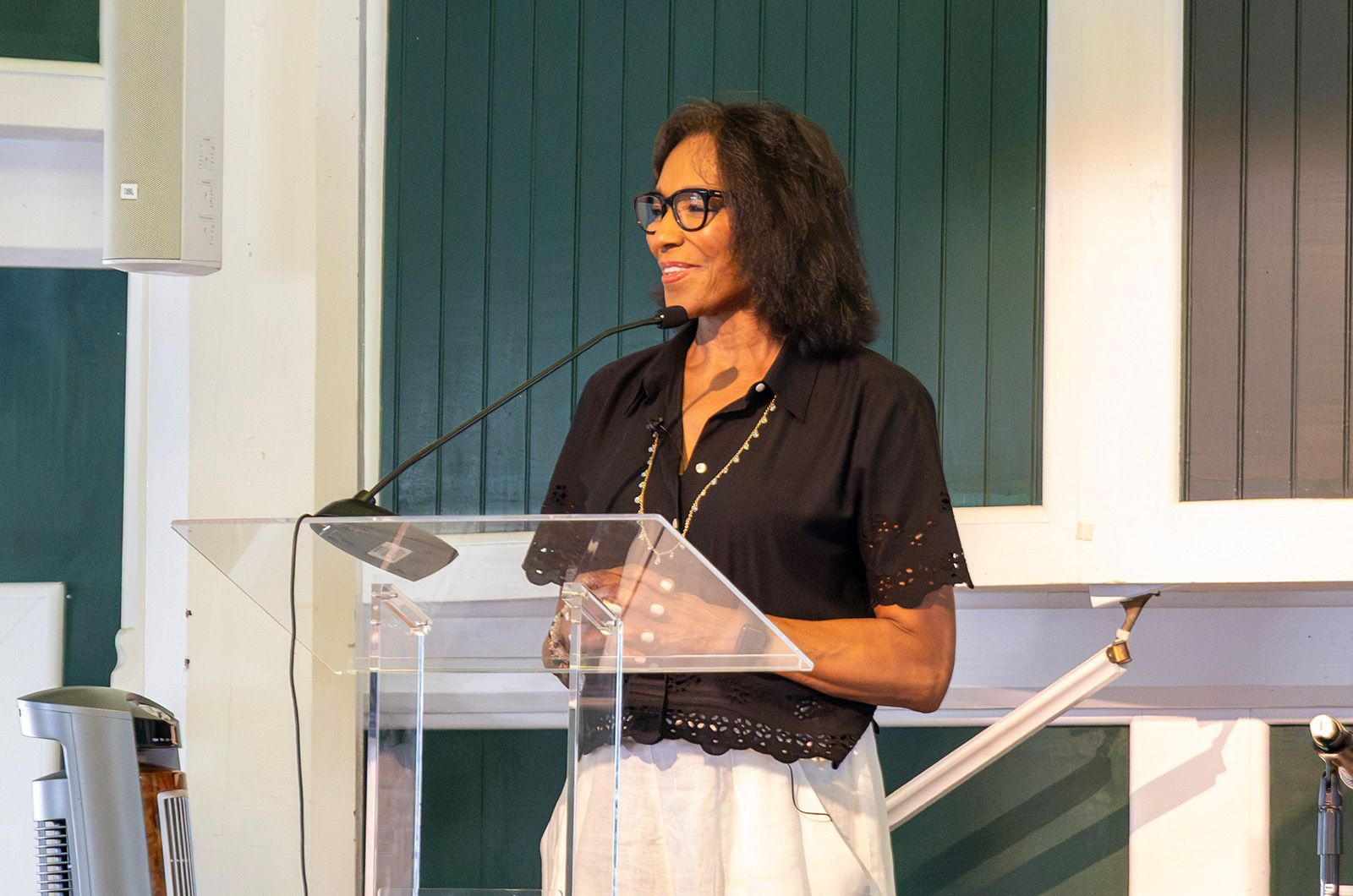
The panel was moderated by Rehema Ellis, former chief education correspondent at NBC News. The series hosted summer lectures and events at the Union Chapel and Oak Bluffs Library this August.
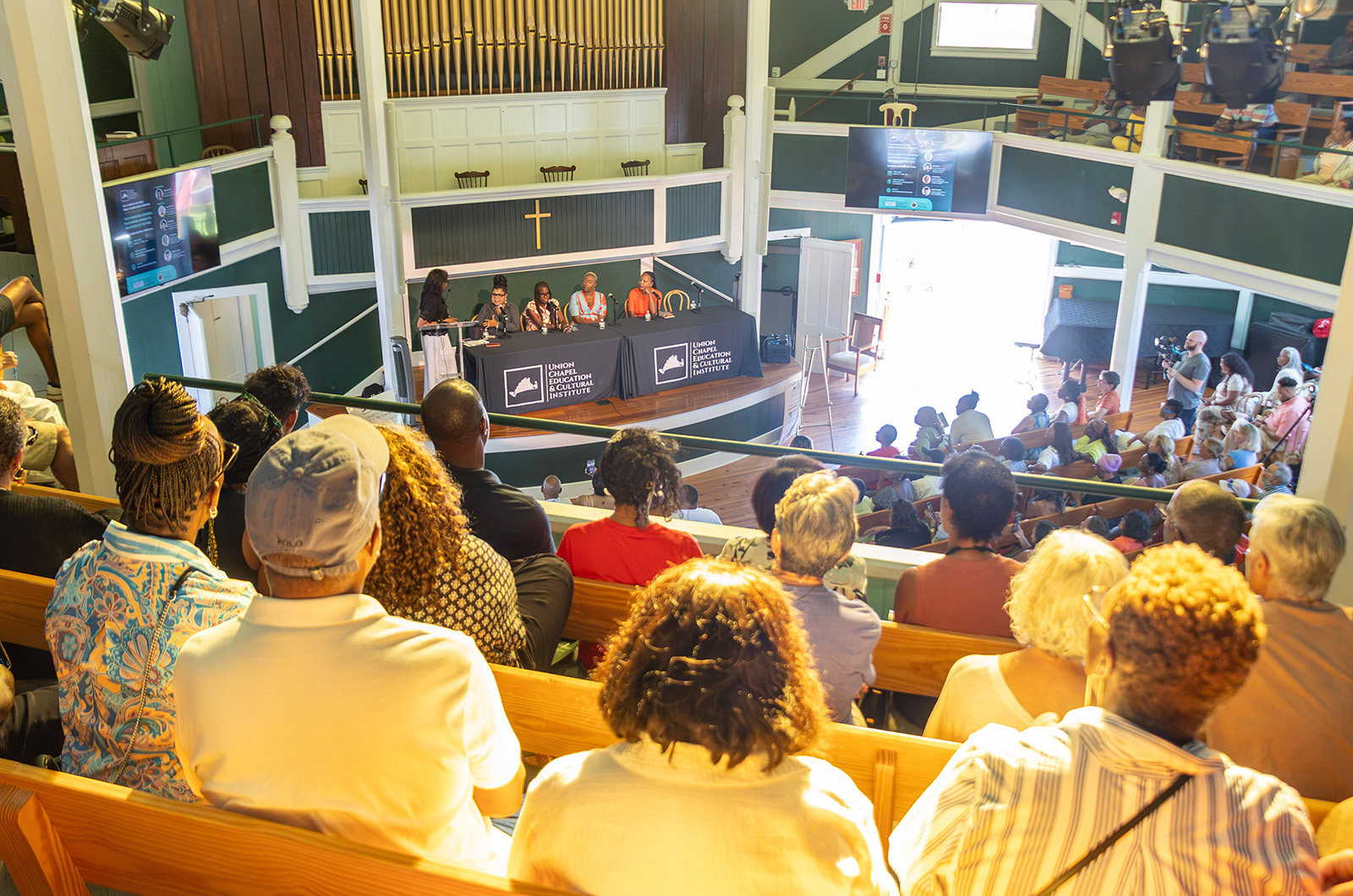
Panelsist reflected on President Trump’s personal attacks on their work as journalists — mocking their questions, calling them names and berating them.
“That is not part of the job description,” said Errin Haines, president of National Association for Black Journalists (NABJ). “That is not what comes with what it means to be a journalist. We are talking about holding power to account, speaking truth to power, asking questions on behalf of the American people.”
The American chief executive’s attacks on journalists are completely unprecedented in the history of the country, and it has only gotten worse as the president has gotten older, said Joy-Ann Reid, journalist and former national correspondent for MSNBC.
That’s less of a problem for her as a target of the president’s criticism, said Ms. Reid. But it has haunting implications for the United States as a whole.
“What I’m concerned for is the country, because I think what he’s exhibiting in these attacks is an increasingly unhinged nature and an inability to literally control himself,” she said. “From a national security perspective, I think his media is utterly failing to interrogate that.”
What the media also fails to do, said journalist and author April Ryan, is stand up for the journalists who come under fire.
“If you notice that when he berates Black women, it’s a sidebar,” said Ms. Ryan, the longest-serving Black member of the White House press corps. “When it comes to…a white woman from CNN or another show, it becomes New York Times headlines. There’s a problem there.”
Ms. Reid agreed.
“Where are the men in the room?” she said. “Where’s the solidarity among the journalists in the room?”
Black women have been targeted on a large scale since the Trump administration took power, panelists agreed. When the Department of Government Efficiency cut jobs, half of the people who lost their jobs were Black women. That’s deliberate, said Christina Greer, professor of political science at Fordham University and a frequent commentator and analyst for news organizations.
“We were lulled into a false sense…of progress during the Obama era,” she said. “And so we did not, we never have gotten to the root of some of these problems as a nation — the disrespect of Black women in general.”
Corporate media is complicit, said Ms. Reid. Major news outlets are currently failing to tell the full stories of corruption and incompetence in the administration, as well as the growing, lethal racism against Black people in the United States, Ms. Ryan added.
“Because of Donald Trump and his disgust with Black folks or people of color in the media, you are not getting the truth,” she said. “Things have changed. You have now to search deep for the person that you trust…and unfortunately, it’s not in mainstream media anymore.”
In an ever-complicated landscape of media and politics, consumers must increase their media diet, reading widely and supporting independent journalism, said Ms. Ryan.
It’s a “recalibration of trust,” said Ms. Haines — a shift from reverence for news organizations to independent journalists, across many different mediums such as podcasts, social media platforms, and Substack. But that trust is earned, she added.
“Particularly among young people — media literacy is absolutely important,” said Ms. Haines. “We can’t just depend on everybody to be a misinformation detective. We have to also be transparent about our process.”
The panelists agreed that they would continue to ask questions on behalf of the American people, continue to fight for their representation in the media, and continue to recognize other journalists of color who are telling stories the way they must be told.
“We have got journalists …across this country that are doing their jobs every single day, that are still fighting to tell the stories for our communities every single day,” said Ms. Haines.
“It takes those of us who are continuing to push,” she added. “It does matter.”





Comments
Comment policy »