
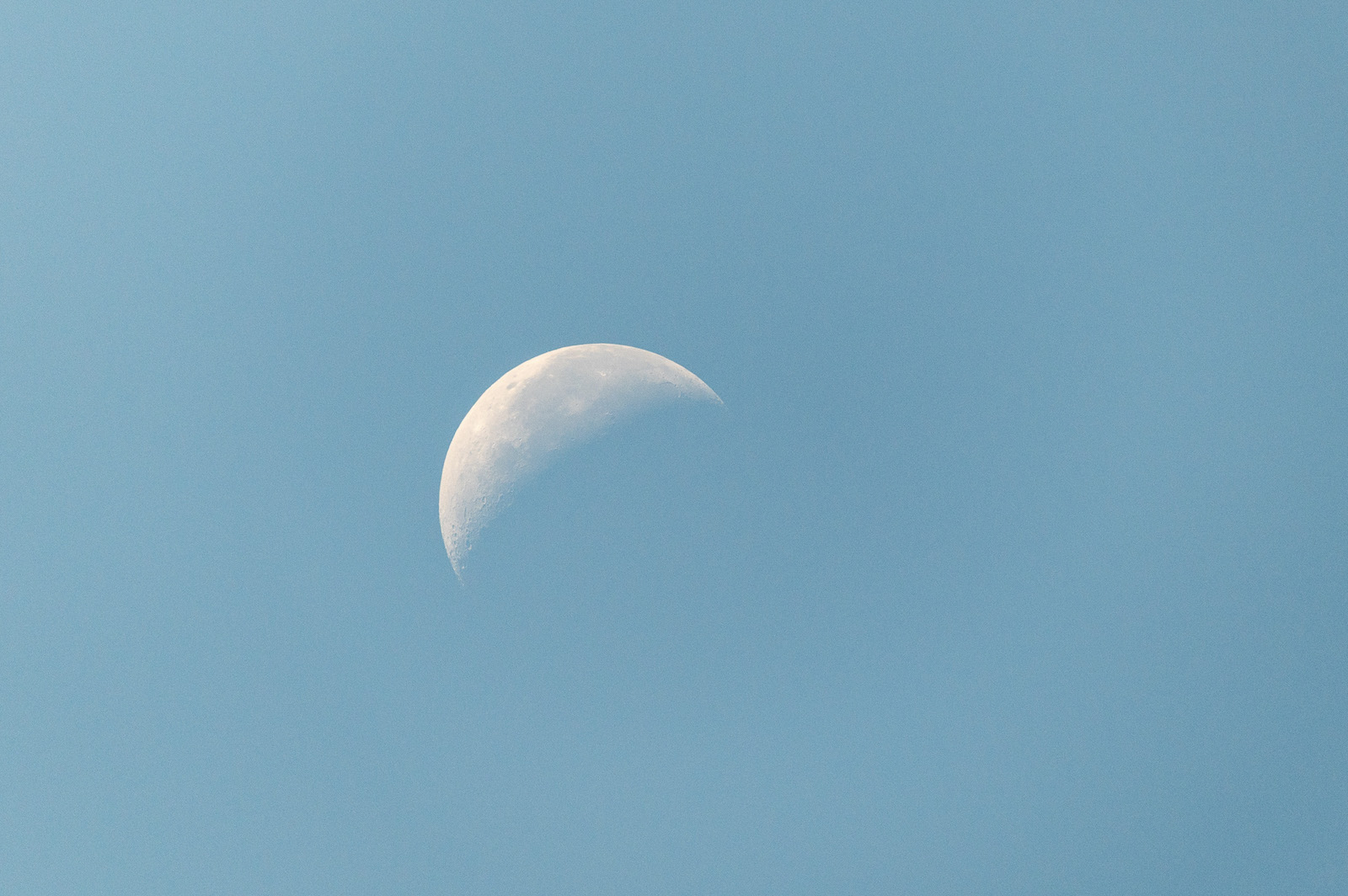
A thin crescent moon appears low in the southwestern sky, right next to the bright star Antares, in the zodiacal constellation Scorpius. See if you can see earthshine in the dark side of the moon. The moon is but three days from New Moon phase. Only a sliver of the visible moon is lit. The rest is dark.
More of us will see the moon when it sets tomorrow, Saturday night. The moon is higher and moving into the zodiacal constellation Sagittarius.
Mercury
The most challenging naked eye planet Mercury will be ideally placed in the nights ahead. Mercury is low in the southwest after sunset. On Wednesday, the planet will be farthest from the setting sun. It will be at its greatest apparition from the sun. Take a look in the southwest. The challenge in seeing Mercury has always been tied to its proximity to the sun. Mercury is the closest planet to the sun and thus the most challenging. This is the best view of Mercury this year.
It takes Mercury only 88 days to complete an orbit around the sun, so its presence in our western sky is for a short time. In a month's time, the planet will be in the morning sky, viewable in December.
| Day | Sunrise | Sunset |
|---|---|---|
| Fri., Oct. 24 | 7:03 | 5:47 |
| Sat., Oct. 25 | 7:04 | 5:46 |
| Sun., Oct. 26 | 7:06 | 5:44 |
| Mon., Oct. 27 | 7:07 | 5:43 |
| Tues., Oct. 28 | 7:08 | 5:41 |
| Wed., Oct. 29 | 7:09 | 5:40 |
| Thurs., Oct. 30 | 7:10 | 5:39 |
| Fri., Oct. 31 | 7:12 | 5:38 |
| Day | Max (Fº) | Min (Fº) | Inches |
|---|---|---|---|
| Oct. 17 | 56 | 49 | 0.00 |
| Oct. 18 | 58 | 40 | 0.00 |
| Oct. 19 | 64 | 44 | 0.00 |
| Oct. 20 | 65 | 56 | 0.00 |
| Oct. 21 | 64 | 52 | 0.49 |
| Oct. 22 | 65 | 44 | 0.03 |
| Oct. 23 | 68 | 50 | T |



Comments
Comment policy »