
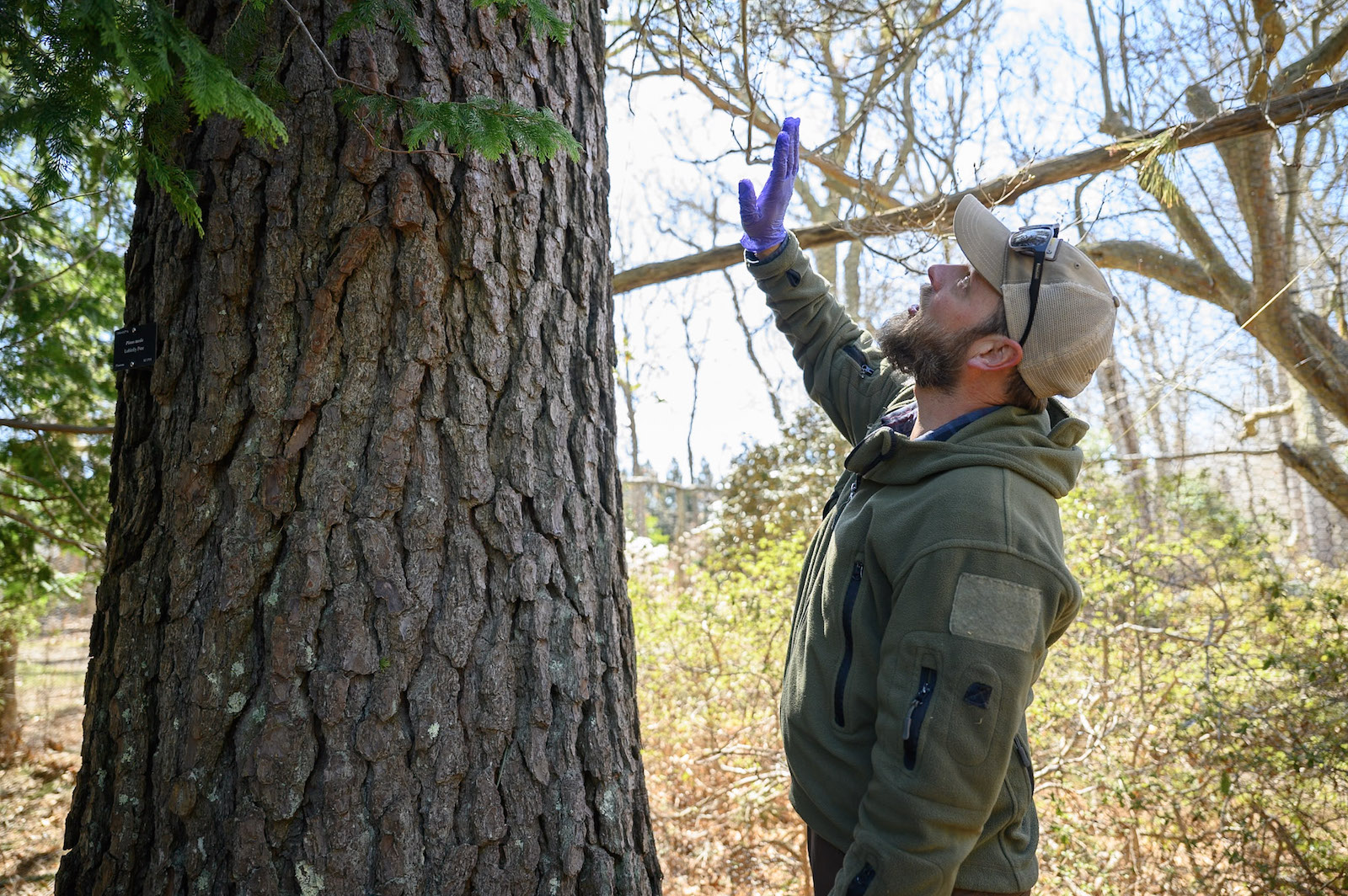
As the spread of the southern pine beetle wreaks havoc on the Island’s forests, researchers at Polly Hill Arboretum are using the beetle’s own biology to try and stop the invasive species.
The little black bugs, smaller than a grain of rice, were first detected on the Island in 2016 and in the last few years have devastated parts of the Manuel F. Correllus State Forest, West Chop and other areas.
Up to now, actions to save the forests have mostly involved thinning the forests in an attempt to slow the beetles down. At Polly Hill, the arboretum is experimenting with new ways to protect its loblolly pines — the southern pine beetle’s favorite food — before the beetles arrive.
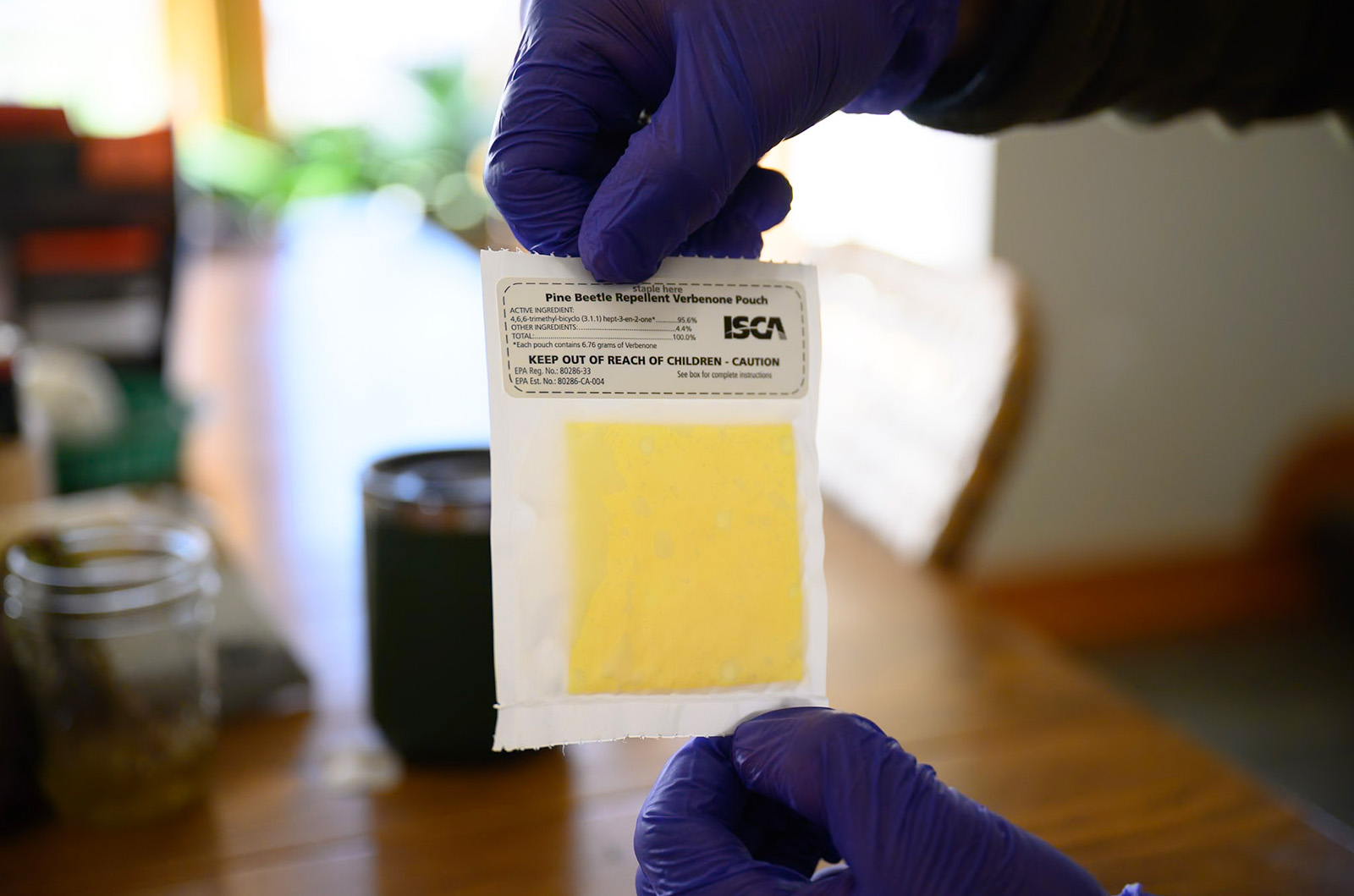
The 72-acre public garden in West Tisbury is using several different methods to stave off an infestation. The first is quite simple: nailing what’s known as a verbenone patch to its trees.
“It’s like a no vacancy sign,” Ian Jochems, Polly Hill director of grounds and facilities, while displaying a patch no bigger than his hand.
As the southern pine beetle eats away at the bark of a tree, carving long tunnels, it releases a chemical called frontalin, which attracts more beetles. But this pheromone can also be used to repel the beetles.
When the verbenone patch is attached to the tree, it tricks the beetles into thinking the pine has already been invaded and is overcrowded. The patches have a strong floral scent and cost under $10 each, making it a cheaper option to the much costlier alternative of thinning out infested trees.
Mr. Jochems said only one patch is needed per trunk, though the patches won’t work for dense pine groves. Combined with regularly watering the trees to keep them healthy, Mr. Jochems said the patches provide a strong line of defense.
Tree injections are another option, though Mr. Jochems said the treatment requires both insecticide and fungicide.
The beetles spread a fungus that cuts deep into the trees and blocks the flow of water. The beetles also carry microscopic mites on their bodies to help speed up the job.
“It’s girdling the tree in multiple ways,” said Caroline Kanaskie, an assistant processor of forestry at the University of Maine at Fort Kent.
The insecticide helps kill the beetles from within, which is key as female southern pine beetles lay about 160 eggs each as they move through the tree’s phloem layer. The females also create more fungus to make it more nutritious for the larvae as they grow.
“The southern pine beetle is a pretty good parent,” Ms. Kanaskie said.
As of yet, pine beetles have not found their way to Polly Hill Arboretum, but officials are not taking any chances. The nonprofit has hung traps in its trees that will let the arboretum know if the beetles arrive before the classic signs of compromise – dusky orange crowns and clusters of sap poking through the bark – start to show.
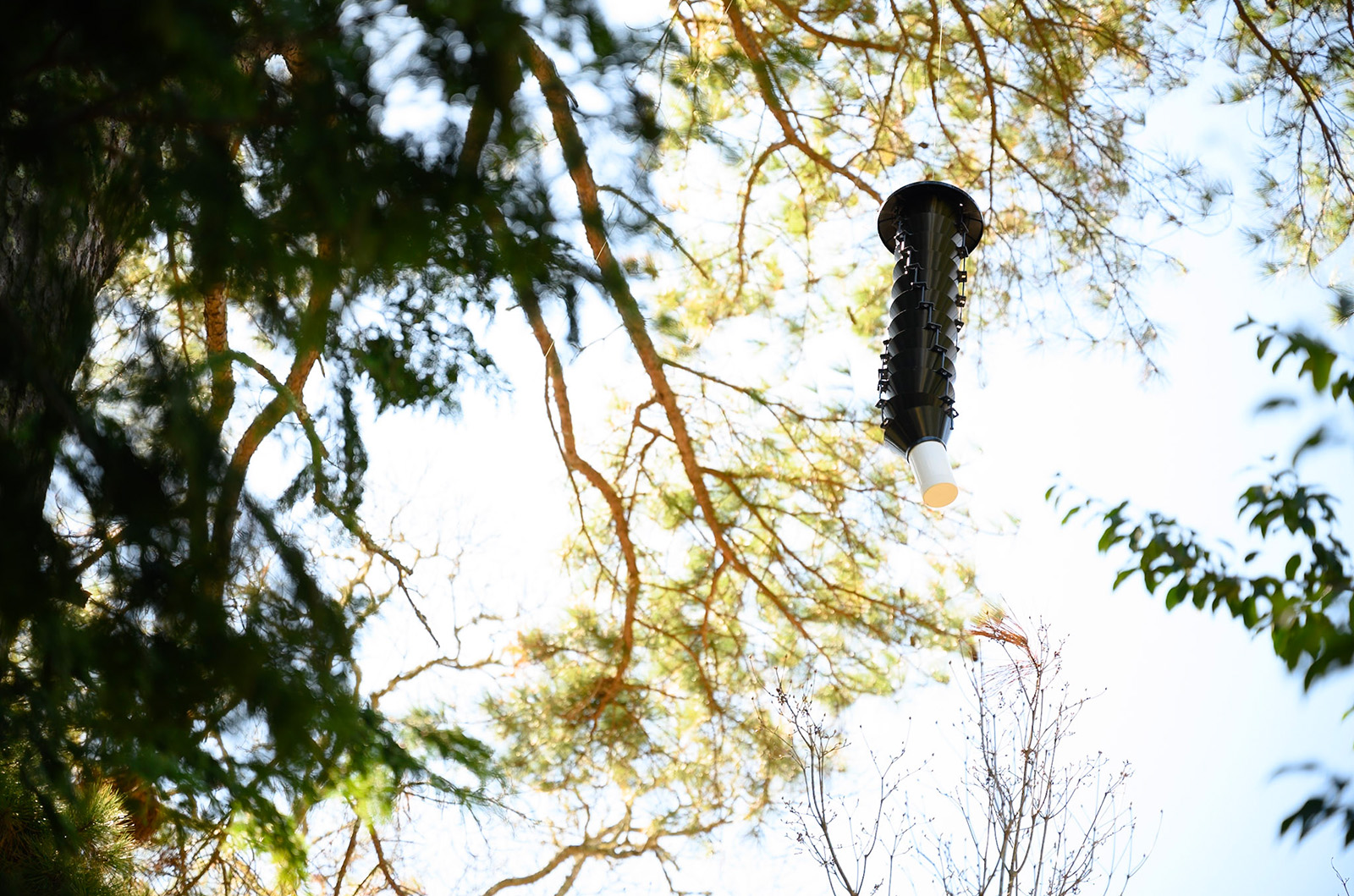
The beetles have poor eyesight and mistake the traps, known as Lindgren funnel traps, as a tree. They fly into the funnels and then tumble down into a chamber for researchers to count.
“Why actively spray if we’re not having them here, right?” Mr. Jochems said.
While spraying is an option often offered to homeowners, Mr. Jochems said it is not the most reliable method and can harm other species as it drifts through the environment. The sprays often don’t reach the canopy or crevices in the bark, which is deeply furrowed on pitch pines.
“If it rains, the rain will wash all the product off,” he added.
As communities across Massachusetts debate how to better manage the beetles’ growing presence, Ms. Kanaskie said efforts on the Vineyard could be an inspiration to other towns.
“The Vineyard is such a special place with a really strong community,” she said. “People come together around issues...and I feel the Vineyard could be a really cool example of how a community chooses to respond to something like this.”
“The southern pine beetle is not something that we’re going to get rid of,” Ms. Kanaskie added. “It’s something we need to learn to live with.”




Comments
Comment policy »