

Harvest a quahaug, scallop or oyster on the Vineyard and it probably started its life with the Martha’s Vineyard Shellfish Group.
Over its now 50-year history, the organization has spawned billions of shellfish, growing them into seed to keep the industry and ponds thriving. It is the shellfish group that trained the Vineyard’s first oyster farmers in the ‘90s, that restores degrading eelgrass beds and contributes to research across the northeast.
It is the shellfish group that educates young Islanders on a defining feature of their home, and remains a model for an independent hatchery structure in a landscape of hatcheries gone corporate.
The organization’s main focus has always been to support the public fisheries and the shellfish in the Vineyard’s ponds. But in its 50 years, the organization has evolved to support a changing shellfish economy and an increasingly fragile Island ecosystem, preserving the cultural, environmental and economic role of shellfish on the Island.
“The shellfish group has been putting really, really focused efforts into making sure that...there are kids and young adults and older adults who are reconnected with it and continue to know it,” said Emma Green-Beach, director of the shellfish group.
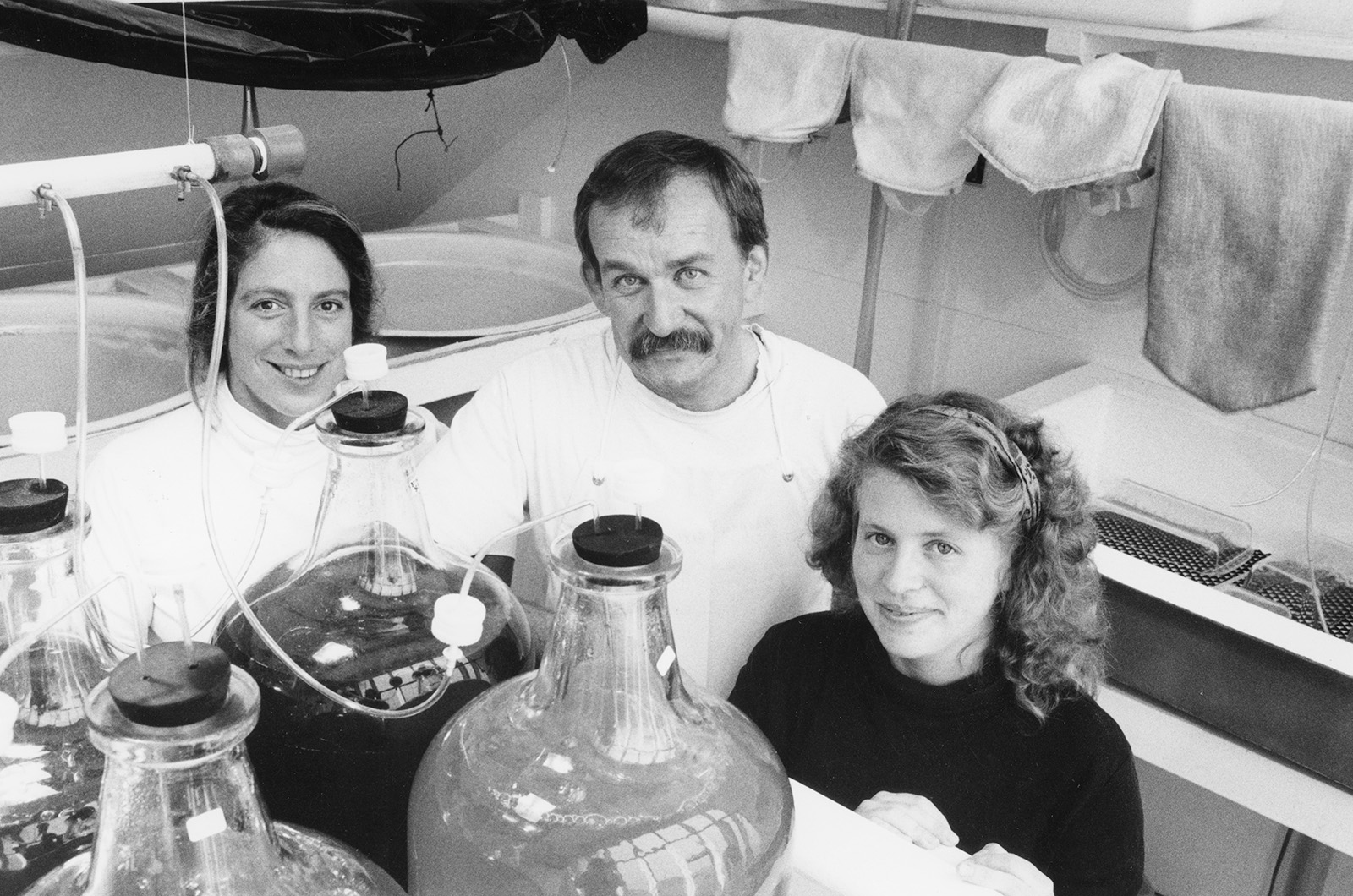
The Martha’s Vineyard Shellfish Group began in 1976 with director emeritus Rick Karney, hired to assist the Island’s shellfish constables in managing the Vineyard’s shellfish resources.
In the 1970s, shellfish was a part of daily life on Island — scalloping was what paid the bills and every kid knew how to shuck.
“[Shellfish] has always been the heart and soul of the Island,” said Mr. Karney. “You could probably go to any bar or any coffee shop, and within 15, 20 minutes, somebody would be talking shellfish. That’s how ingrained it was.”
Mr. Karney helped build a pilot hatchery on Lagoon Pond — below where the Solar Hatchery in Vineyard Haven now stands — with materials gleaned from the dump. That’s where he spawned and grew his first bay scallops, developing a method now used by hatcheries across the country.
“We grow bay scallops better, and have for longer, than most communities,” said Ms. Green-Beach.
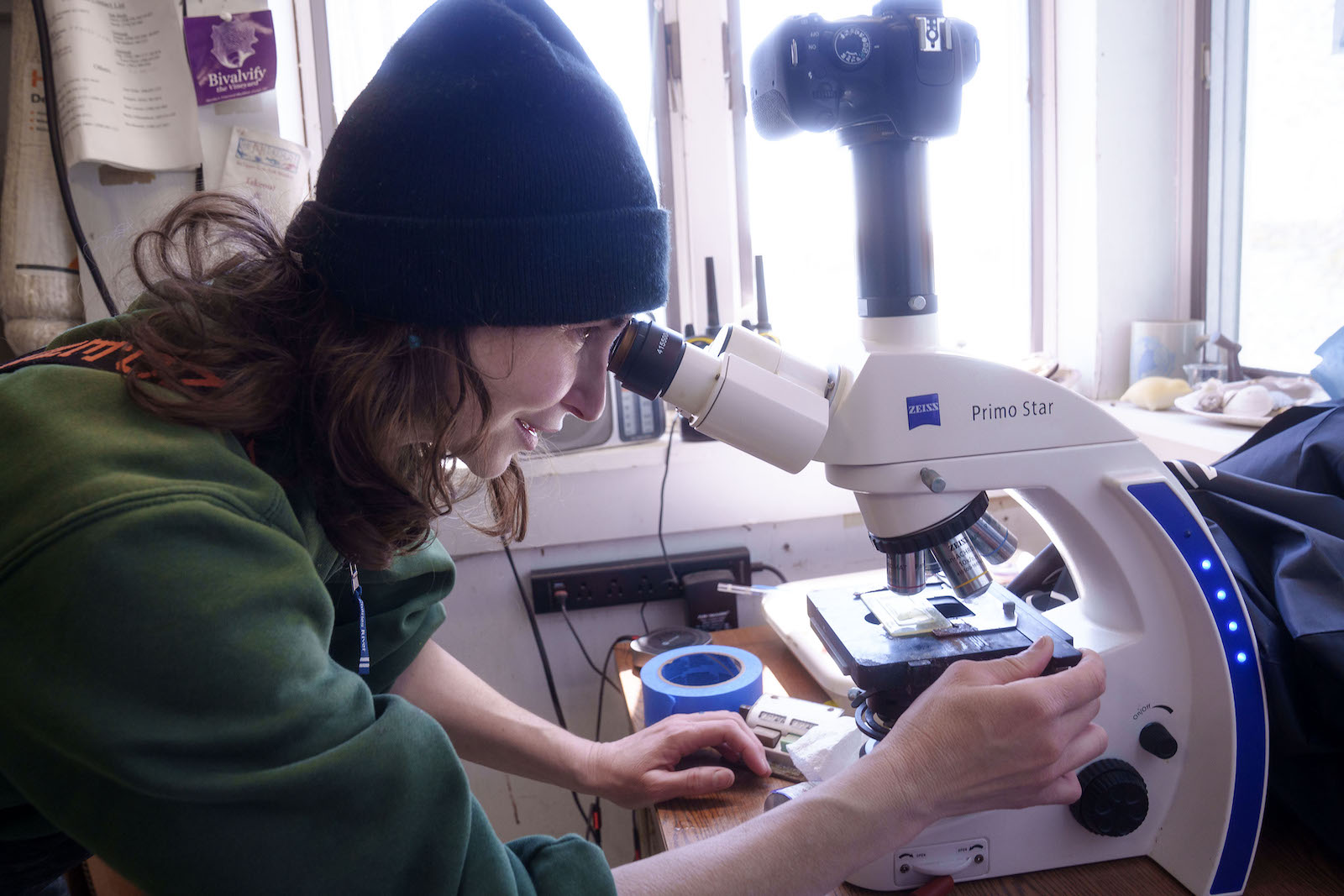
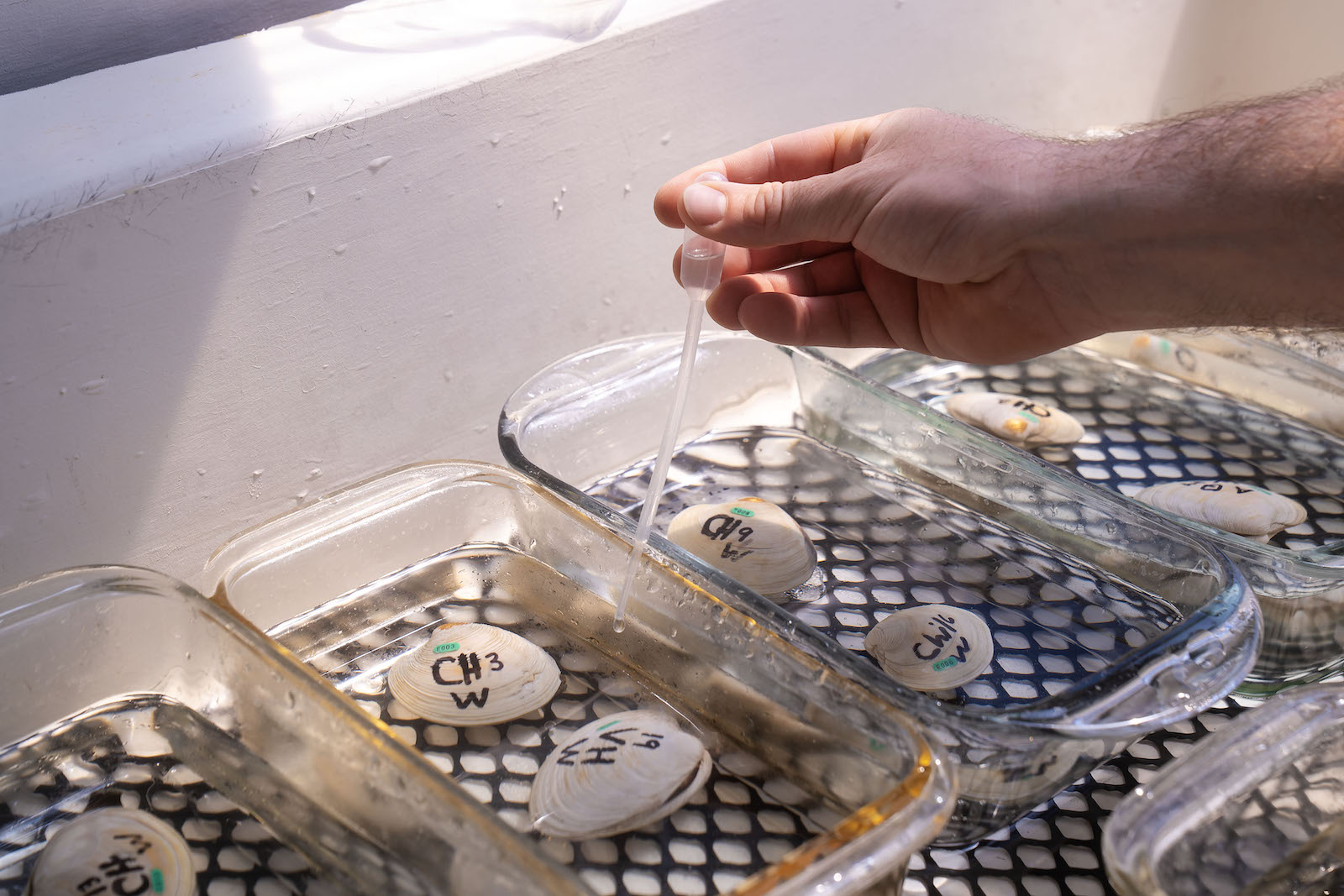
Shellfish spawn naturally in the environment, but survive at a much lower rate than when they are spawned in a hatchery and grown, in a controlled environment, into seed.
Mr. Karney also made his scallops easily identifiable. Vineyard scallops are many different colors, but Mr. Karney selected and bred orange scallops, a “genetic tag” to trace catch back to the shellfish group. Once fishermen started catching more orange bay scallops, it was clear the shellfish group was vital in supporting the wild fishery, a source of income for so many Islanders.
He eventually switched to spawning striped scallops, called “Vineyard skunks,” because the striped pattern allowed the animal to camouflage better against predators.
Those were the days, said former Edgartown shellfish constable Paul Bagnall, when almost 200 commercial fishermen were harvesting on Island waters, and a good year yielded 25,000 bushels of scallops.
“Back in those days you could make a living quahaugging and scalloping,” said Mr. Bagnall. “You can’t do that anymore.”
Bay scallops have suffered especially in the last few decades. In 2026, 10,000 bushels is considered a banner year. They are a fragile species, said Ms. Green-Beach. Even with the shellfish group’s yearly spawning and seeding of ponds, the decline of eelgrass and the influx of nitrogen from development has been straining the bay scallop population since the ‘80s.
But at first, private aquaculture was a “dirty word,” said Mr. Karney.
Those who proposed it were practically tarred and feathered and then run out of town, Mr. Bagnall said.
“The town, it was just not socially ready for aquaculture,” said Mr. Bagnall, the president of the shellfish group’s board of directors for almost 30 years. “A few bad scallop years and we had a few believers.”
As more fishermen came around to the importance of the shellfish group, the organization began to expand in different directions.
In the mid ‘90s, Mr. Karney won a grant from the federal government to train fishermen in private aquaculture. He brought in professionals to speak to his group of 15, a few of whom would go on to create Island’s now-burgeoning industry of farmed oysters.
“The more people that we got into aquaculture, that would take the pressure off of the commercial fishery,” said Mr. Karney.
At 50 years, the shellfish group now acts as an extension service for the Island’s aquaculture, helping the oyster farmers with problems and selling oyster seed. The group’s focus has also shifted alongside a changing environment. As development on the Island started to increase, the water quality in the ponds began to degrade.
“Nobody really knew what was going on,” said Mr. Karney.
Island scientists first hypothesized the pollution was from taller smokestacks in Ohio — supposed to disperse pollutants better — that swept heavy metals downwind to Massachusetts. Eventually, they figured it out: it was nitrogen.
“The nitrogen is out of wack,” said Mr. Karney. “And then there were other studies that showed...this is coming from development.”
As the issue progressed in the scientific community, shellfish became recognized not just as a source of economy or culture, but as an important part of the estuary environment. Shellfish filter water, improve water quality and clarity, sequester carbon and take in excess nitrogen to build its protein.
“Our environment is changing,” said Danielle Ewart, Tisbury shellfish constable and president of the shellfish group’s board. “With that, you have to get inventive and creative.”
As the science evolved, so too did the shellfish group. The organization is now working on restoration of eelgrass, an important habitat for scallops, and it contributes regularly to other studies.
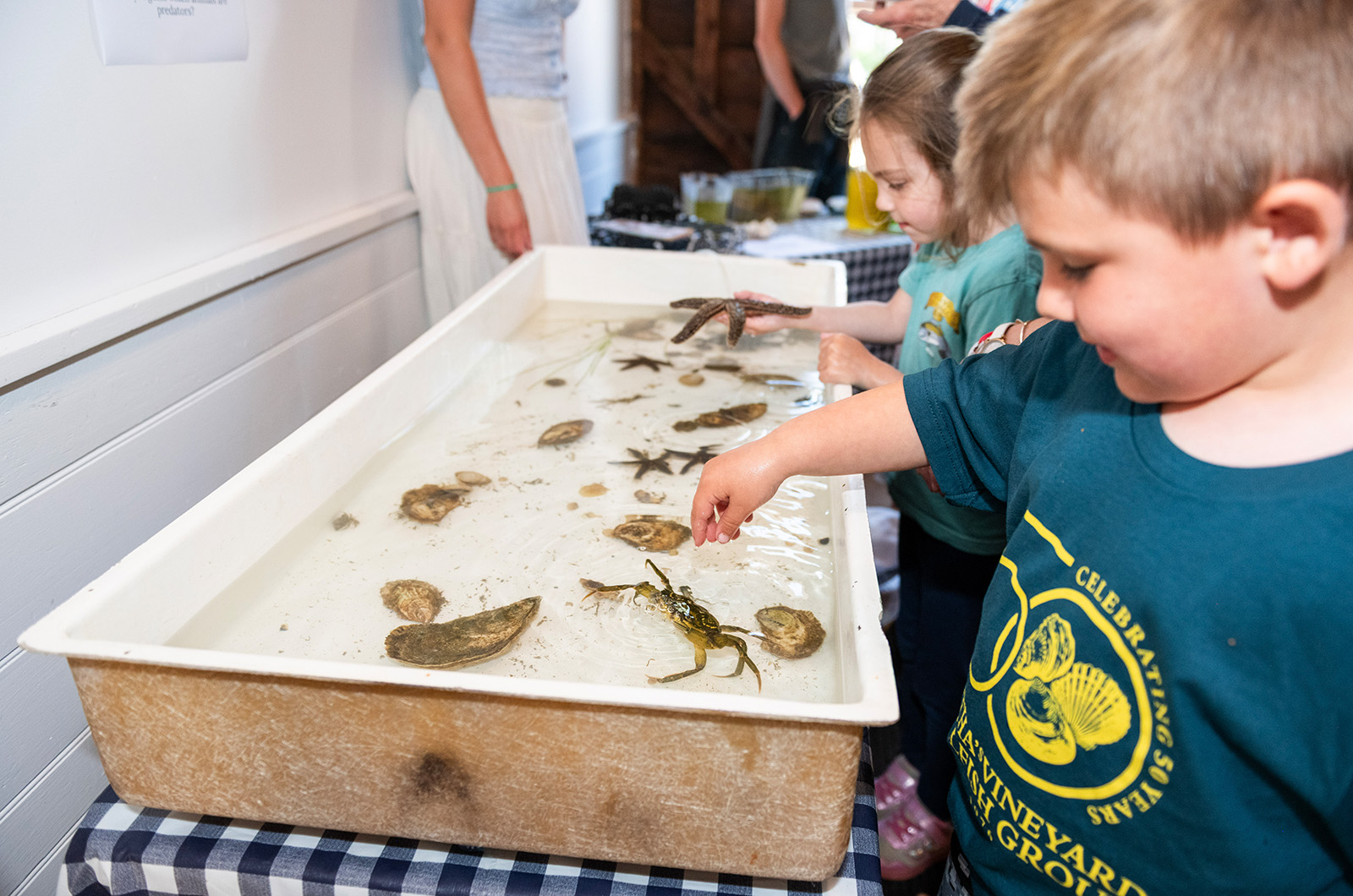
It also sponsors education initiatives, teaching families how to quahaug and kids how to shuck. The shellfish group brings students and residents to its hatcheries, teaching the Vineyard about the importance of shellfish to the environment, setting up touch tanks with oysters, starfish, hermit crabs and scallops.
It’s all part of making sure the tradition of shellfish on the Vineyard continues to thrive.
“Getting the word out will maybe help the new generations and people now on the Island to have the same reverence for the shellfish that we had 50 years ago, that maybe we’re losing,” said Mr. Karney.
“I want to continue on this tradition,” said Ms. Ewart. “It’s a legacy of having younger generations learn how to be able to catch and find and prepare their own food.”
While their activities have expanded, the shellfish group has also continued to spawn and grow shellfish for the Island’s ponds. Find them upstairs in the solar hatchery on the edge of Lagoon Pond, watching quahaugs release sperm as massive cylinders of different-colored algae bubble in the background.
Mr. Karney often turns up to help out, checking out the latest technology that keeps the quinoa-sized oysters happy and fed. The staff will lift up a sieve to rinse the baby shellfish, squinting to see the tiny but familiar shape of a quahaug or scallop. It never gets old, they told the Gazette.
“As we’re looking to the future, the mission hasn’t changed,” said Ms. Green-Beach. “It’s expanded, or maybe we’re just thinking of it in an ever-expanding way. It’s all in response to what the community needs and what the environment needs.”



Comments
Comment policy »