

The Dukes County Sheriff’s Office is moving forward with a $8 million renovation of its jailhouse in Edgartown, one of the first major upgrades in decades, as the state grapples with how sheriffs operate in Massachusetts.
The sheriff’s office, which runs the county jail and the regional lockup out of the 150-year-old building on Upper Main street, said the revamp is much needed to continue serving the Island’s public safety needs. The current building is out of compliance with state health codes, is showing its age and has been described by leaders in the past as archaic.
“We run a modern-day agency in an antiquated facility,” Sheriff Robert Ogden said.
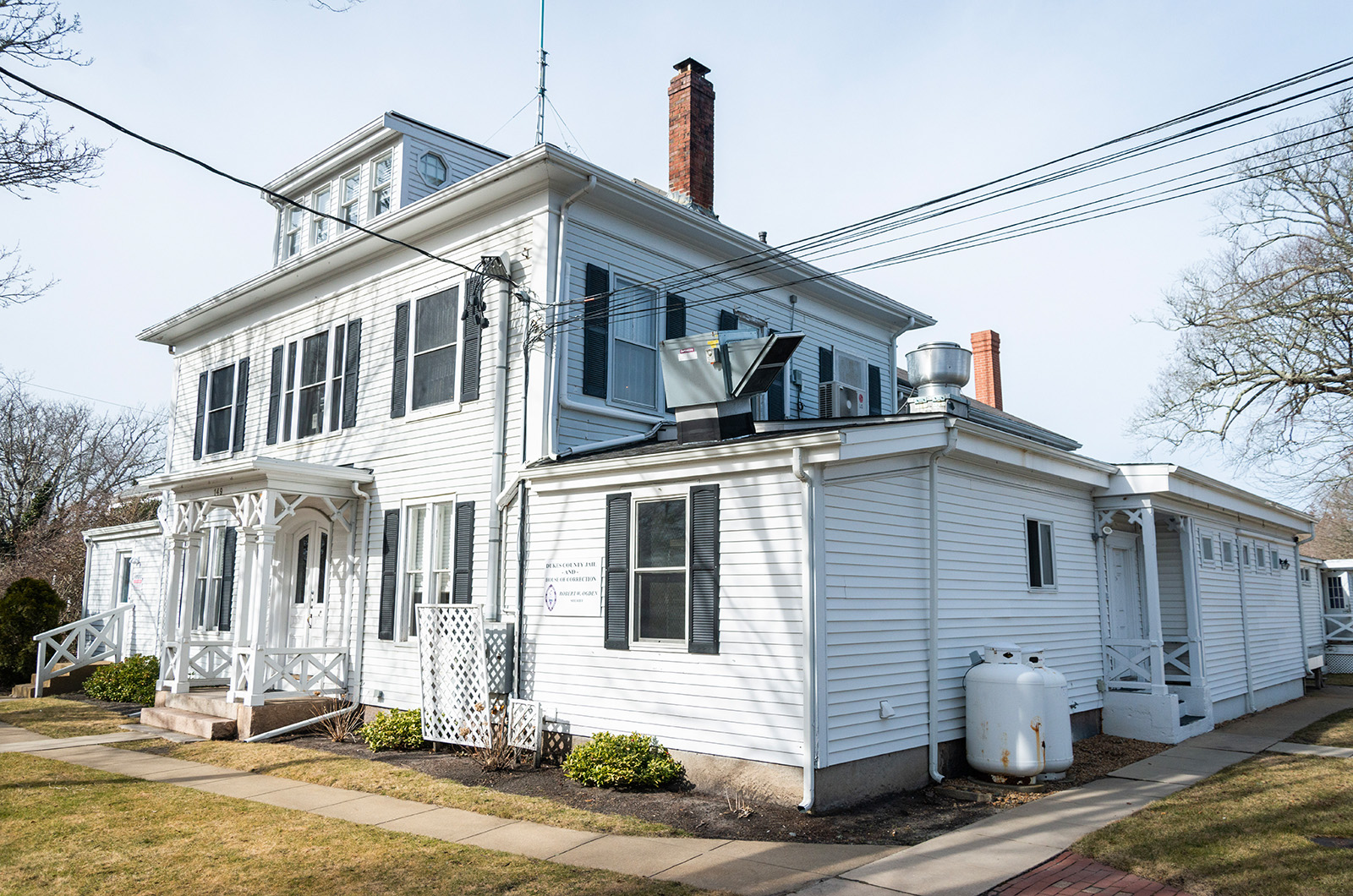
The planned work will take place at the existing booking and pre-release areas that are contained in 1,000-square foot modular building attached to the original historic jailhouse. The sheriff’s office is in the process of going out to bid for contractors to demolish the unit and replace it with a 1,765-square-foot addition.
Though the project has been envisioned for years, it is coming to fruition at a time when leaders on Beacon Hill are taking a harder look at sheriff’s department budgets in the wake of a 190-page report from the state inspector general that questioned how each of the 14 sheriffs’ offices operate.
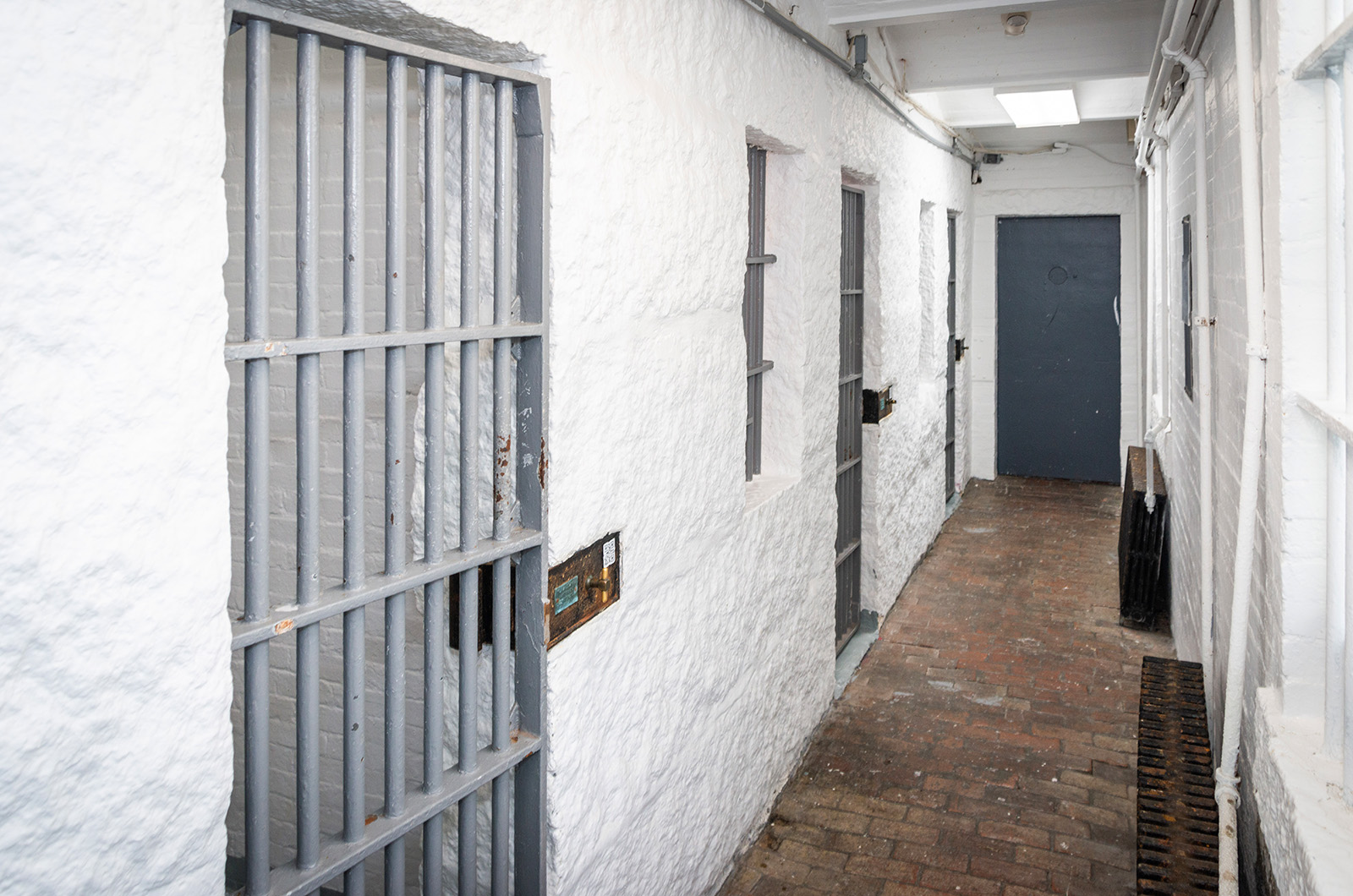
Dukes County chief of deputies Greg Arpin said the building project will modernize the booking area and expand the processing space. It would also install four high-security short-term holding cells, make the building more compliant with the Americans with Disability Act, and decommission nine of the twelve original granite cells.
Finished in 1875, the facility sits at the corner of Main and Pine streets, and, for the most part, looks like an Italianate-style home. Several additions have been made over the following decades, including the attached modular building that is eyed for replacement.
The sheriff’s office plays several roles on the Island, including jailer to people convicted of crimes on the Island. It also books the hundreds of people charged with crimes and holds people ahead of their initial court date in what’s known as a lockup.
The jailhouse has been routinely cited for deficiencies by the state Department of Public Health, largely around inadequate size of the cells — an issue that is expected to be partially addressed in the upcoming construction.
Money for the project has been considered at the state level for the better part of a decade, and the sheriff’s office got the greenlight in 2024 for the first phase from the state Division of Capital Asset Management and Maintenance, Sheriff Ogden said.
A second phase is being sought to add cells and other upgrades, but would push the price tag to about $20 million, and has not been signed off yet.
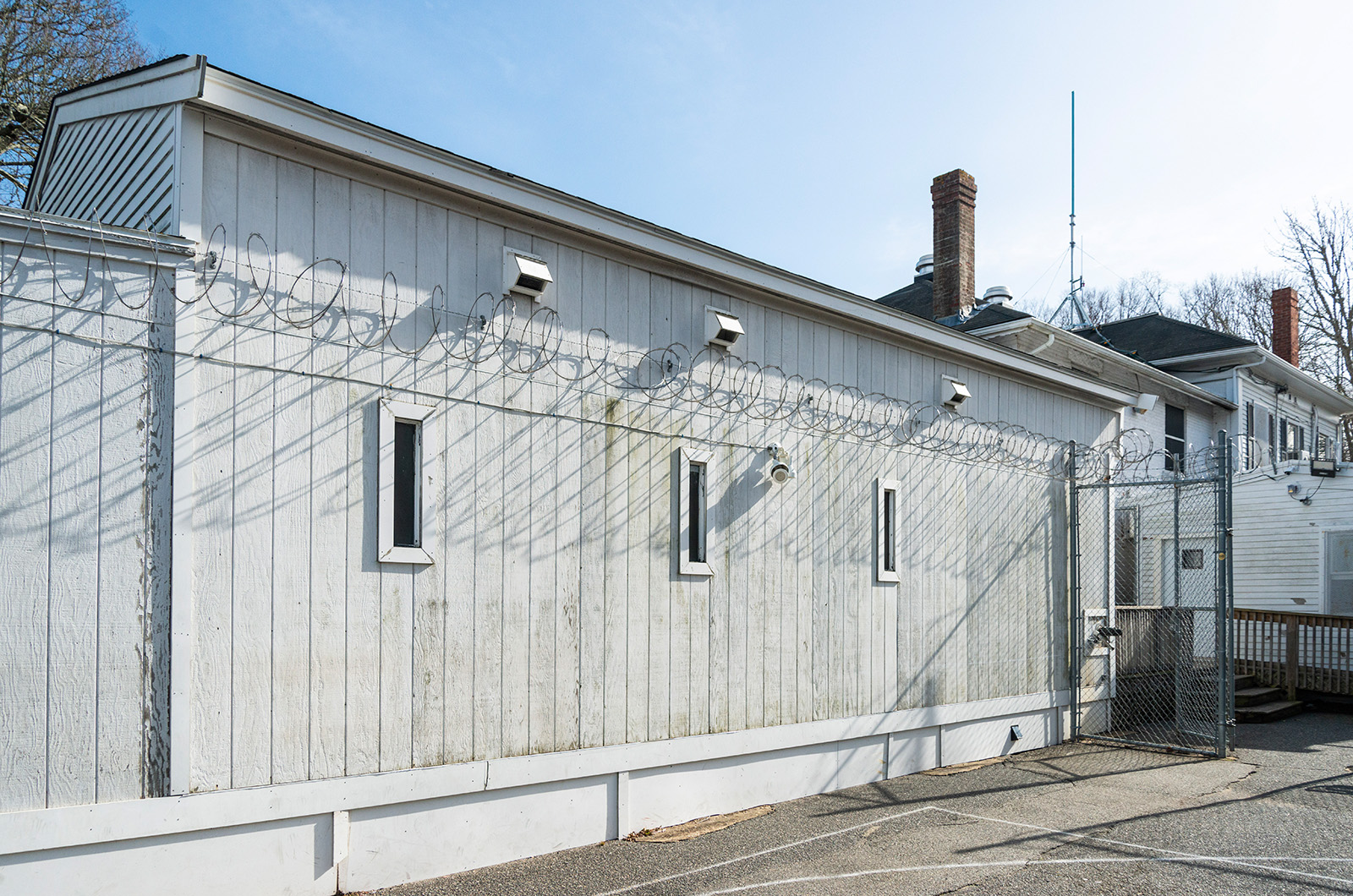
Specific construction plans are not available to the public because the jail is a high-security law enforcement facility and is exempt from public disclosure under state public records laws, according to Mr. Arpin.
The public did get an idea of the design of the facility however when the project went before the Edgartown historic commission in March.
Sheriff Ogden has also been talking about the project to Island select boards in recent weeks, coinciding with the release of a long-awaited report from the state inspector general on the operation of sheriffs’ departments across the state.
The inspector general found that the state’s budgeting process for the 14 sheriff’s departments is chaotic, resulting in chronic underfunding and at times illegal overspending. There is also no consistency between departments on their roles, some expending millions of dollars on investigative arms, while others, such as Dukes County, operate on much more meager budgets.
“To put it in sheriffs’ terms, it’s a bit like the wild west,” inspector general Jeffrey Shapiro told the press earlier when the report was released on June 1.
One of the main issues is the budgeting system for sheriffs. The inspector general wrote that sheriffs spend higher than their appropriations in part because of a longstanding practice of the state allowing independent agencies to transfer funds out of their payroll accounts to use for other expenses.
For sheriffs, this practice had no limitations, allowing the jailtenders to take advantage and make their overall deficits hard to track, according to the report.
Mr. Shapiro called for a more streamlined budgeting system, where the expenses are agreed upon before the start of the fiscal year and any spending above and beyond that is reviewed by the state.
He also worried that some revenue streams went to bank accounts outside of the state accounting system, including about $1.1 million for Dukes County, which made transparency difficult.
“I do believe those should be brought into the state financing system,” Mr. Shapiro told the Gazette this week.
Mr. Shapiro’s report also touched on the potential of consolidating the sheriffs departments for Martha’s Vineyard and Nantucket, a topic that has been bandied about in the past in the name of cost cutting.
But Mr. Shapiro did not view it as a smart move, and felt it could end up costing taxpayers even more to have Barnstable County or another office to take over.
“It would be shortsighted to say the sheriff in Dukes County could be eliminated and subsumed by Barnstable County,” he said.
Sheriff Ogden praised the report and felt it was fair.
“I’m really optimistic about the inspector general’s report,” he said. “I think at the end of the day his report was fair, at least to me, in suggesting there is no savings or benefit to eliminating us.”
Mr. Ogden has heard people suggest ferrying inmates over to Barnstable, and other ways to shrink the sheriff’s office imprint. Most recently, he has been asking the Island towns to support the continuance of the regional lockup to process the 800 or so arrestees a year, a function that is usually performed by police departments.
“I believe this hopefully lays to rest the suggestion that we aren’t necessary here on Martha’s Vineyard,” Sheriff Ogden said.






Comments (1)
Comments
Comment policy »