

The morning is cool, with a stillness that warns of the heat to come. We ride out to the fields in the back of a truck bed filled with blue pint baskets, strawberry carriers and plastic baking trays. Each picker gets one row: we stand with a foot on either side of the raised bed leaning over it to pick. The ground is soft and sweet with straw.
How could I continue this column without writing about strawberries?
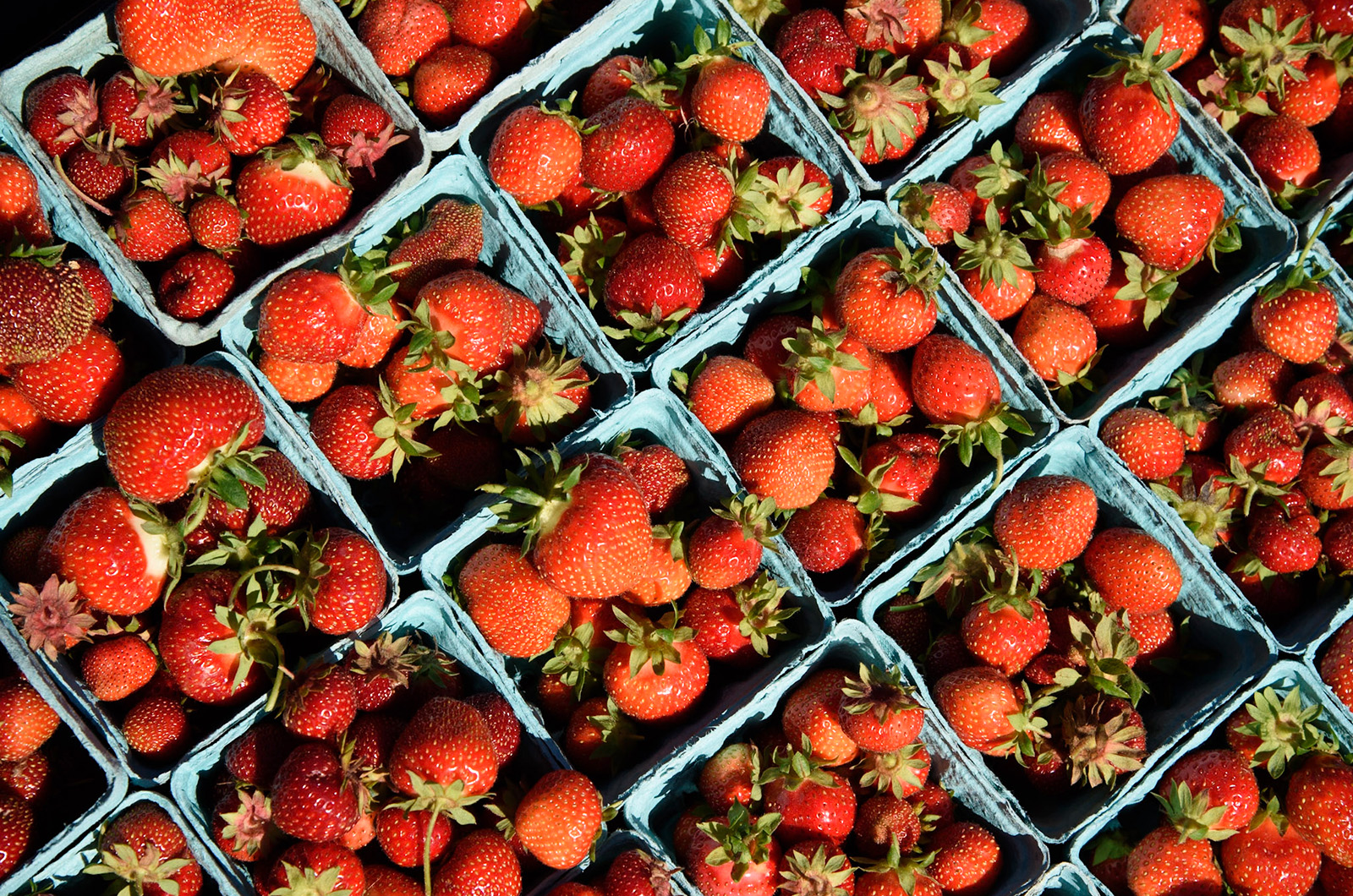
Last summer, strawberries were one of the first crops I picked at Morning Glory. Because they come so early in the summer season, they are often the field crew’s first introduction to farming. There are nuances and difficulties to it, but above all joy, and a singular appreciation for fieldwork that lingers for the rest of the season.
This week, I jumped in with Morning Glory’s field crew to help pick strawberries. I grew up picking at strawberry farms in Wisconsin with my family, and there are many photos of me with a red-stained face and fingers, presenting my bounty to the camera.
Picking strawberries is an exercise in restraint. Only the reddest strawberries must be picked. A blush of white, even of orange, and the berry should stay on the plant to ripen for another day, or even a few hours, and then it will be perfect. Move aside the leafy plant to get to the berry. Move your shadow, so you can be sure of the berry’s color. Turn it over, to assess its other side. Pick from the stem, to preserve the strawberry top. Place it in the pint, gently so it doesn’t bruise.
The strawberry fields were where I first got to know my coworkers last summer. Side by side we shuffled on our knees (a different technique, slower but easier on the back), occasionally knocking into rocks stuck in the soil (I still have bruises on my kneecaps from these weeks).
“Come look at this one,” we said to each other. The king berry: the berry developed from the primary flower of the strawberry plant. It is the largest fruit and looks like multiple smaller strawberries fused together, forming a half-moon or even a full disc, a freak and a delight of a fruit. Sometimes these split down the middle, and little green inchworms live in the space in between. Sometimes the king berries protrude in places, little red fingers that stick out from the top.
In these rows we ask each other who we are, why we are here, and what we do when we’re not farming. Many of Morning Glory’s crew are first-time farmers. They are current students, former and future professionals in education, arts, history and chemistry. Some of them packed up their lives and careers to do this work.
It is noble work, Kelly Brenholdt told me in the fields. We picked together last season, and now she’s back at Morning Glory. Kelly has an associate’s degree in English and theatre, and is a year out from her bachelor’s in history at University of New Mexico. But farming is what she wants to do: grow food locally, sustainably and responsibly, and feed a community.
“The strawberries as a treat are maybe not quite as much about feeding and fueling people,” she told me.
But they do help form sweet summer memories.

“It’s just very important to me to be able to make somebody smile like that,” she said.
When the market manager Helen McGookey first found herself in the strawberry field, she cried.
There’s a magic to it, she said. There’s something that feels so natural about working outside, helping grow food. Helen has a bachelor’s in chemistry, and has been working in restaurant management in Colorado for the last few years.
Strawberries are one of the best examples of the fruits of your labor, Helen said. I feel the same. This year’s strawberries I helped plant last fall. We made holes in the ground with pyramid-shaped tools and pushed in the young strawberry plugs. We weeded the edges of the beds, and in between the rows. The weeding continued this spring, when it was like a “wind tunnel tornado vortex,” said field crew manager Grace Palmer.
We snapped off the runners, which the mother plant shoots out to start new root systems and plants, and which waste energy that it should be putting into leaf development, and eventually flower and berry development.
The fruits of our labor. The nine rows of plants result in hundreds of pints of strawberries a day.
Strawberries are specialty items. Strawberries do not feed an Island, but they help sustain a local food system in a different way. They get workers into the fields and allow them to start a season (which can be grueling, both mentally and physically) with joy. They get people into the farmstand, building a momentum for buying and eating locally that lingers for the rest of the summer. They are easy practice for a seasonal diet: have a pint of Island strawberries and you will never want to buy Driscoll’s again.
I’ll finish with a secret. We do eat the strawberries in the field. We’re not supposed to, but there’s a loophole. We can’t sell the blemished berries, the ones that have been nibbled or bruised on the plant. It’s merely cosmetic, though. Nothing beats an Island strawberry.





Comments (1)
Comments
Comment policy »