

Working on a farm can feel at once like a race and war. You’re up against weeds, time, weather and funds. It’s stressful and strategic, and the margins of success are slim. Often you can lose sight of the multifaceted merits of farming, beyond growing food and caring for the soil.
Not at Island Autism.
The Island Autism Group formed in 2009 with the goal of bolstering Island schools’ programming for young students with autism, and has since grown to include programming and job training for adults with autism. Last week I spent a morning at their brand-new campus in West Tisbury.
The organization has built out their small farm alongside their new residential and program houses over the last few years. Amid their chicken coops, goat pen and flower-filled garden, you can smell it: a different philosophy of farming based on its less-obvious merits, which are no less wonderful.
“I feel like farming requires so much trust in life in general,” said Mary McCarthy, farm manager. We sat on the outdoor porch of their community building, the Hub House, looking down as the few farm assistants fed the goats and pulled weeds.
“You’re like, is it gonna grow? Is it not gonna grow? But this is such a great place to learn because it’s...not super high stakes,” Mary said. “We’re more focused on programming and getting people outside and interested in farming.”
Island Autism has always had egg-laying hens, which previously lived at the Farm Institute. Executive director Kate DeVane would take the programs’ adults — people with autism or intellectual developmental disabilities — to collect the eggs, which they washed and sold at various farms.
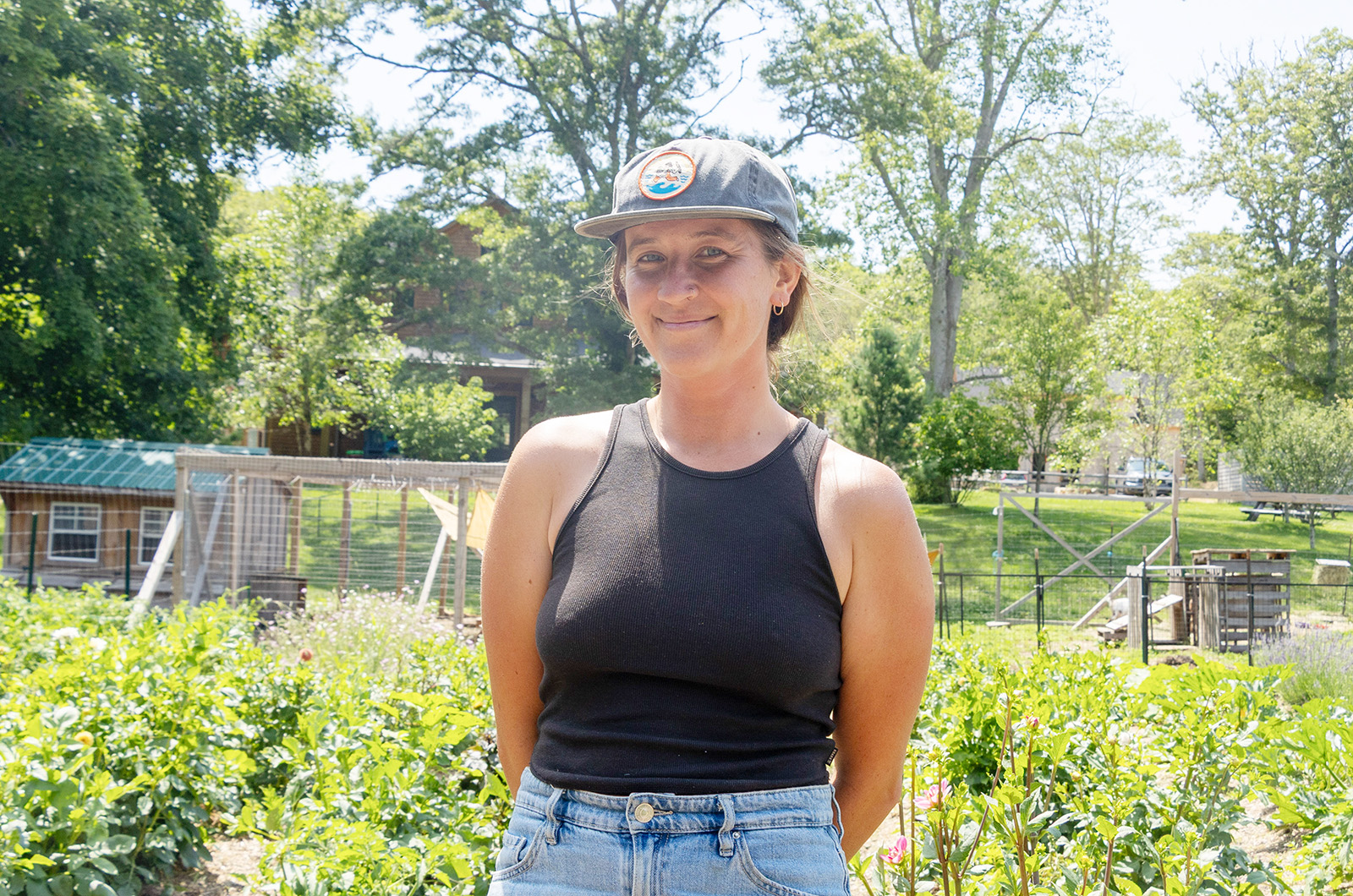
Now, the farm at the bottom of their campus’ hill includes a fenced garden filled with flowers, strawberries, squash and herbs, grown from starters other farms donate. They still collect eggs from the three chicken coops and enclosed runs, and there are two future garden areas with raised beds. There are goats and a self-service farm stand, where Island Autism sells its granola and Purple Paws dog treats — both of which they make at the center — bouquets of flowers and Yommi pops.
“It’s chaotic, but we like it like that,” said Mary.
Besides the few farm assistants, adults in their community-based day program come to the farm twice a week to collect eggs, plant flowers, water the beds and pick produce. Some get paid to feed the animals and do other chores, and every Friday the program does a farm-themed ice cream flavor: mint, strawberry and, hopefully soon, blueberry-lavender.
“It’s just nice for all kinds of people to be able to be outside, and with the goats, and sort of engaging with your environment,” Mary said. “I think that can be really nourishing for people.”
Essential in programs for adults with autism is vestibular stimulation — movement that activates and regulates the vestibular system. Both exercise and farming are included in that, said Kate.
“If your exercise is farming, then when you’re done exercising, you’ve created something wonderful,” Kate told me as she changed the chickens’ water, scattered dried mealworm larvae, and let the chickens out.
But their farm also helps complete the world they’ve built on their new campus, which is no less Martha’s Vineyard than anywhere else on the Island.
“We’re trying to create for people with autism and intellectual disabilities the same kind of world or community of Martha’s vineyard. There’s a huge farming tradition here,” Kate said. “We just want to make sure that everybody from the age of five to 75 has a sense of purpose, a feeling that they’re part of the community.”

Island Autism has a booth at the West Tisbury Farmers’ market where they sell their eggs and “quirky bouquets,” said Mary. Farm assistant Julia Morrow told me about it while weeding the cosmos and nigella, also known as love-in-a-mist. I knelt in the row, trying to avoid the circling sprinkler, and pulled the weeds I recognized. At the other end of the bed, brand new farm assistant Rudy Vecchia-Zeitz pruned chamomile, which Mary said “volunteered” to grow there.
Julia is currently in school for midwifery and used to work in the fields at Morning Glory. Rudy has their masters in social work from the University of Chicago and grew up farming for Scottish Bakehouse and private gardening companies.
“I feel like a lot of people living with autism are much more in tune with authenticity,” Rudy said. “There’s not as many...inhibitions at play, and I really like that.”
“It feels like an oasis here,” Julia told me. “Everybody is so patient and kind. It’s a really smart organization.”
Island Autism is not immune to the challenges of farming, among them weed pressure, pests and yearly spring rocks.
“We were like, is [clearing rocks] going to be an interesting project for people?” said Mary. “And we quickly realized no, no one wants to pick up rocks.”
But generally, things want to grow.
“It’s like such a good life lesson in general,” she said. “If you give things some water and some sun, mostly they’ll grow, and sometimes it won’t, and that’s okay. And then you can pivot.”
They’ve also learned a lot in the few years they’ve been farming, like how to work with their hilly landscape and the fact that the goats will eat anything. And speaking of goats: While most goats and many on-Island are threatened by a gastrointestinal roundworm, Island Autism has successfully lowered the parasite load in their herd by feeding their goats an Australian-made biosupplement containing fungus spores that consume the roundworm’s larvae.
That’s a mouthful. The bottom line: Island Autism has healthier goats than they did before.
“I know that sort of sounds like a little accomplishment,” said Kate. “But for us, we just learned something about farming and became better farmers because of it.”
The goats are chatty, fenced in next to the wooden raspberry trellises made by another person with autism. Blackberry and grape vines intertwine with one of the chicken fences, and the garden’s tomatoes are a sea of hopeful yellow suckers.
“We’re stressed about the tomatoes,” said Mary. “They’ve become monstrous!”
Monstrous and chaotic? Yes. But also joyful, nourishing and undeniably exciting: one more model for what successful, sustainable farming can look like.




Comments
Comment policy »