

Dan Athearn spends his Monday afternoons at Morning Glory Farm’s pastures in Katama, surrounded by a herd of mooing cattle.
Enclosed behind an electric fence, the cattle swish their tails and grunt impatiently, eyeing first their keeper and then the fields of tall grass on the other side of the barrier. The message is clear: let us over there, we want to eat now.
When Mr. Athearn cranks the fence away, the herd surges forward, racing to graze on the best patches of grass. The tall, tannish stalks are only half the meal; underneath lies a more vibrant understory of clover and wildflowers that adds a necessary variety to the cattle’s diet.
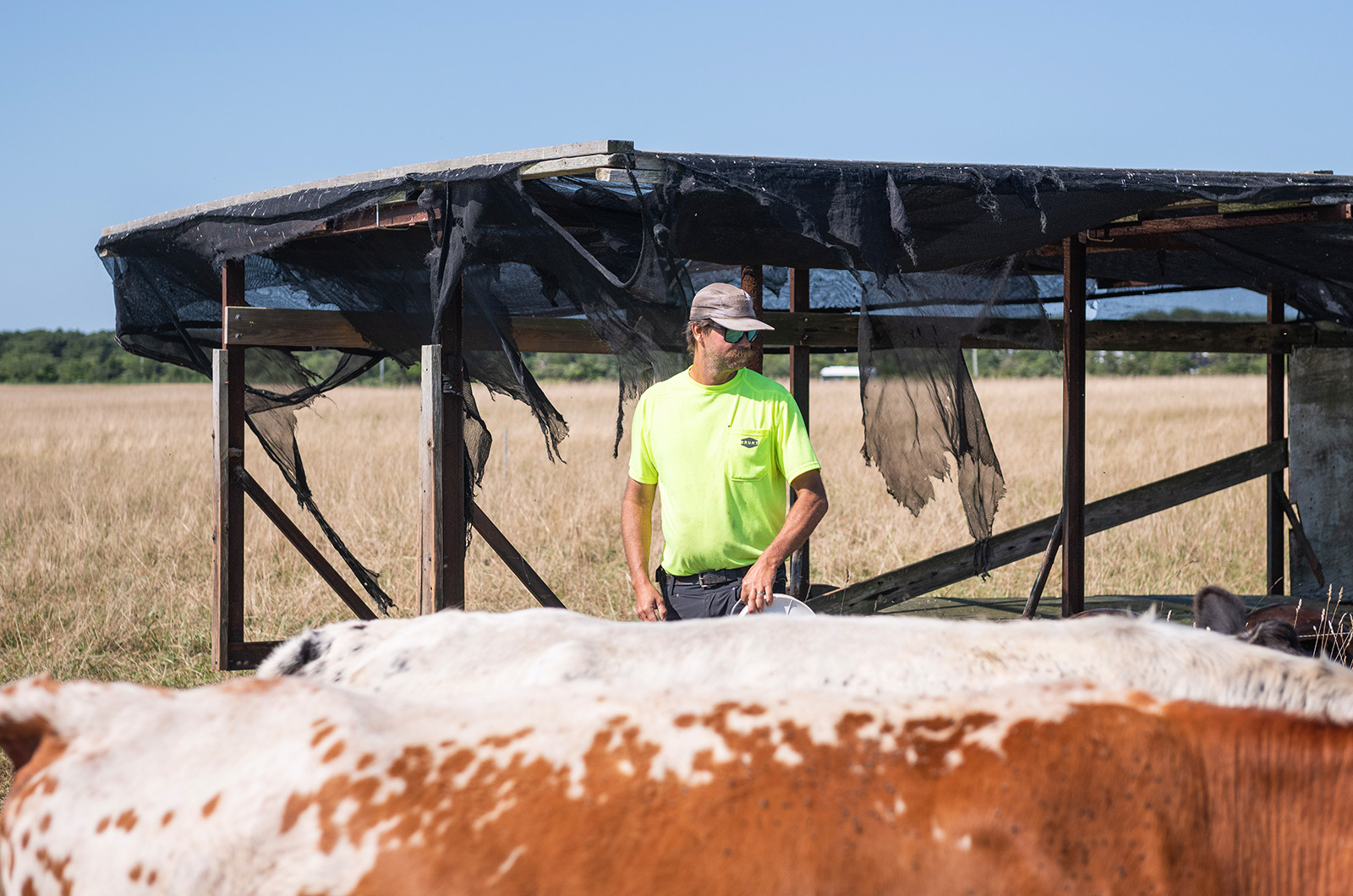
But this year, clover grew sparsely. Rain has fallen this summer, but not consistently, and a lack of deep-soaking precipitation earlier this spring left the understory underdeveloped and the pastures unproductive. It’s a misfortune that could cost farmers thousands of dollars.
Massachusetts declared the Vineyard to be in a significant drought in June, following two years of below-average rainfall. Dr. Vandana Rao, director of water policy at the Massachusetts Executive Office of Energy and Environmental Affairs, said this drought has shown even drier conditions than other recent ones.
“We’re already seeing below normal conditions that we would typically expect in August and September, which are normally our lowest flow or driest months in terms of availability of water,” Ms. Rao told the Gazette by phone. “So it’s not looking great.”
Farmers in particular have felt the effects of the drought across the Vineyard. June was especially tough on Island agriculture, since most of this summer’s rain has fallen during July.
“This is probably the driest year or second driest year I can ever remember,” said Andrew Woodruff, a longtime Island farmer and owner of Whippoorwill Farm.
Over in Chilmark, Beetlebung Farm has also struggled.
“It’s brutal, to say the least,” said farm manager Ethan Buchanan-Valenti. “But we’re just irrigating constantly.”
He said the drought has pushed them to adjust their farming practices, particularly in the realm of irrigation. Replacing overhead irrigation with drip irrigation means more targeted moisture but less coverage overall, and certain zones end up drier than others.
Mr. Buchanan-Valenti also suspects that the drought could be affecting the supply chain, since Beetlebung imports some of its farmstand products from other parts of the state.
“Our whole ecosystem just feels like it’s suffering,” he said.
Mr. Athearn said that at Morning Glory Farm, the team knew early on that it would be a challenging summer. With almost no substantial wet periods between winter’s snow melt and June, the young vegetable plants, along with the hay and pastures, were sure to suffer.
Morning Glory has invested heavily in irrigation systems designed exactly for dry periods like this, Mr. Athearn explained, but the 40 hours a week it takes to maintain them is a chore at best and a hindrance at worst. Equipment that hasn’t been used all year can rust, and the well can experience air leaks. Addressing such problems is an intensely physical task, and one that eats up precious time.
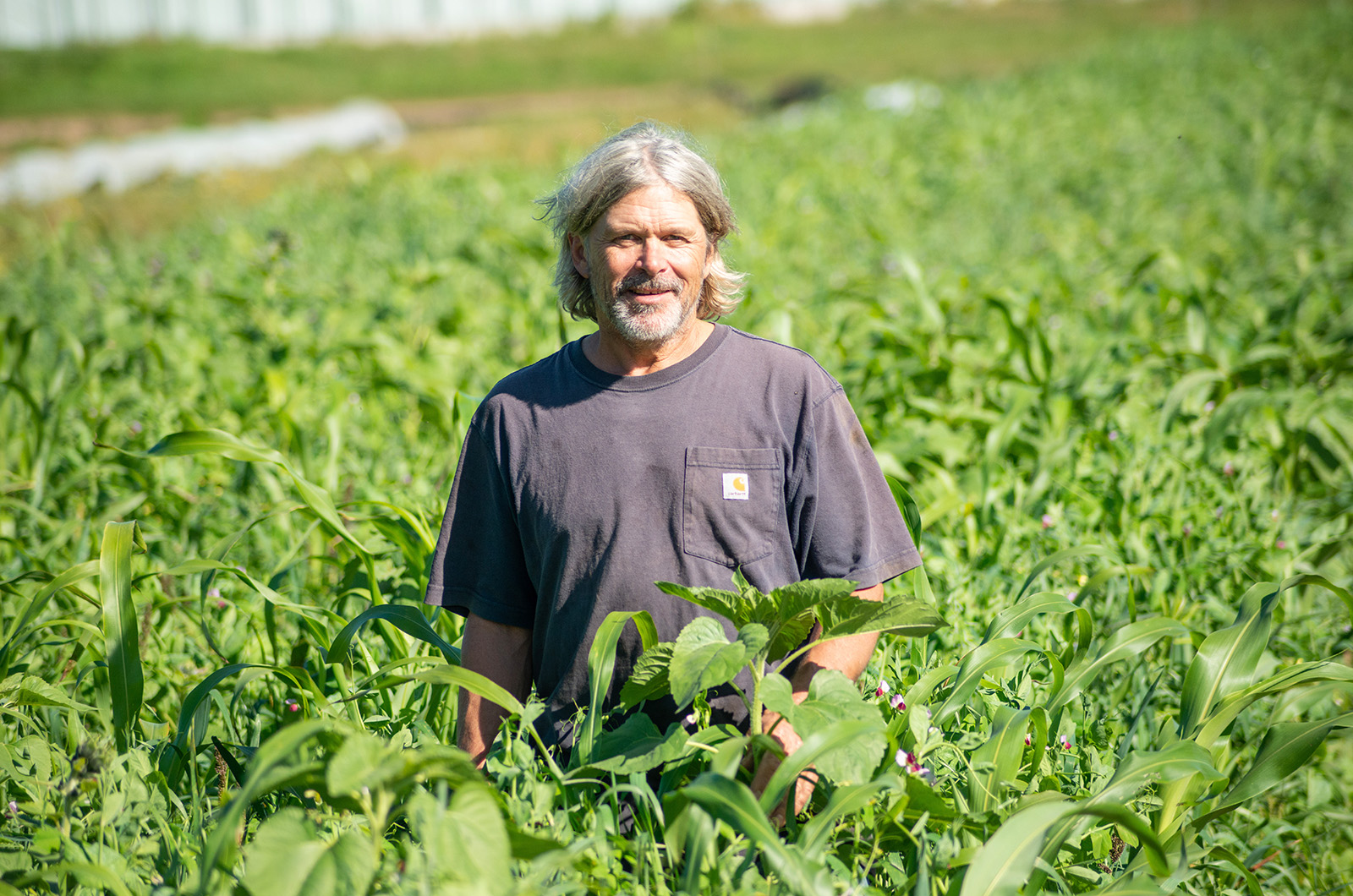
“You might be 200 strokes in, and your arms are burning, and you’re thinking I’m gonna get water any second,” said Mr. Athearn. “It’s hot, and you’re cursing, and the plants are dying.”
Rainy days are always a relief, he added, since the person working the irrigation systems becomes free to help out elsewhere. Still, the weather can never be relied upon, and the importance of equipping a farm with efficient irrigation can’t be discounted.
“Certainly, it will be the difference between a good crop and a failed crop,” he said.
Aside from driving up diesel, electrical and labor costs, Mr. Athearn said, droughts rarely wreak significant havoc on vegetable fields so long as the proper irrigation systems are in place. Instead, it’s livestock farming that suffers the most.
Farmers can’t rely on irrigation to nourish hay and pasture growth. Only well-timed rain showers early in the spring can ensure summertime success.
“April rains bring May grasses,” said Mr. Athearn. “When you get dry, you can dig four feet down and it’s dusty.”
Without an early bed of moisture, soil health plummets. Microbes, which stimulate nutrient recycling, deactivate, and the fiber and nitrogen levels of pastures and hayfields increase to a point of excess. What does grow through the dusty layer is essentially cattle junk food.
The effects of a drought are rarely contained to the summer, Mr. Athearn added. One dry season impacts the rest of the year.
“If you don’t get rain in the summer, you don’t get grass to eat,” he said. “You’re feeding hay, and you’re immediately becoming basically not profitable.”
The cost of premature hay feeding is exacerbated by drought-diminished hay harvests. Mr. Athearn worries they’ll have to import hay to keep the herd fed, and that the extra spending could amount to $10,000.
In the long term, Morning Glory Farm might not be able to feed the 60 cattle it is currently responsible for.
“I will basically shrink my herd if I don’t get the rain, which means that two or three years from now, I would be selling less beef,” said Mr. Athearn.
As chair of the Massachusetts drought management task force, Ms. Rao has observed precipitation patterns over the last decade. Those findings point to a clear pattern.
“Certainly in the Northeast and definitely Massachusetts, we have been experiencing a lot more droughts in recent years,” she said. “Nine out of the last 11 years, Massachusetts has been in a drought for at least four if not many more months a year. And this is something we’re seeing in all our neighboring states as well, and in fact, across the United States.”
That doesn’t mean drought-affected areas never see rainfall. Short periods of heavy precipitation will occur, but only consistency can replenish groundwater reserves.
“We will need sustained months of above average rainfall right now to really get us out of this drought,” said Ms. Rao.
But Mr. Athearn remains optimistic. Multiple inches of rain have fallen on Martha’s Vineyard over the last few weeks alone, and a small but growing bed of clover has begun to populate the understory at the Katama pastures.
For Mr. Athearn, nothing beats the moment when the clouds grow dark and rain begins: “Seeing that rain falling and just being so content to know that finally, you’re getting ahead on something.”
Haley Sandlow contributed to this article.





Comments (1)
Comments
Comment policy »