
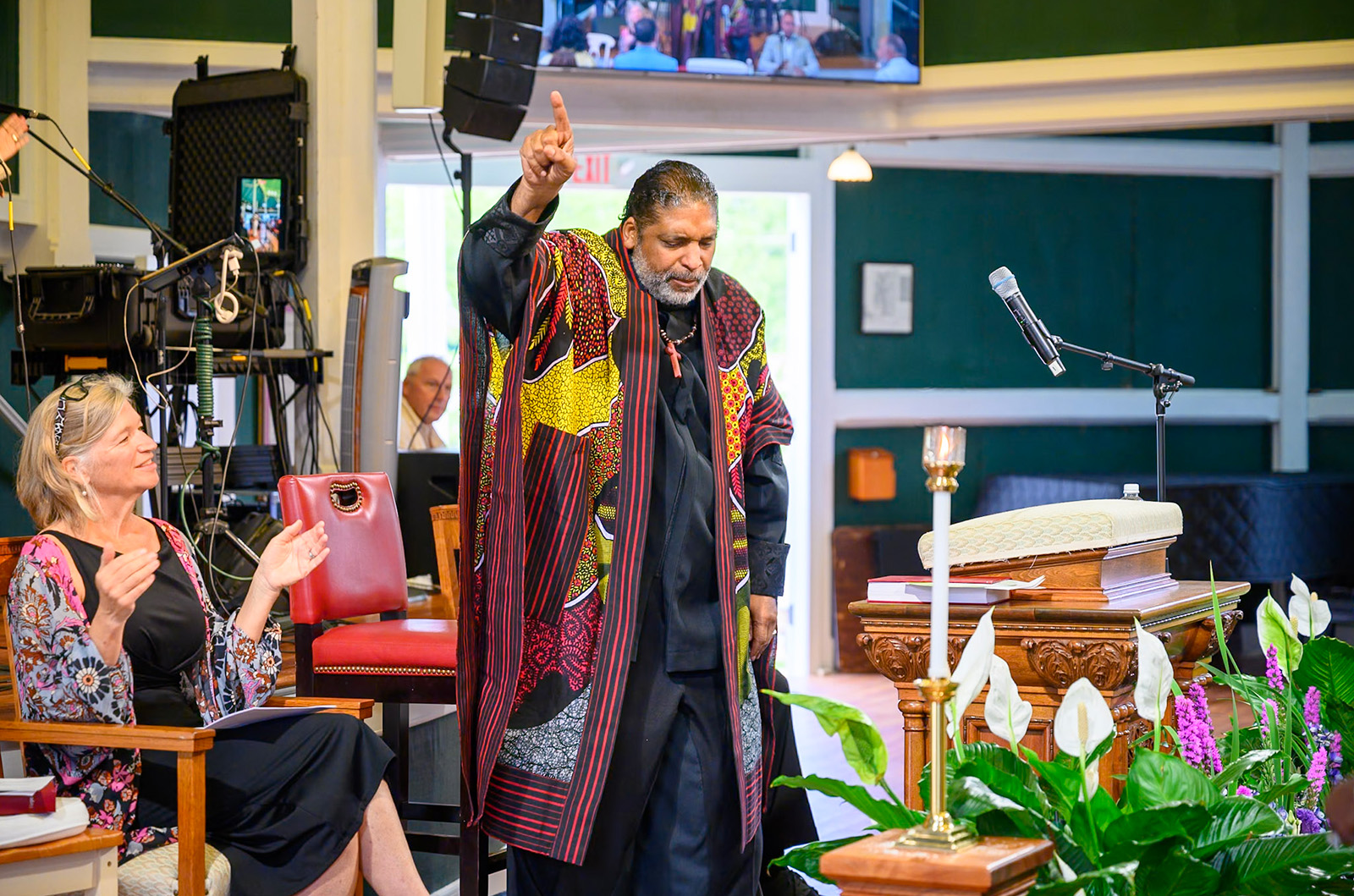
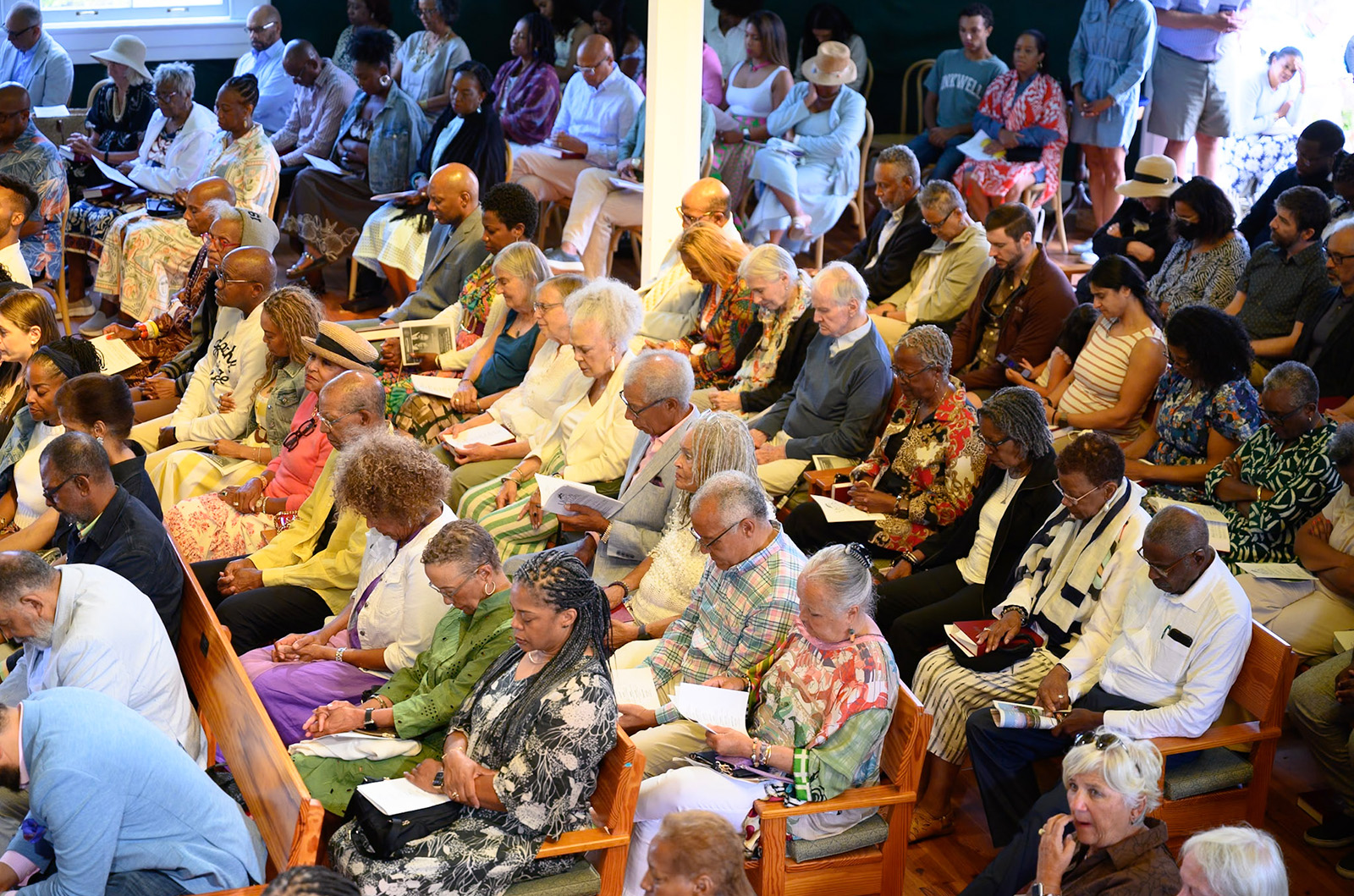
On Sunday, Union Chapel welcomed minister and social activist Rev. William Barber for a sermon and discussion exploring the interplay between power, politics and faith.
Reverend Barber is a Protestant theologian, professor of the Practice of Public Theology and Public Policy at Yale Divinity School, and the founder of Yale’s Center for Public Theology & Public Policy. He’s also the founder of Repairers of the Breach, an activist organization taking aim at systemic poverty, disenfranchisement and racism.
Reverend Barber began Sunday’s sermon by reading three verses from the Bible, which, together, warned against abuses of power, encouraged protecting and advocating for the oppressed and emphasized an individual’s power to make change.
He referred to these as “dangerous” texts that, when acted upon and embodied, pose a threat to authoritarianism and systemic oppression. These verses were used to upend power structures in the ancient world, he said, and can be used in the same way today.
“To look at these texts is to uncover a fierce, unified, uncompromised moral mandate straight from God.”
As Reverend Barber sees it, the power of a society rests in its ability to protect the oppressed. His sermon criticized the Trump administration for, in his view, failing to do just that.
“What we’re facing today is authoritarianism, but it ain’t your grandparents’ authoritarianism,” he said. “We’re up against forces who learned from the worst mistakes of the worst regimes in history, and they learned those lessons well.”
Reverend Barber recognized a global shift away from democracy and toward religious nationalism, which he called a “weaponization of faith.”
“We’ve allowed a right-wing neofascist religion to steal the vocabulary of our faith,” he said.
In the United States, he said these forces have emboldened systemic racism while reinforcing the polarized thinking that drives people of different identities apart. Technology, he said, is being used to suppress humanity and drain its resources. He spoke against the “ecological devastation” of climate change, voter suppression tactics that disenfranchise people of color and women, and structural poverty, engineered by the ruling class to stop the poor from mobilizing.
Eight hundred people die every day from poverty, Reverend Barber said. “What if 800 wealthy people were dying every day?” he said. “What kind of outcry would that be?”
Reverend Barber also critiqued some religious leaders for losing sight of this, and focusing on soothing platitudes instead of the issues that affect the most vulnerable Americans.
“When is the last time you heard a sermon on the poor?” he said. “That’s where Jesus started.”
Reverend Barber sees this moment in American history as “the beginning of the civil rights movement afresh” — a moment that should have mobilized the public long ago.
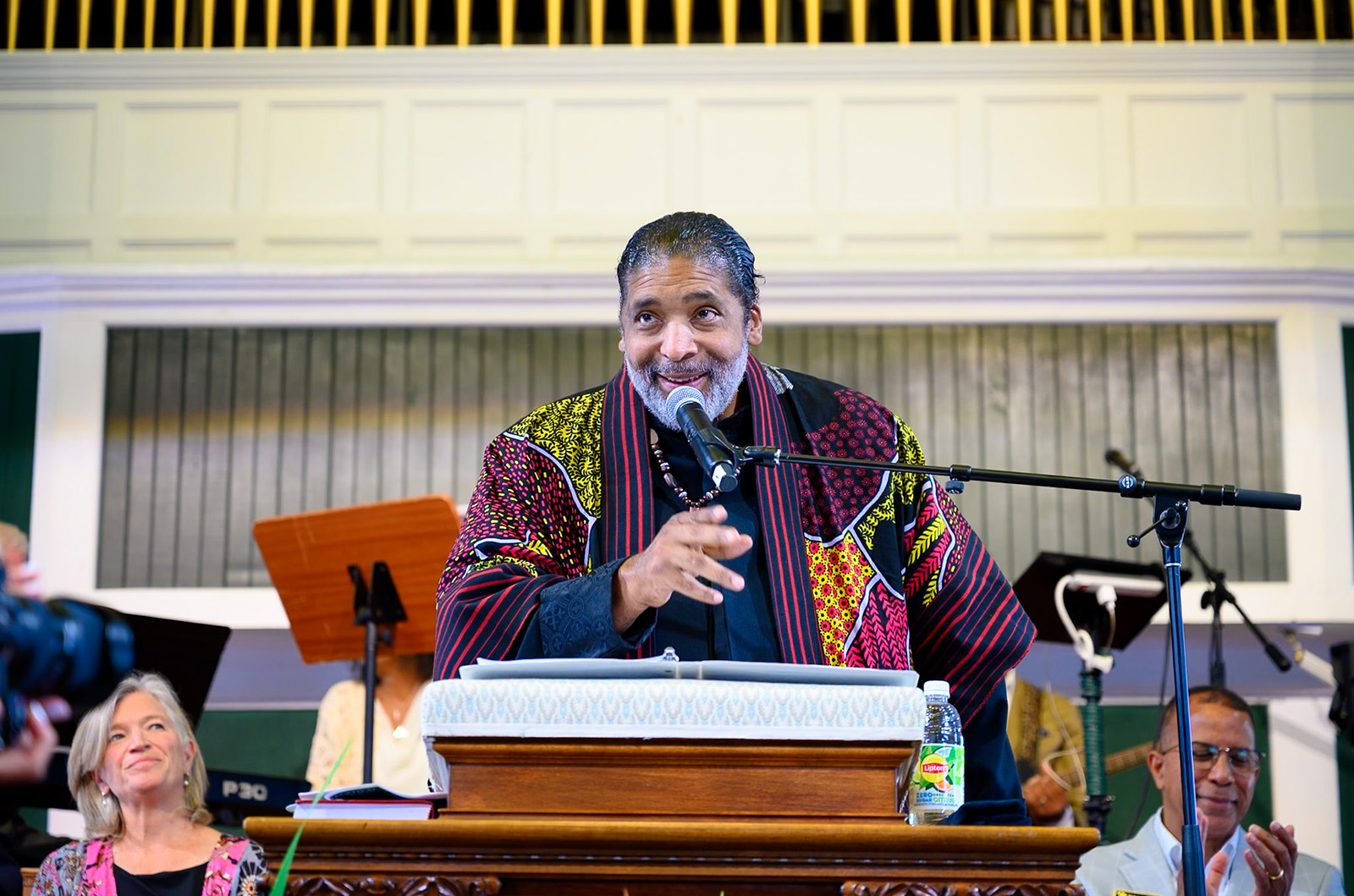
“This is why we are calling for a thousand marches to the polls in the states on the first day of early voting,” he said, referring to an ongoing initiative at Repairers of the Breach. “We don’t need a march on Washington in an election year, we need marches to the polls in an election year.”
Critique of our times, he said, isn’t enough on its own to make change. Critique needs to be accompanied by a vision for the future. And the power to create that vision rests with the people, even if it needs to be wrestled back.
“America was never changed from the top down,” he said. “It was changed from Montgomery and Birmingham and Greensboro up.”
After his sermon, Reverend Barber sat down for a conversation with Rev. Cathlin Baker of the First Congregational Church of West Tisbury and Caroline Hunter, leader of the Inkwell Beach Polar Bears who organized against South African apartheid.
During the discussion, Reverend Barber said that the key to meaningful and effective political action is something called “moral fusion” — working with others not to form a coalition of disjointed, dissonant parts, but a singular whole.
He also said it’s impossible to battle any one form of systemic injustice without also addressing the other injustices that compound it.
“Only fighting for racism and not fighting for economic justice will kill you. You can’t have any one without the other,” he said.
For Reverend Barber, it’s incumbent upon those with privilege and resources to stand up for society’s most oppressed. And fighting oppression, he said, is not a radical idea — it’s the foundation of Christianity.
“Liberation is orthodox,” he said. “It should have never been a sidebar.”





Comments
Comment policy »