
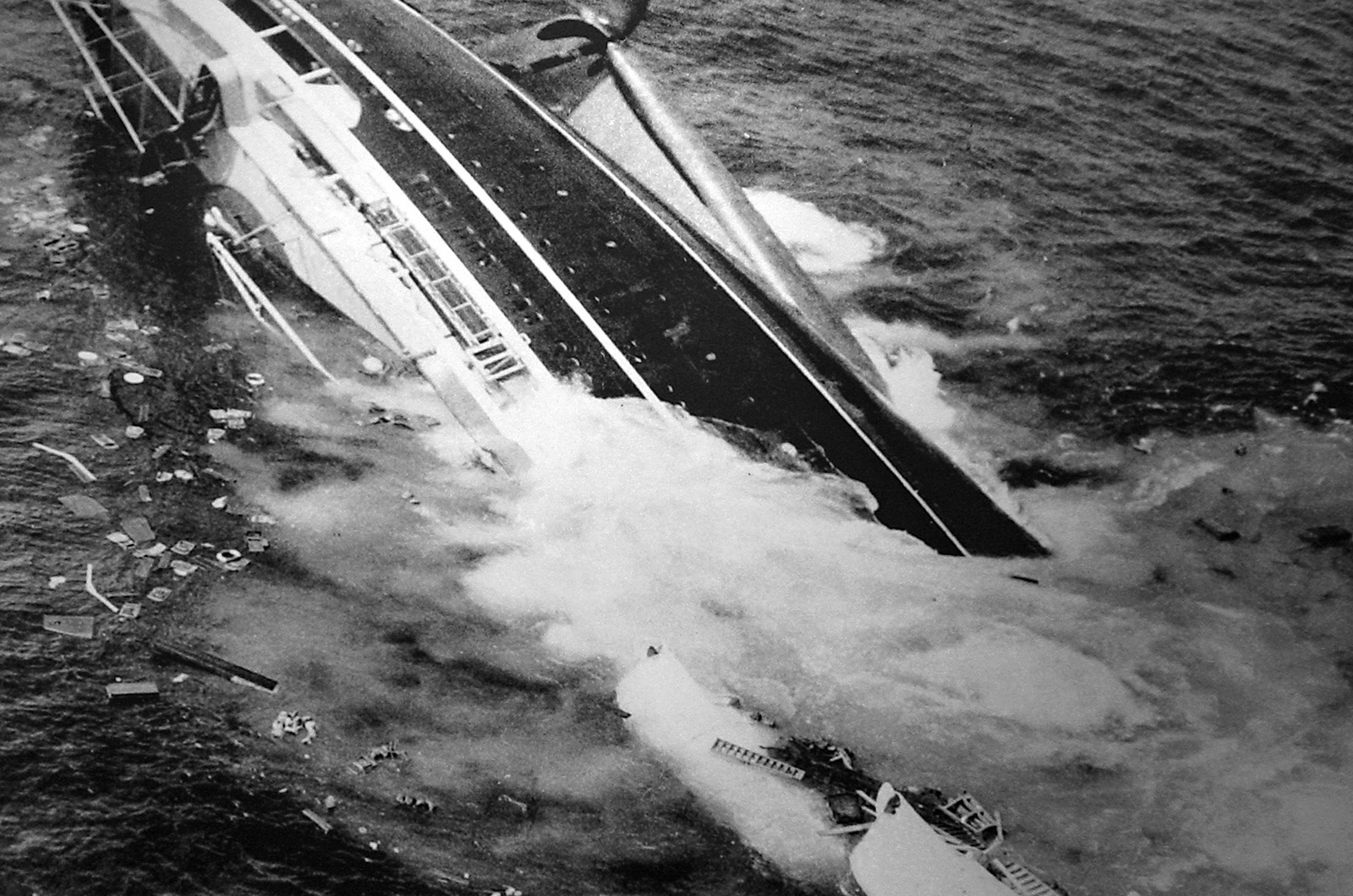
On July 26, 1956, almost exactly 70 years ago, SS Andrea Doria slipped to the depths of the Atlantic just 65 miles southeast of Martha’s Vineyard. The luxury Italian ocean liner listed and sank after a Swedish ship, MS Stockholm, plowed into its starboard side, resulting in 51 deaths.
Dense fog and human error made an unfortunate combination that day. Accounts say the ships both turned the wrong way, that the Doria was moving too fast, that visibility was abysmal. The two parent companies settled out of court and no one was ever found at fault.
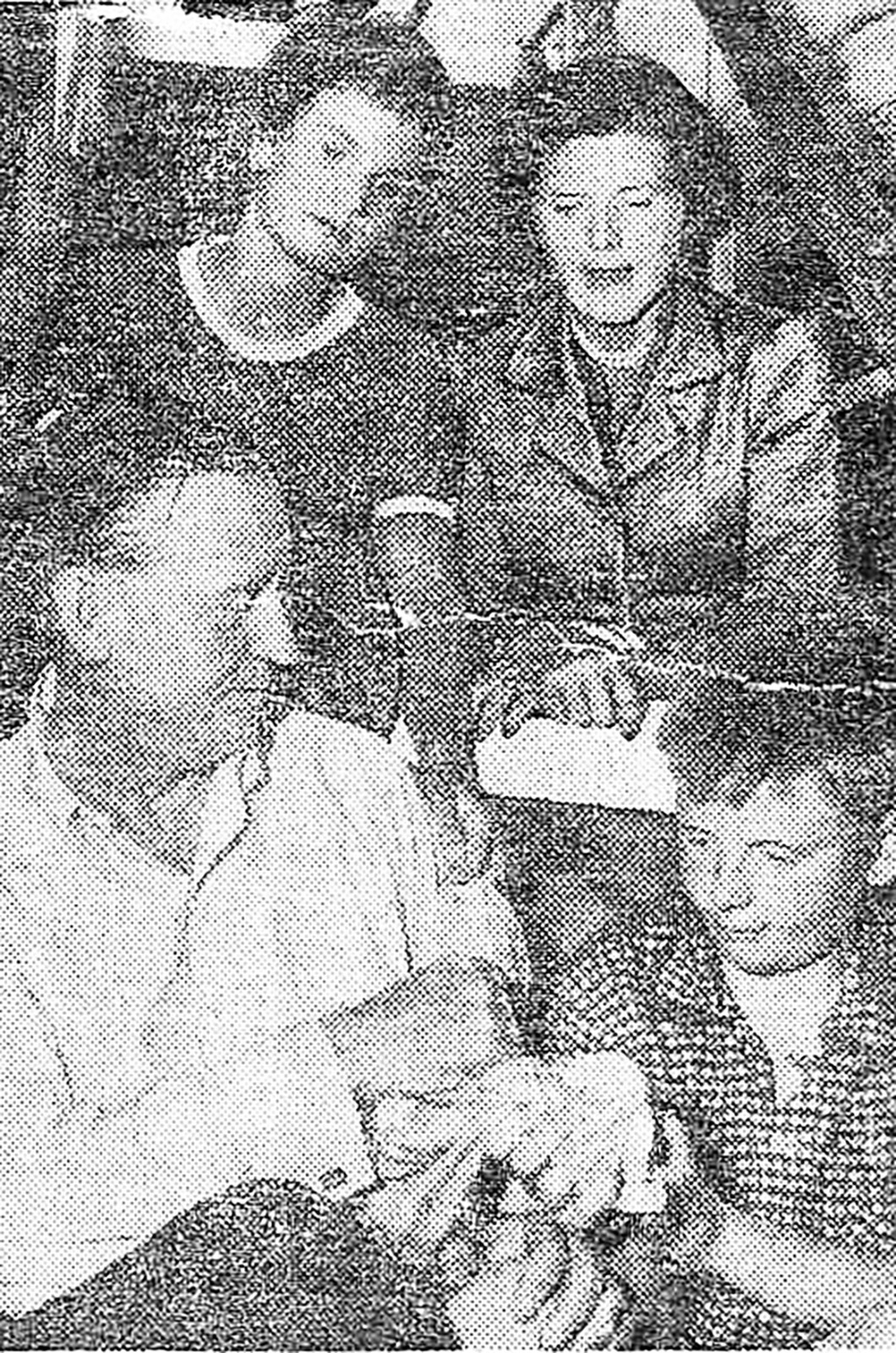
Aboard Andrea Doria, bearing witness to it all, was 12-year-old seasonal Vineyarder Robert Boggs. The 83-year-old, whose family of four survived the wreck, recalls that day with clarity — and as the experience of a lifetime.
“It was an adventure to me,” he told the Gazette in a recent interview. “I wasn’t really scared.”
Mr. Boggs, now based in Los Angeles, Calif., was raised on Long Island, N.Y. From the 1940s to the 1960s, his family owned a vacation home on the outskirts of West Chop. He recalls summers spent racing 21-foot-long sailboats and harvesting vegetables on Arrowhead Farm.
After his parents separated and sold the house, he still visited the Island frequently throughout the 1970s. His last summer here was in 1974, also the summer a then-unknown Steven Spielberg was on the Island filming Jaws. He and his partner at the time were extras in a scene left on the cutting room floor.
“I always loved the Vineyard,” he said. “I’m there in spirit.”
The Boggs family found themselves on the Andrea Doria traveling back to Long Island after a European summer vacation. Mr. Boggs’ mother and sister went shopping in Rome, while he and his father cruised around Germany in the family’s bright red Buick station wagon.
The morning of the wreck, his parents were on the deck playing bridge with two priests. His older sister was in the ballroom, dancing with a boy (“not a boyfriend yet,” insisted Mr. Boggs) she met aboard the ship.
Then, out of the nothingness came Stockholm’s icebreaker bow.
“The impact knocked them both to the floor, [they] flew across the dance floor,” he said.
As the ship began to list and groan, the crew started shouting over the loudspeakers in Italian. None of this, however, roused the young Mr. Boggs, out cold in his cabin, nursing tonsillitis with strong medication.
“I was kind of punch drunk,” he said.
His father, a Navy veteran, came soon enough to collect him. He made no effort to sugarcoat the situation to his delirious 12-year-old son.
“He said, ‘This is an 18-degree list. It’s going to sink. This ship is not going to survive,’” Mr. Boggs recalled.
From the promenade deck, he could see the cavernous hole Stockholm had gored in Doria’s starboard side. It was listing badly and the decks were slick with oil, making it difficult for passengers to hang on.
“I was looking out the window on the promenade deck, and I could see that the red bottom paint of the Doria was starting to show,” he said.
Most passengers, including his mother and sister, climbed down a rope ladder into lifeboats to be carried to safety. Mr. Boggs was lowered into the boat by a member of the crew with a rope tied around his waist. His father stayed aboard to make way for women and children.
“We all got crammed into that thing like sardines and rowed away,” he said.
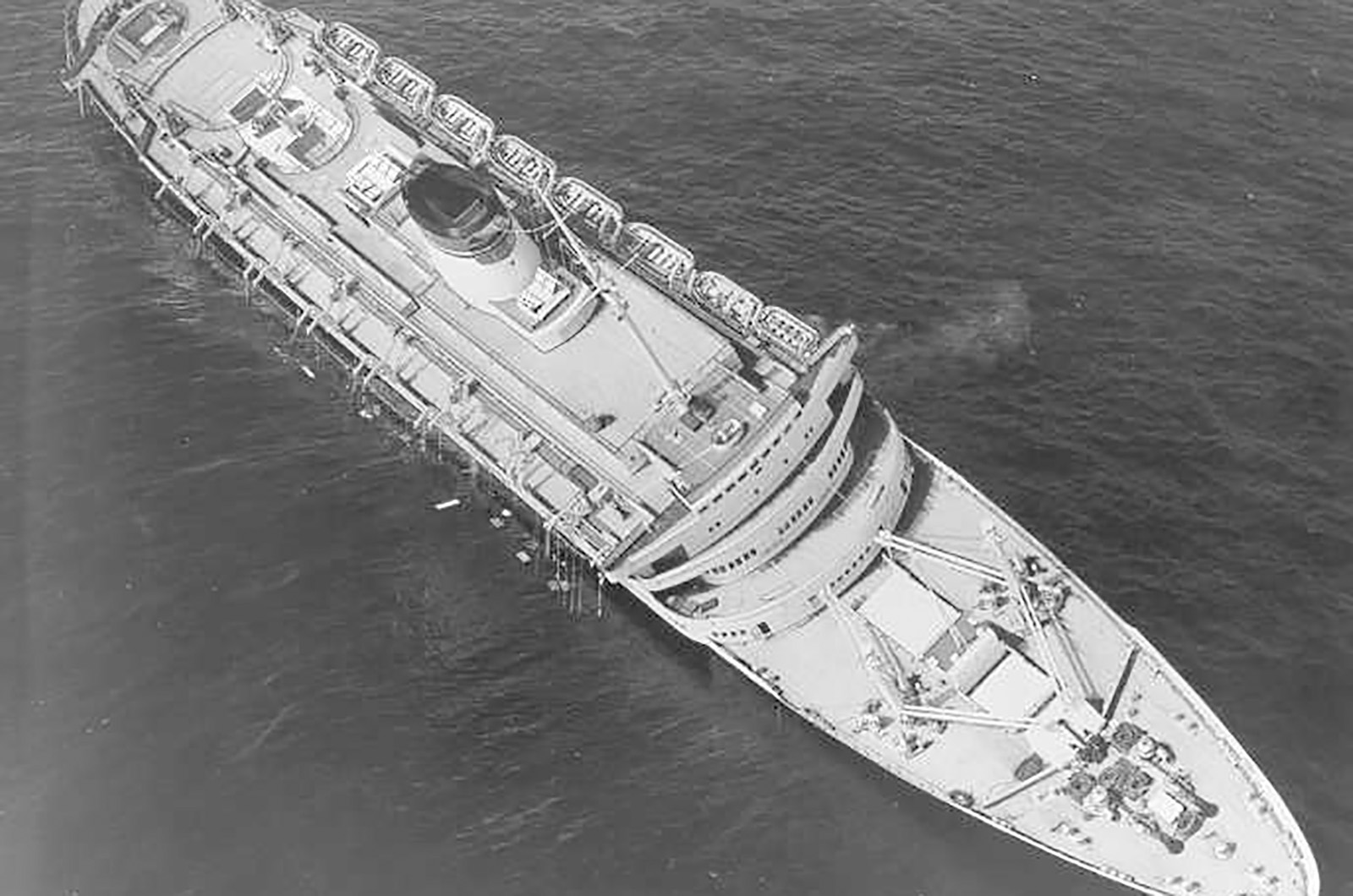
They rowed to the nearby SS Île de France, which was bound for its homeport when the crew received a call of distress from the Andrea Doria. Three years later, the Île de France would be sunk for a disaster film called The Last Voyage, but that day, it was a safe haven.
Aboard that ship were two journalists: a photographer and an editor, both from Life Magazine, the latter of whom was an acquaintance from Mr. Boggs’ mother’s youth. It had been years, and she was covered in oil, but he recognized her instantly.
“He said, ‘My God, Barbara, what have you done to your hair?’” Mr. Boggs recalled, laughing. “I couldn’t believe that’s the first thing he focused in on.”
The family reunited after making it to shore. The press snapped a photo of them, huddled and harried. All of their belongings, save for the clothes on their backs, were lost, including the family car. Mr. Boggs was decidedly all right with that.
“I remember being so glad that the thing went down with the Doria,” he said.
The following week, the Gazette sat down with Mr. Boggs’ parents, who recounted the affair.
“We didn’t stop to speak or pause to think,” his mother told the paper in 1956. “Our first thought was to get Robert out of his room, and we went down as fast as we could.”
They were struck by how little the passengers panicked. The priests they had befriended performed last rites for some and taught others how to safely jump into the water. Ms. Boggs recalled only one passenger screaming and being stifled with a slap.
“I didn’t know that I would ever want to see salt water again,” her husband said.
Public fascination with Andrea Doria was immediate and enduring. Sitting 250 feet beneath the ocean’s surface and cocooned in trawl nets, it’s known as the “Mount Everest of wreck diving.” At least 22 divers have died exploring it.
For years after the wreck, the Gazette reported extensively on the jetsam that made its way to Vineyard shores: a life jacket, an Andrea Doria mylar balloon, a handbag that was later reunited with its owner.
In 2016, the Gazette reported that OceanGate, the now-defunct underwater exploration company, sent a submersible to the Andrea Doria to explore the wreckage, stopping in Menemsha on the way. The company dissolved just six years later after a submersible headed for the Titanic wreck imploded, killing all its passengers.
Some years after the wreck, Mr. Boggs met up with Andrea Doria survivor Mike Stoller, perhaps better known for co-writing Hound Dog and Jailhouse Rock for Elvis Presley, for lunch to mark the anniversary. Their miniatures of the Andrea Doria and the Stockholm caught the eye of the maître d’hôtel, who came over to announce that his father, a firefighter, had survived the sinking of the Italian ocean liner.
“That was really amazing,” Mr. Boggs said. “I couldn’t believe that.”
These days, the ordeal hardly crosses Mr. Boggs’s mind. His mother, on the other hand, was traumatized, and she refused to board a ship for 40 years thereafter. Days after the wreck, and eager to put it behind her, she swept the family to the Vineyard. She brought them to South Beach for a picnic — an idyllic antidote to a harrowing journey home.
It wasn’t long after they set down their blanket that Andrea Doria’s deck chairs began to wash ashore.
“That was a reminder,” Mr. Boggs said.



Comments (1)
Comments
Comment policy »