

The Brazilian man who was detained by federal immigration officials while fishing off the Vineyard earlier this year left the U.S. this past weekend after a court signed off on his removal order.
Rogerio da Silva Lima flew back to Brazil this past weekend, according to his attorney Amelia Ritenour. Mr. da Silva Lima’s case drew national attention and spurred protests after he and his teenage son were taken into custody while they were in a boat fishing off Menemsha in May.
Mr. da Silva Lima had hoped to stay in the U.S. with his son, Nycolas Al Varenga Lima, but he left on a flight to comply with the removal order, Ms. Ritenour said.
“He got to leave on his own terms, not in shackles, not on a deportation flight,” his attorney told the Gazette Tuesday. “It’s a win, not a great win or the one people would have wanted, but he got to leave with his dignity and that’s the best we can ask for in this horrible situation.”
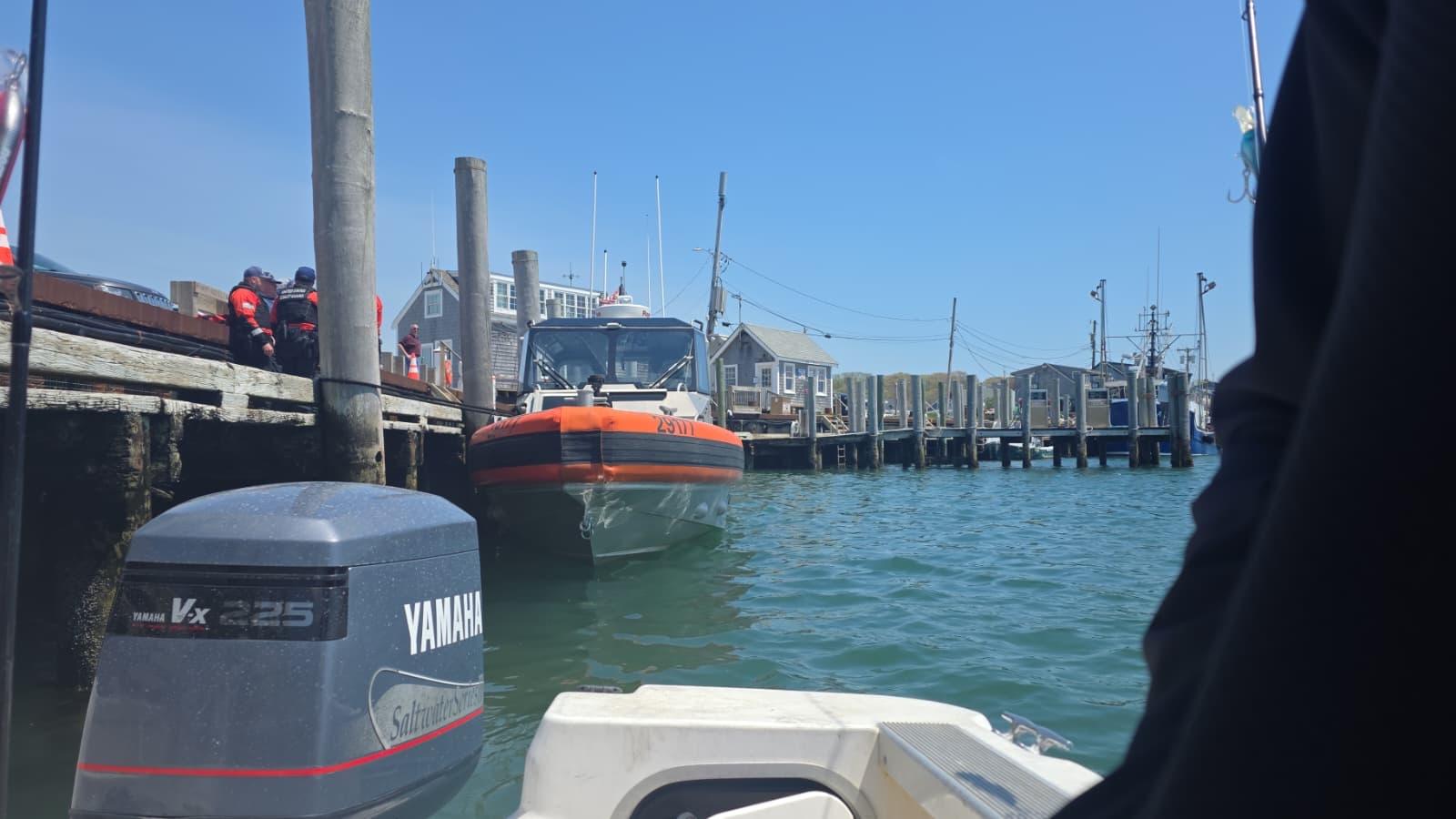
The father and son had been living on the Vineyard, with Mr. da Silva Lima working in the trades and the son, 15, attending the regional high school. They were fishing with a friend in a boat off Menemsha on May 18, when the U.S. Coast Guard approached them.
The Coast Guard said that the agency had received a report of a vessel in distress and had motored over from the Chilmark station to check in on the boaters. When the Coast Guard arrived, officers found the fishermen were doing fine, but the boat lacked the required state registration number.
Without a registration sticker, the Coast Guard checked to see if anyone on the boat had warrants out for their arrest. Mr. da Silva Lima had a warrant for inadmissibility, and Coast Guard detained him and transferred him to Immigration and Customs Enforcement (ICE) custody in Woods Hole.
Instead of separating the father and son, the Coast Guard decided to bring Nycolas with them and transfer him over to ICE as well, officers told the Gazette.
Many Islanders, including Mr. da Silva Lima’s boss, and the Martha’s Vineyard chapter of LUCE, an immigration rights organization, rallied around the father and son and helped them secure Ms. Ritenour to represent the family in court.
After a private donor covered the fees to file a habeas corpus petition in U.S. District Court in Boston, a judge granted the petition, allowing the family to temporarily stay in Massachusetts.
Both Mr. da Silva Lima and Nycolas were later released from ICE custody, but Mr. da Silva Lima was aware that he likely would not be able to stay in the U.S. due to his past removal order.
Mr. da Silva Lima’s brush with immigration officials started soon after he arrived in the U.S. from Brazil in 2021. At the time, he was released by the government while he appealed for asylum. That request was rejected by the board of immigration appeals in 2024, which should have kicked off a 90-day statutory removal process where he could have been detained.
But the federal government, led by the Biden administration, never carried out that process, leaving his case in a legally gray area.
At a hearing in May, a federal judge ruled that because the government did not follow its own procedures, officials were not allowed to arrest him and hold him in custody.
“DHS didn’t do what they were supposed to do and put the person in custody in [2024],” Judge Indira Talwani said at the time. “So to say, well, now we get to do it and put them in custody ignores what Congress says [how] it’s all supposed to work.”
But the judge also made it clear that Mr. da Silva Lima would not be able to stay for the long term.
“This is not an open invitation for Mr. da Silva Lima to get to stay here,” Judge Talwani said. “Whatever is happening between now and when he is removed, it’s not being spent in detention if there’s no need – at taxpayers’ expense – to do that.”
In late July, the U.S. Attorney’s Office asked to remove Mr. da Silva Lima, potentially on a flight in August. On August 21, the court allowed the process to proceed and he was booked on an available flight to Brazil.
Alexis Moreis, a tribal council member of the Wampanoag Tribe of Chappaquiddick and friend of the family, said she has watched Rogerio spend every day of his time back on the Island providing for and preparing for Nycolas to be separated.
“Nycolas will continue to be educated here,” Ms. Moreis told the Gazette. “Myself and the Wampanoag community are grateful to everyone who helped Rogerio and Nycolas and hope we keep taking care of all [in the] Island community.”
Ms. Moreis criticized the Trump administration for the way it has carried out deportations.
“The current administration is cruel and targeting families, not criminals,” she said. “The Island is now one amongst thousands of communities devastated by this country’s systemic abuses against immigrants’ rights under the constitution.”
Ms. Ritenour said Mr. da Silva Lima would like to move back to the U.S. at some point, but it will likely not be in the near future.
“It’s not impossible, but it’s not super likely,” she said. “We knew this was never going to be about keeping him in the United States for the long-term. It’s the outcome we expected and at least save [the family] some of the trauma.”
Mr. da Silva Lima and his son’s cases are rarities for immigration attorneys, but Ms. Ritenour said she believed more and more cases like them would appear before judges in the coming years because of the change in priorities between the Biden and Trump administrations.
ICE was more lax on enforcement in previous years, meaning many people who had removal orders were never taken out of the country, she said. While those immigrants are supposed to be put under supervision while they remain in the U.S., the Department of Homeland Security often opted to not do that.
Under the Trump administration, which has been aggressive in its immigration enforcement, ICE has arrested those people who had been awaiting action from the federal government. ICE has detained them despite that being against the stated procedures, according to Ms. Ritenour.
“I think they are a good example of what we expect to see a lot of in the future — people with years-old orders being grabbed and trying to be removed,” she said.






Comments (1)
Comments
Comment policy »