
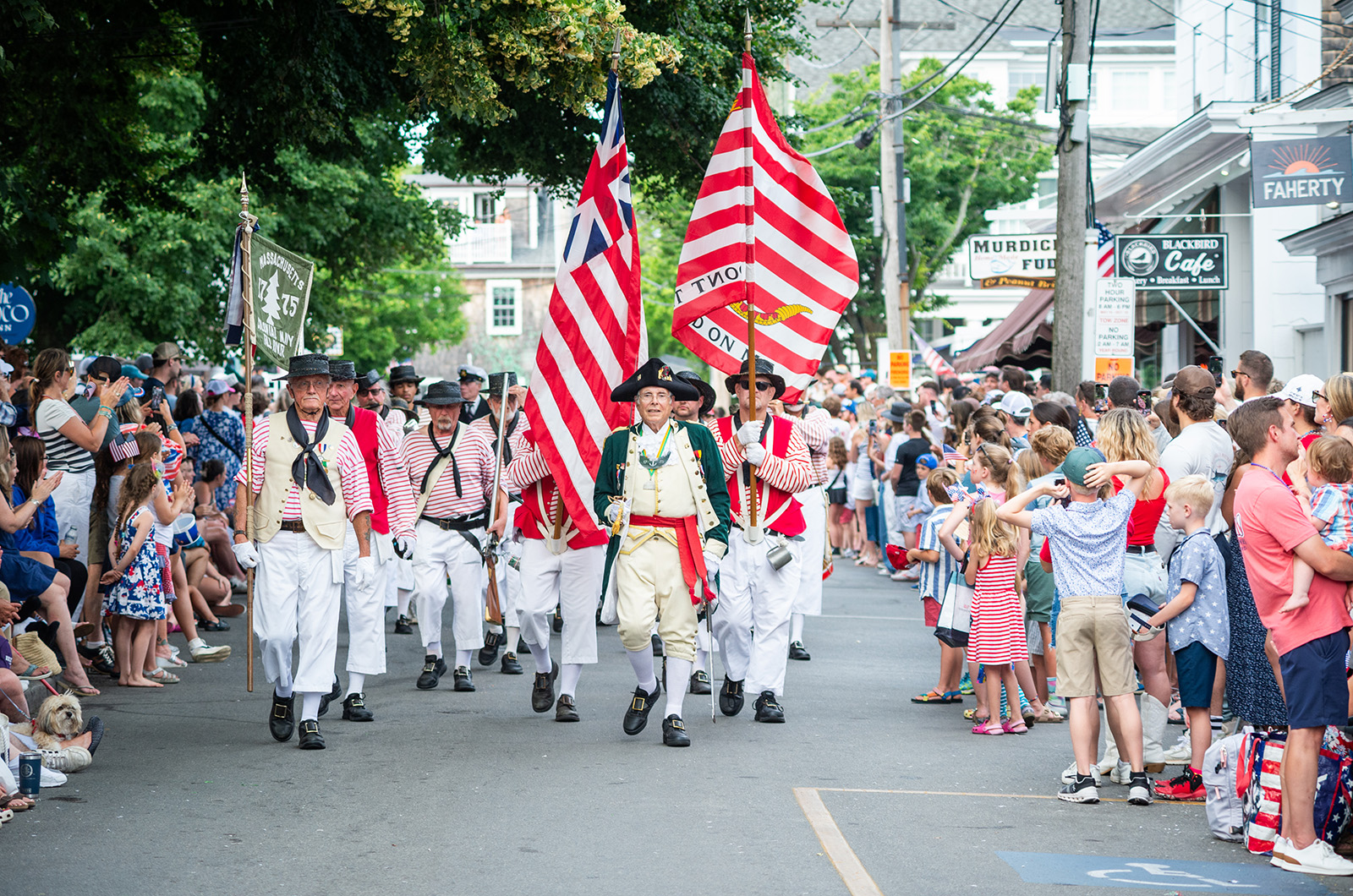
On July 4, 1776, exactly 250 years ago, the 13 American colonies declared independence from British rule, and Martha’s Vineyard, being part of the Massachusetts Bay Colony, was making its investment in the ongoing American Revolution known. Though the Island would be forced into submission two years later by the British in an economically devastating attack called Grey’s Raid, Islanders had convictions, and some were trying to make their mark on the war — or at least strike it rich.
But the Revolution was just one piece of Vineyard life in 1776. The Island’s Wampanoag tribes were contending with British colonists’ infringement on their land, culture and personhood. Slavery, not yet outlawed in Massachusetts, persisted. And physical separation from the mainland, paired with a material reliance on it, created economic complexity.
To Island historian Norah Van Riper, questions of freedom and independence — and what it might eventually mean to be an American — were central not just to the Vineyard’s stake in the Revolution, but just about every aspect of Island life 250 years ago.
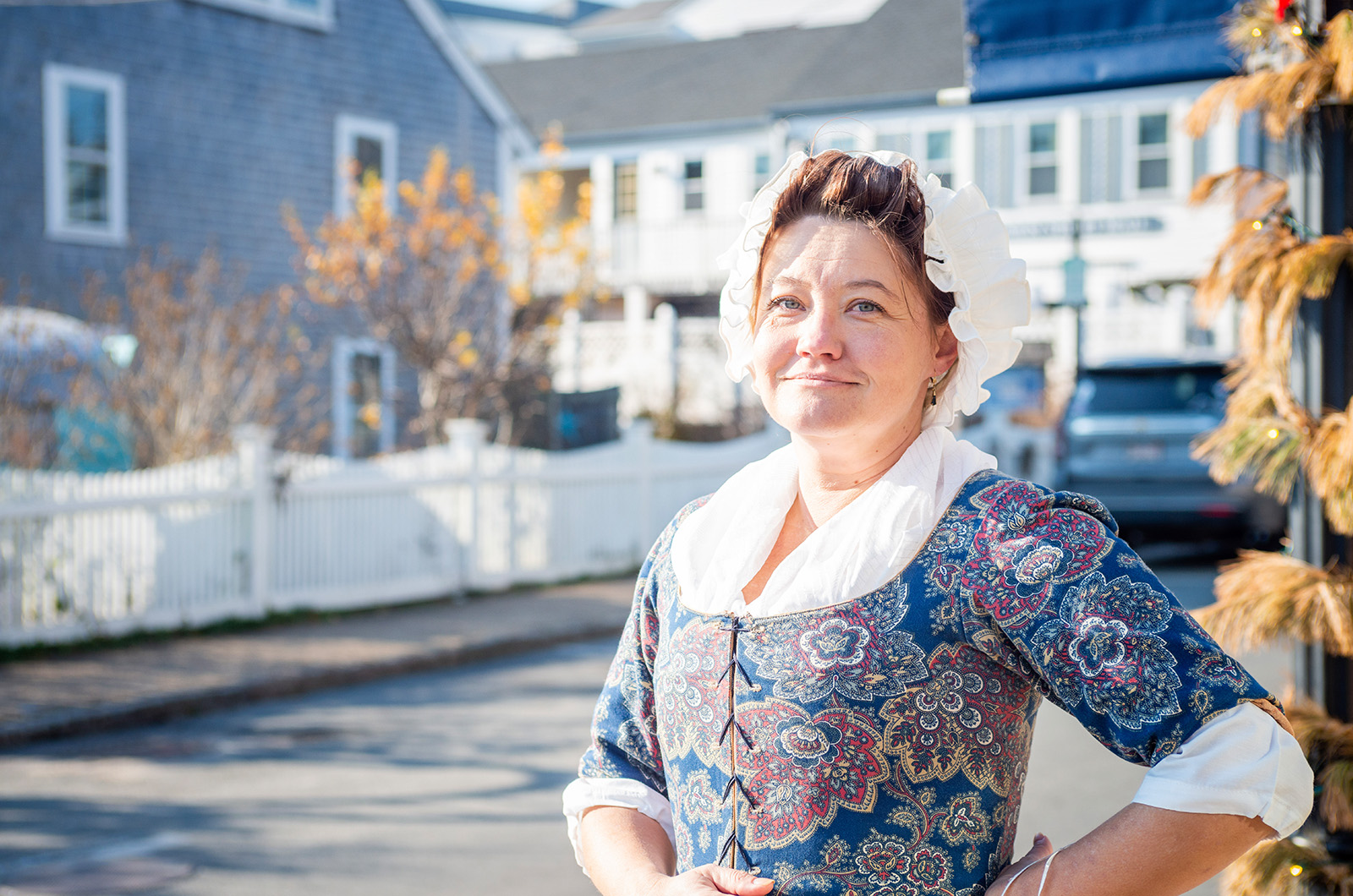
“What does independence mean? What does freedom and liberty mean?” asked Ms. Van Riper in a recent Gazette interview in Edgartown at the Vincent House Museum, in a room furnished to look like an Island tavern in 1776. “What does it look like? Who’s entitled to it?”
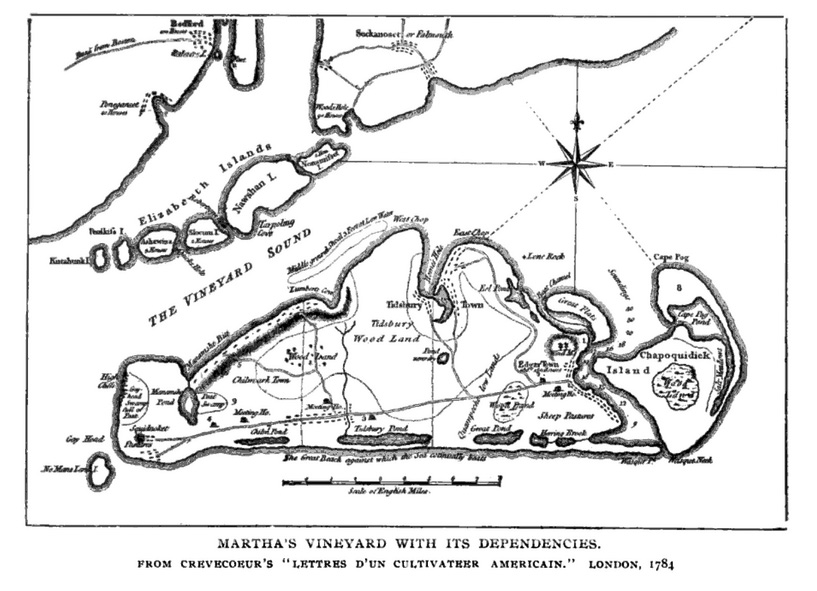
The story of 1776 on the Vineyard begins with an Island composed of three incorporated towns: Edgartown, Tisbury and Chilmark. Among them, according to Charles Banks’ History of Martha’s Vineyard, were 2,822 people, 59 of whom were people of color, not accounting for the Wampanoag population. Bow Van Riper, historian and research librarian at the Martha’s Vineyard Museum and husband to Ms. Van Riper, estimates that there were 3,000 British settlers, 300 Wampanoag people and 30 African Americans on the Island at the time.
Back then, daily life and commerce on the Island revolved not around towns, but around the villages within them. One was not from Tisbury so much as they were from, say, Holmes Hole (now Vineyard Haven) or Lambert’s Cove. Economically, the Vineyard generated plenty of goods. The main industries were rearing sheep for wool and harvesting sea salt, but everyone farmed, fished and scalloped.
But many daily necessities, like wheat, could only be sourced off-Island, which made a relationship with the mainland vital.
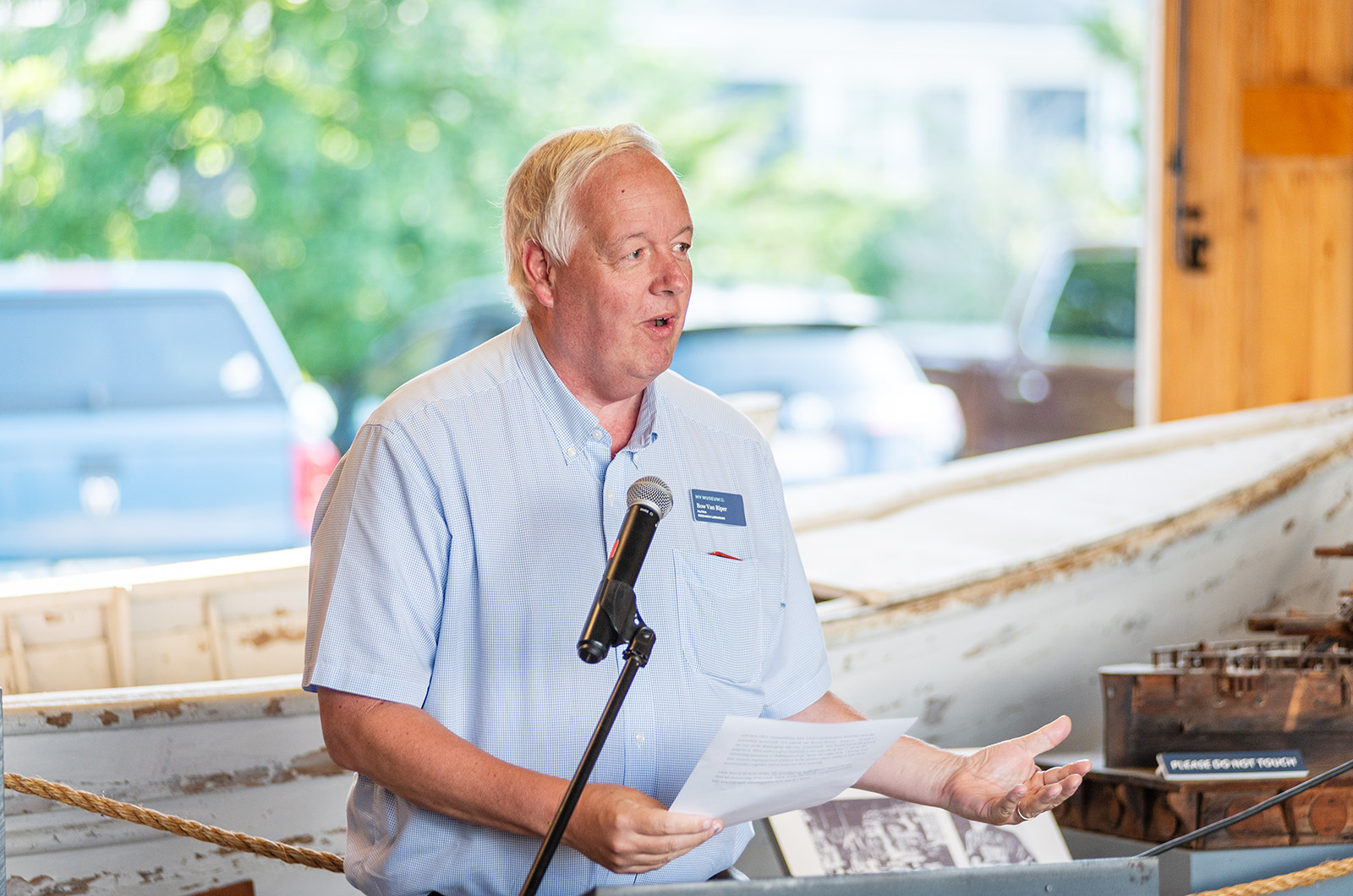
“Contrary to a lot of swoopy romantic sentiments about the old days, when everyone was self-sufficient... the Vineyard was, even in 1776, dependent on the mainland,” said Mr. Van Riper.
The Vineyard’s geographic location and deep-water ports meant it was easy to engage in the maritime economy and with the news of the world. The Island, according to Mr. Van Riper, was quite cosmopolitan, with access to fancy textiles and exotic food and drink, like coconuts and rum.
By the same token, the Vineyard Sound, for better or worse, created distance between the Island and everything else.
“Then as now, the water acts both as a barrier that to some degree isolates the Vineyard from the rest of the world, and a highway that connects the Vineyard to the rest of the world,” he said.
At war with Britain, the protections and vulnerabilities of Island life came fully into view.
In the early years of Revolution, British forces would regularly dock in the Island’s ports and demand supplies, leaving Islanders little choice but to comply. The Island’s small size of less than 4,000 meant it couldn’t adequately defend itself from the British on its own. In 1775, Vineyarders appealed to the Massachusetts provincial government for help that came in the form of the Seacoast Defense Company, two infantries that stood guard to protect against raids from the British.
But Vineyarders were skilled on the water, and the thieving went both ways. Island privateers would make a killing seizing goods from British ships anchored or run aground, sometimes taking the captains back to the Island with them for political leverage.
In 1776, the Seacoast Defense Company captured the British merchant ship Herriot, carrying supplies to troops in Boston, while it was anchored off Cape Pogue. The following month, Seacoast Defensemen captured the British schooner Valente and two British officials.
Arthur Railton, author of The History of Martha’s Vineyard, wrote that privateering was often less a political statement than pure opportunism.
“Privateering was profitable, legal or illegal,” Mr. Railton wrote. “The Herriot capture was piracy, nothing more. The men involved were just an excited bunch of men eager for profit.”
But in 1776 and the surrounding years, there was plenty of overt political activity on the Vineyard in response to the Revolution.
Like most places, there was a mixture on the Vineyard of loyalists, who favored British rule, and rebels. Most, per Mr. Van Riper’s estimation, fell somewhere in the middle, but navigating the political terrain of the time required some social savvy.
“If you run the general store and you’re a tub-thumping loyalist, your rebel-sympathizing customers are going to take their business someplace else, and so maybe you keep your thoughts to yourself,” he said.
One of the most famous stories of Island rebellion starts two years prior to the Declaration of Independence, in 1774, when rebel Islanders erected a liberty pole on Manter’s Hill in Holmes Hole with tea buried at the base in protest of British rule. After some British sailors tried to take the liberty pole in 1778 to replace their ship’s broken mast, three young women bore holes in its base under cover of night, filled them with gunpowder and lit the pole ablaze. Some say they damaged it just enough to render it useless, others say they blew it to bits.
While the Vineyard engaged in naval skirmishes and symbolic demonstrations of rebellion, no one died in the Revolution on Vineyard soil, with one notable exception. In 1777, a shootout with British forces on Squibnocket killed Sharper Michael, an African American man born into slavery in Chilmark.
According to historian Elaine Weintraub, co-founder of the Martha’s Vineyard African American Heritage trail, history has not provided enough clues to fully illuminate Mr. Michael’s side of the story.
“Was [Mr. Michael] just in the wrong place at the wrong time, or was he leading resistance against the British invasion?” Ms. Weintraub asked. “I don’t know.”
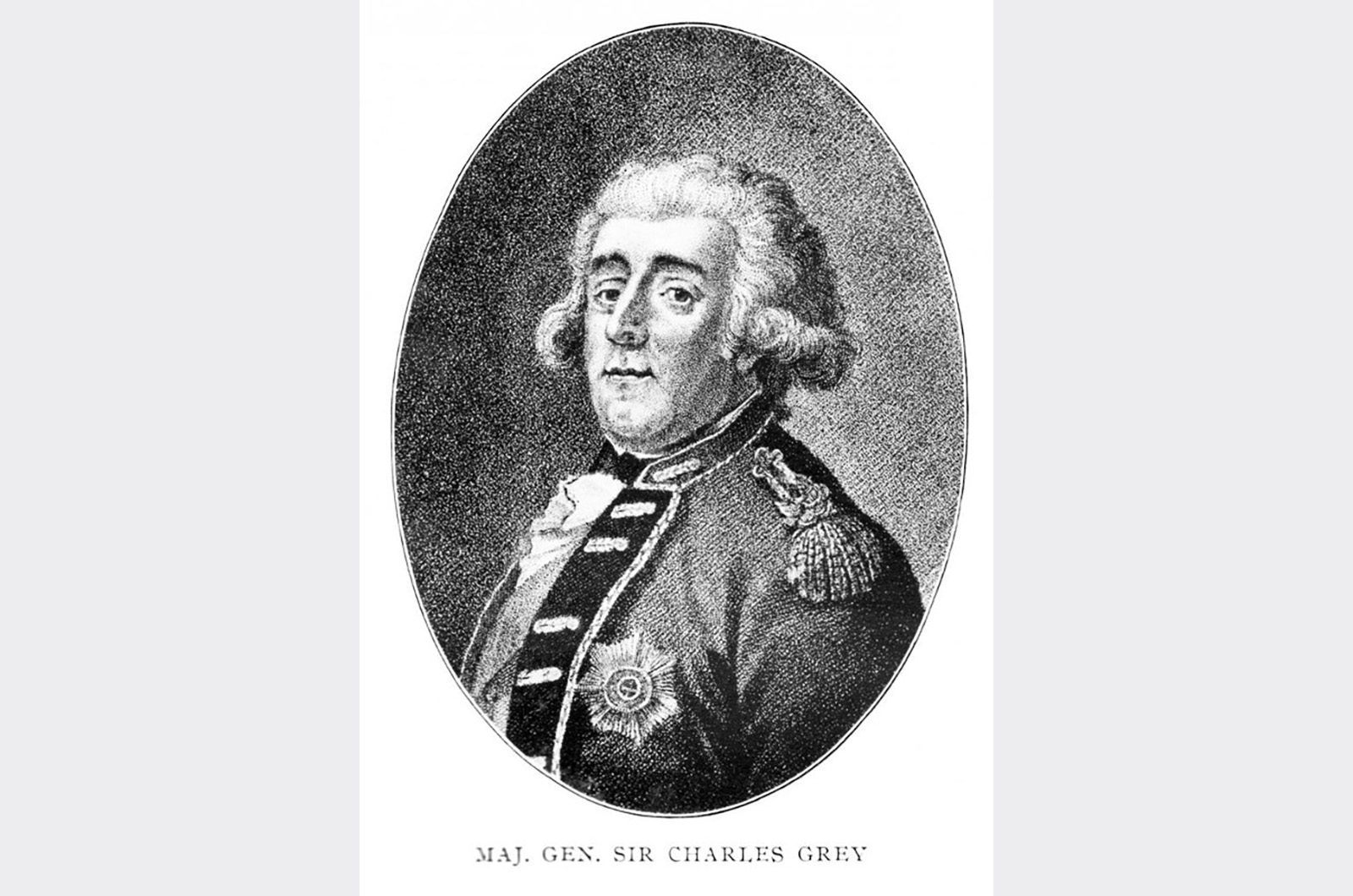
But Grey’s Raid forced the Vineyard to submit to neutrality the following year. British General Charles Grey raided the Island with 4,000 soldiers in 1778, taking over 10,000 sheep and other livestock, while also destroying and pillaging crops, salt-harvesting tools and schooners used for privateering.
Though Mr. Van Riper compared the Vineyard’s tactical impact on the British to “mosquito bites on a human,” he said it was enough of a drain on resources that Britain wanted to put a stop to it.
And it unequivocally worked, said Ms. Van Riper.
“That was a huge, huge dent in our economy,” Ms. Van Riper said. “It was all designed really to force us to cease our rebellious activities.”
While 1776 and the surrounding years may be most associated with the early years of Revolution, war with Britain was far from the only source of tension on the Island.
Slavery was ongoing, according to Ms. Weintraub. In 1779, seven-year-old Nancy Michael was sold to Joseph Allen of Tisbury, which indicates that the Island’s Black population in 1776 was a mixture of individuals both enslaved and recently freed or escaped from enslavement.
“The Island itself was part of a slave-holding economy, and enslavement did exist here, which is documented,” she said.
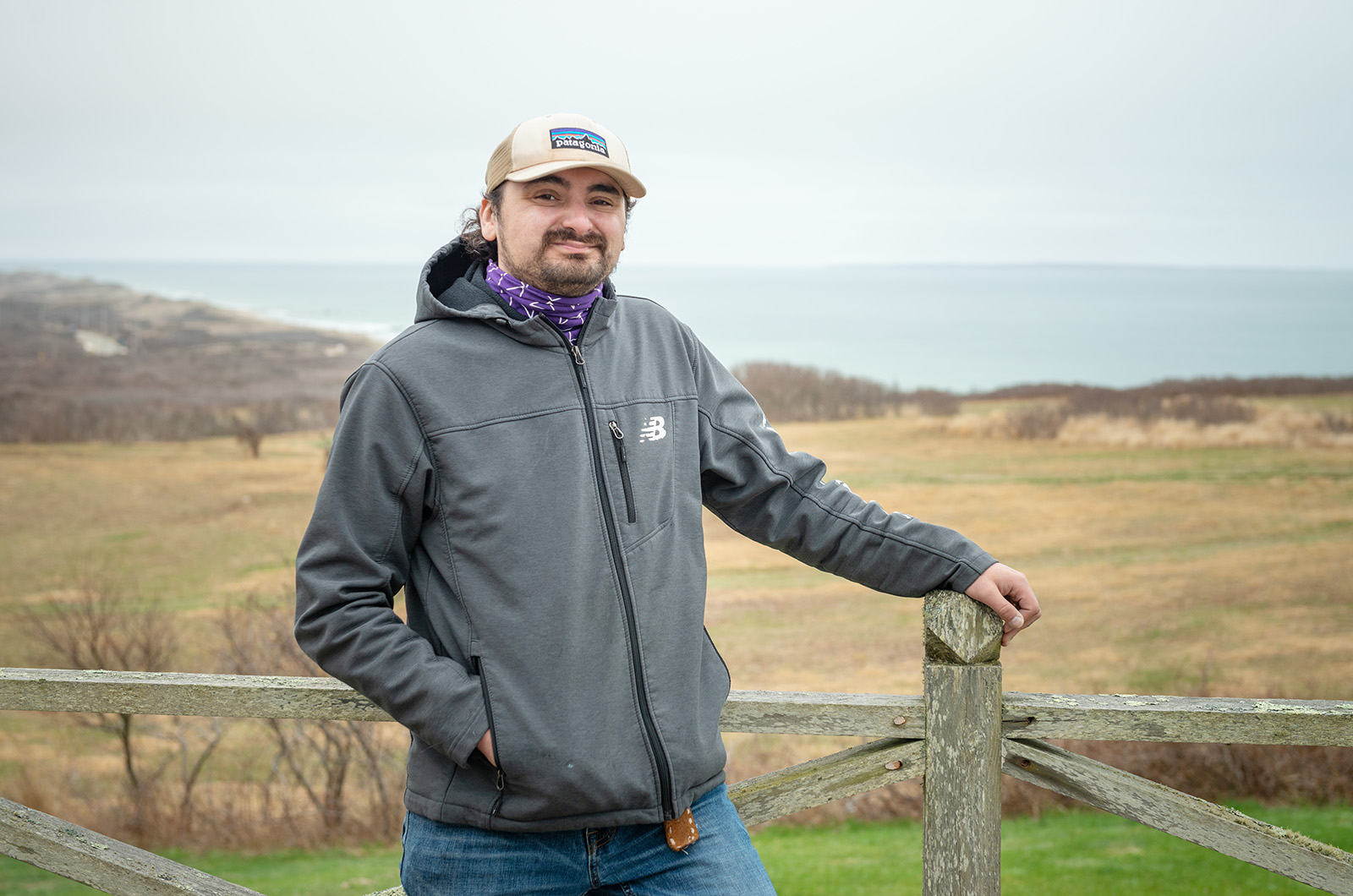
Meanwhile, the Island’s Wampanoag people were grappling with the cultural and material effects of colonization, said Brad Lopes, member of the Wampanoag Tribe of Gay Head (Aquinnah) and education and public program manager for the Aquinnah Cultural Center.
“It’s hard to fully understand or fully embrace exactly what some of our folks, our ancestors, are thinking about at that particular time,” Mr. Lopes said. “But there are some clues.”
When colonists came to what today is America, Indigenous populations all over were seriously impacted by epidemics from unfamiliar illnesses from abroad. In her book Colonization and the Wampanoag Story, Wampanoag Tribe of Gay Head (Aquinnah) council member and historian Linda Coombs writes that deaths caused by tribal epidemics enabled colonizers to seize native land and hold onto it.
In 1776, the Vineyard’s Wampanoag population was just a decade out from the last epidemic. The different Wampanoag tribal communities — concentrated in Aquinnah, Chappaquiddick, Christiantown and Deep Bottom — were fighting an uphill battle to hold onto their autonomy and their ancestral lands.
The tribes were subject at this time to a colonial guardianship system that made them wards of the state, infringing on their agency. And land ownership, as British colonists understood the concept, was incompatible with thousands of years of Wampanoag life.
While the colonists were enamored with John Locke, who declared private property a natural right, Mr. Lopes explained that the tribe saw land as more of a community resource. A surviving 1776 petition from members of the Wampanoag Tribe of Gay Head (Aquinnah) calls on the Massachusetts Bay Colony House of Representatives to acknowledge this and help the tribe retain the use of its land, despite the new encroaching colonial system.
“It’s not that they might not have been thought of [by Indigenous communities]. I think they probably were thought of,” Mr. Lopes said of colonial land ownership ideals. “It’s just that they’re not valued, they have no place. That’s not how we are.”
Tribal members were disadvantaged in the emergent colonial legal system, run by, for and in favor of colonists. But Mr. Lopes said they found modes of resistance by working within the system imposed by colonizers to protect what rights they had left to their native land. Surviving land deeds from a century before the Revolution, written in Wôpanâak and exchanged between tribal members, confirm this.
“These deeds are very reflective of traditional kinship networks,” he said.
During the 1770s, the Wampanoag Tribe of Gay Head (Aquinnah) was also still engaged in the fight to reclaim Aquinnah lands seized by a group of British missionaries, called the New England Company, earlier in the 18th century. Meanwhile, some Aquinnah Wampanoag tribal members, according to Mr. Lopes, left for the mainland to fight in the Revolution.
“Many people either did not return or did not receive a pension afterwards, which is unfortunately just the case with many native people,” he said.
For colonizers descended from the English, the signing of the Declaration of Independence in 1776 was a critical moment of American self-actualization, when freedom was in sight. But to Mr. Lopes, this moment is but a blip in the tribe’s 12,000-year history that didn’t yield much freedom at all.
“I think ultimately, it was a moment of failed promises,” he said. “One of the things that the American Revolution has reinforced for Wampanoag people is that we’ve been promised so many things [by] non-native people. But at the end of the day, words are wind, and those things were never delivered.”
The story of 1776 on the Vineyard — or anywhere in the country, for that matter — is not easily pieced together, said Island historians. Most surviving documents are from a white, male, colonial perspective, distorting the lens through which one is able to understand the events of the past.
Ms. Weintraub said this especially obscures our window into the lives of the most marginalized.
“Sometimes, history has been moved around to make everybody feel comfortable, but life isn’t like that,” she said.
But what we do know, said Ms. Van Riper, is that the issues of 250 years ago bear striking resemblance, at their core, to the issues of today.
“One of the things that struck me... is just how much the same we are today as they were when we declared independence in 1776,” she said. “These stories keep repeating themselves.”





Comments (3)
Comments
Comment policy »