
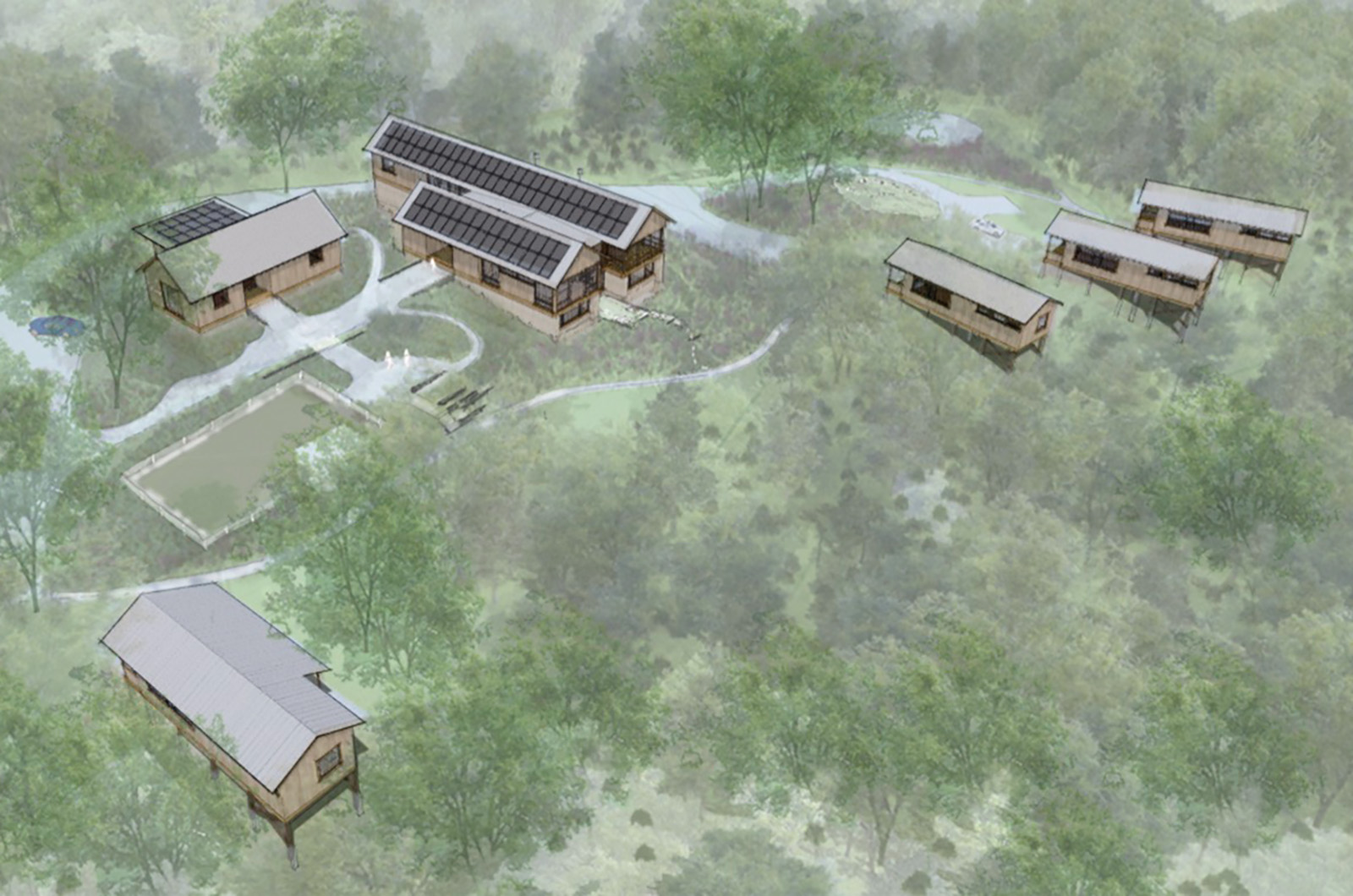
Kinship Heals unveiled plans last week to build a domestic violence shelter and food pantry in Aquinnah for the Island’s tribal community.
The nonprofit came before the Martha’s Vineyard Commission last Thursday to pitch the proposal, which would be the state’s first Native American-run shelter, for a 7.7-acre property along State Road. The project, known as Aquinnah Headwaters, would include a 4,160 square foot healing center, a food hub with a commercial kitchen and four residence buildings.
Kinship Heals has been focused on ending sexual assault, stalking and sex trafficking in Native communities by providing support services since 2020. The group hopes the new campus will help continue its traditional practices in a modern context.
“Aquinnah Headwaters is a space where we’ll be able to not just provide housing, crisis intervention and healing, but it will also be the space where we can provide education, prevention and long-term development for safety,” Jennifer Randolph, the executive director of Kinship Heals, told the commission at the July 9 hearing. “Aquinnah Headwaters is a critical link between services we offer and the continued healing that we can help bring to the tribal community.”
The project was referred by the town to the Islandwide planning agency for being a large commercial development, among several other triggers. It would also need approvals from the town planning board, board of health, conservation commission and Mass Wildlife.
The Martha’s Vineyard Commission also listened to some of the building details from Matt Coffey, an architect with South Mountain Company who was hired by Aquinnah Headwaters.
Kinship Heals purchased the land in 2023. Prior to that, the undeveloped land had been permitted for a 14-bedroom septic system. The buildings are orientated to the east toward the rising sun. Mr. Coffey said Kinship Heals plans for a garden, food forest, a ceremonial gathering space and a playground.
The food hub would be 1,780 square feet, and be built next to the healing center. On the other side of the center would be three one-bedroom dwellings for guests. A fourth one-bedroom building for a manager would be on the far side of the property.
The food pantry would be open to all Aquinnah residents in need while the shelter would be only available to Wampanoag tribal members and other Native Americans, according to Mr. Coffey.
Having this sort of facility available is crucial, Ms. Randolph said, because three out of five Native women experience violence in their lifetime. Ms. Randolph herself moved to the Island to flee a violent relationship in her 20s, she told commissioners.
“It was being in my tribal community and my culture and spiritual practices, that were traditional to our Wampanoag ways, that provided me a safe space and a way to heal and grow,” she said.
The name for the project stems from the association as a place of restoration and healing, as well as the property’s location along a high ridge line and the surrounding watershed, according to Mr. Coffey.
In keeping with that ideal, the buildings will have low-flow water fixtures, drought tolerant plantings and solar panels.
Aquinnah Headwaters met with abutters at a meeting earlier this year, and has the backing of the Wampanoag Tribe of Gay Head (Aquinnah), which gave a significant grant donation to the project, Mr. Coffey said.
Designs were slightly altered to give neighbors more of a buffer, though neighbor Tony Shaw raised some concerns about the distance from his home.
“We very much appreciate the work that Kinship Heals does, and we’re very much in support of their proposed development of a safe living facility,” Mr. Shaw said at last week’s hearing. “The overall scope and some of the siting of the development is a concern to us.”
Commissioners encouraged Aquinnah Headwaters to continue conversations with its neighbors about what can be done as the permitting moves forward.
No decision was made and the public hearing was continued to July 16.




Comments
Comment policy »