
Pick your poison — or, better yet, leave it alone.
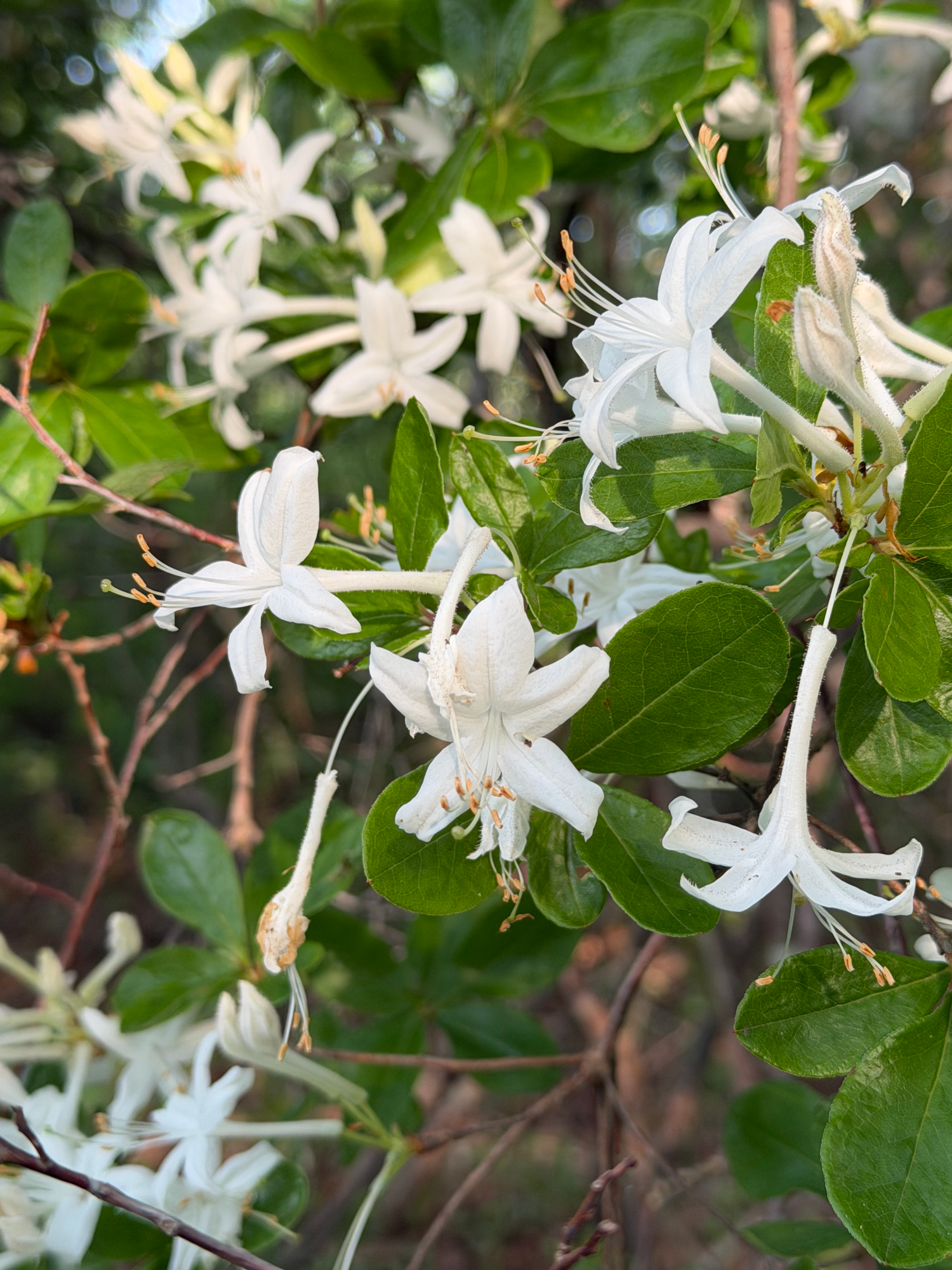
With swamp azalea, a harvest could be hazardous and even deadly. Swamp azalea tempts with a seductive scent, one that can be detected even before you see the plant. Think honey, clove and citrus carried on the winds enticing you like a botanical siren.
A walk in Island wetlands or swampy area holds out the promise of discovering this decidedly un-delicious shrub and its white (or sometimes pink) flowers. Wildlife of many types are drawn to swamp azalea.
Birds, including common yellowthroats, prairie warblers, swallows, robins and catbirds, will use its multiple branches for nests. Long tongued bees and even short tongued bees will drink nectar out of its tubular flowers, the latter piercing the bottom of the tube to make up for its less than long tongue and access the sweet syrup. Hummingbirds and swallowtail butterflies will also lap up swamp azalea’s liquids.
Humans, however, should take care and resist its allure. Consumption of all parts of the plant are toxic to people and to pets. With flowers reminiscent of honeysuckle, children might mistake the plant and suck its juices as they would with honeysuckles. Another error for kids and adults would be using the sticks to roast marshmallows.
Nor should the fragrant flowers be employed as a pretty dessert decoration or salad garnish. Leaves, fresh or dried in arrangements, potpourri or other concoctions, can be problematic for pets or our own inadvertent ingestion.
There is another pathway that might really make one mad, and it is a honey trap. Honey that is produced by bees that forage mostly or exclusively on azaleas can result in a product that can trigger illness and even fatality.
So-called mad honey has been harming humans intentionally and accidentally throughout history. One account by Greek military leader Xenophon explains, “The number of bee-hives was extraordinary, and all the soldiers that ate of the combs, lost their senses, vomited and were affected with purging, and none of them were able to stand upright; such as had eaten only a little were like men greatly intoxicated, and such as had eaten much were like mad-men, and some like persons at the point of death.
“They lay upon the ground, in consequence, in great numbers, as if there had been a defeat; and there was general dejection. The next day no one of them was found dead; and they recovered their senses about the same hour that they had lost them on the preceding day; and on the third and fourth days they got up as if having taken a physic.”
Closer to home and in modern times, mad honey has shown up in Appalachia and in New Jersey and Pennsylvania, sometimes added to liquor intentionally for a more “pleasant inebriation,” that reportedly can turn “ferocious.” Other medicinal uses of mad honey have been documented, as it was believed to cure insanity, epilepsy, and impotence. Mad honey also has traditional and spiritual uses in other parts of the world, but can be a risky endeavor for those not knowledgeable enough in its employ.
The compound that causes these concerns is grayanotoxin, a chemical that disrupts the nervous system and heart. It can take as little as 20 minutes or up to two hours to feel the toxin’s effects. With the availability of medical treatment, death from this poisoning is now rare, but who wants to go through the symptoms those aforementioned soldiers experienced?
Don’t let a walk in the woodlands turn terminal. Inhale the scents, enjoy the sights and observe the wildlife on and off swamp azalea, but resist the urge to consume this powerful and persuasive plant. It can as quickly ail you, even as it entices.
Suzan Bellincampi is director of the Felix Neck Wildlife Sanctuary in Edgartown, and author of Martha’s Vineyard: A Field Guide to Island Nature and The Nature of Martha’s Vineyard.



Comments
Comment policy »