
Queen Berenice’s romantic romps were well documented.
According to a variety of sources, she was a royal who lived and loved during the early Roman Empire. Berenice had at least three marriages and a couple of rumored affairs. Wed as a young teenager, the first marriage was over before it was even consummated due to her husband’s death. The second, a coupling with her uncle, produced two children before he died and left her a widow at 20 years old. The third marriage ended when Berenice decided to go her own way.
Her way was back to her brother, with whom she was rumored to have had affairs with during the interludes of each of her marriages. True or not, she eventually left his home for a new beau, Titus, who became Emperor and provided her with power and wealth before eventually casting her off.
Was it Berenice’s beauty, strength or regal standing that led to a dragonfly being named for her? Was it coincidence that this powerful and self-determining woman and insect share the same name? Was the insect named after another Berenice? We will never know, but can only wonder why a dragonfly shares a name that means “bearer of victory.”
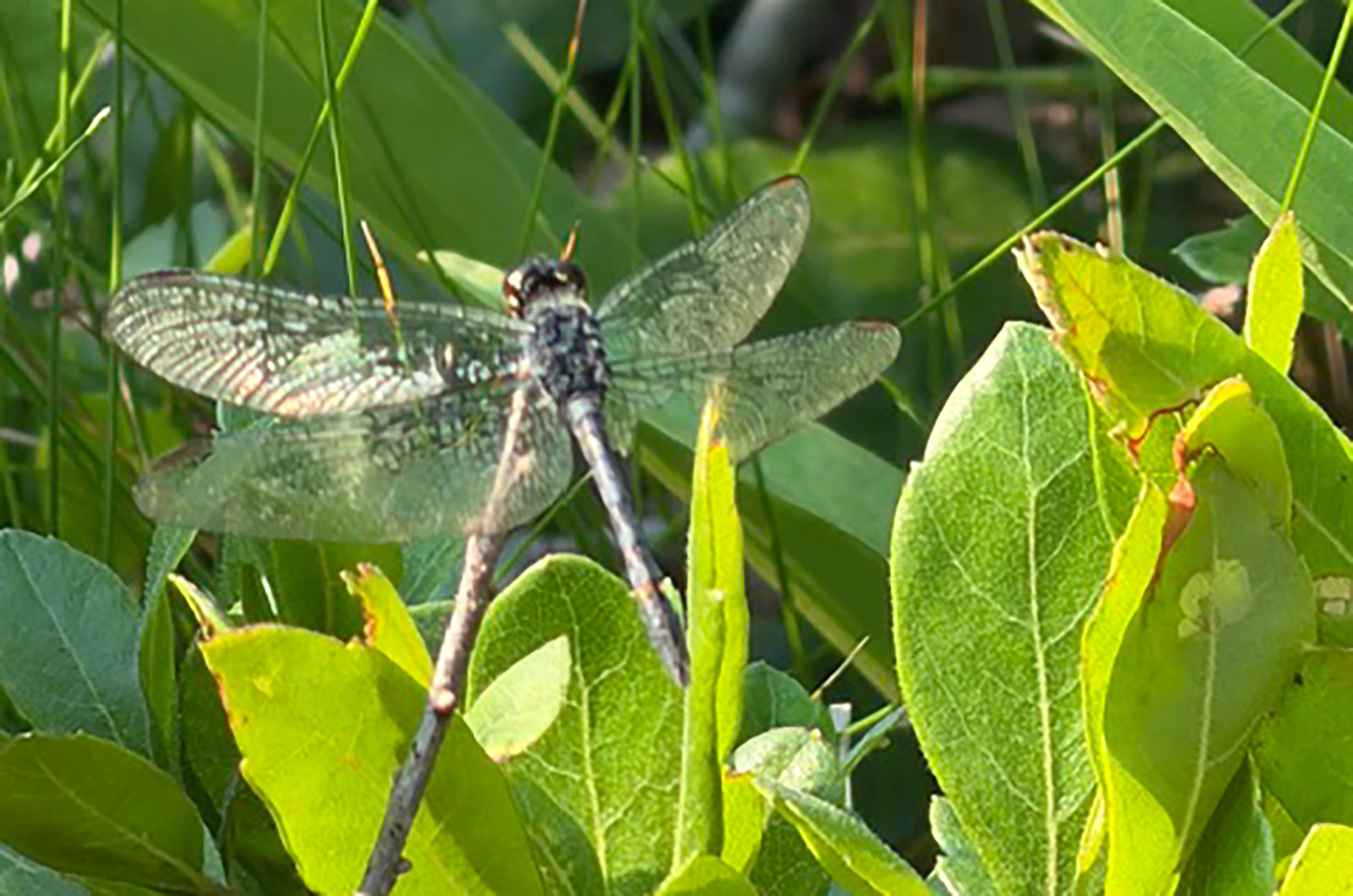
The so-named dragonfly, Erythrodiplax berenice, is regal and poised. This small species is commonly called a Seaside Dragonlet.
And despite the rumors that swirled around Berenice, this creature and her namesake hold their heads up high and, in the case of the former, into the wind. Researchers believe that position provides the Seaside Dragonlet with the most lift when it flies.
Which isn’t often, since Seaside Dragonlets don’t like to wing it. Known for their laid-back lifestyle, their idea of a perfect day is to rest on some vegetation in the salt marsh or other wetland. One study showed that these wetland wonders spend 99 per cent of their time resting on plants.
On the wing during mating, coupled Dragonlet males and females take tandem flights and oviposition (lay eggs) together on floating algae mats.
Seaside Dragonlets are North America’s only saltwater dragonfly. Their aquatic nymphs can live in water that is 260 per cent saltier than seawater. However, up the salt to 300 per cent and those salty souls won’t survive. They endure hypersalinity through osmoregulation, which is the ability to manage the balance of water and dissolved substances (salt in this case) in their bodies.
Most active in the summer, and because of their sedentary ways, Seaside Dragonlets are more easily observable than other flitting and flying dragonflies. Males are darker colored and have a frosted coating, making them look shimmery. Females can be dark, gold, orange or yellow, and have striping on their thorax.
Both prey and predator, Seaside Dragonlets consume other insects and are consumed by spiders and daddy long legs. Dragonlets become especially vulnerable when lighting from coastal developments attracts them. With artificial light, these insects become more exposed to their predators, who can more easily detect them near those bright buildings and structures.
Berenice the Queen left another legacy, that of a pacifier and advocate for her fellow Jewish people. During a revolt, she travelled bald and barefoot to the Roman governor to ask for a cessation of violence against her people. The governor refused her request, but her commitment to her tribe left her legacy of romantic relationships in the shade, and provided ample reason to honor her with the naming of a petite and forceful flyer.
Suzan Bellincampi is director of the Felix Neck Wildlife Sanctuary in Edgartown, and author of Martha’s Vineyard: A Field Guide to Island Nature and The Nature of Martha’s Vineyard.






Comments
Comment policy »