
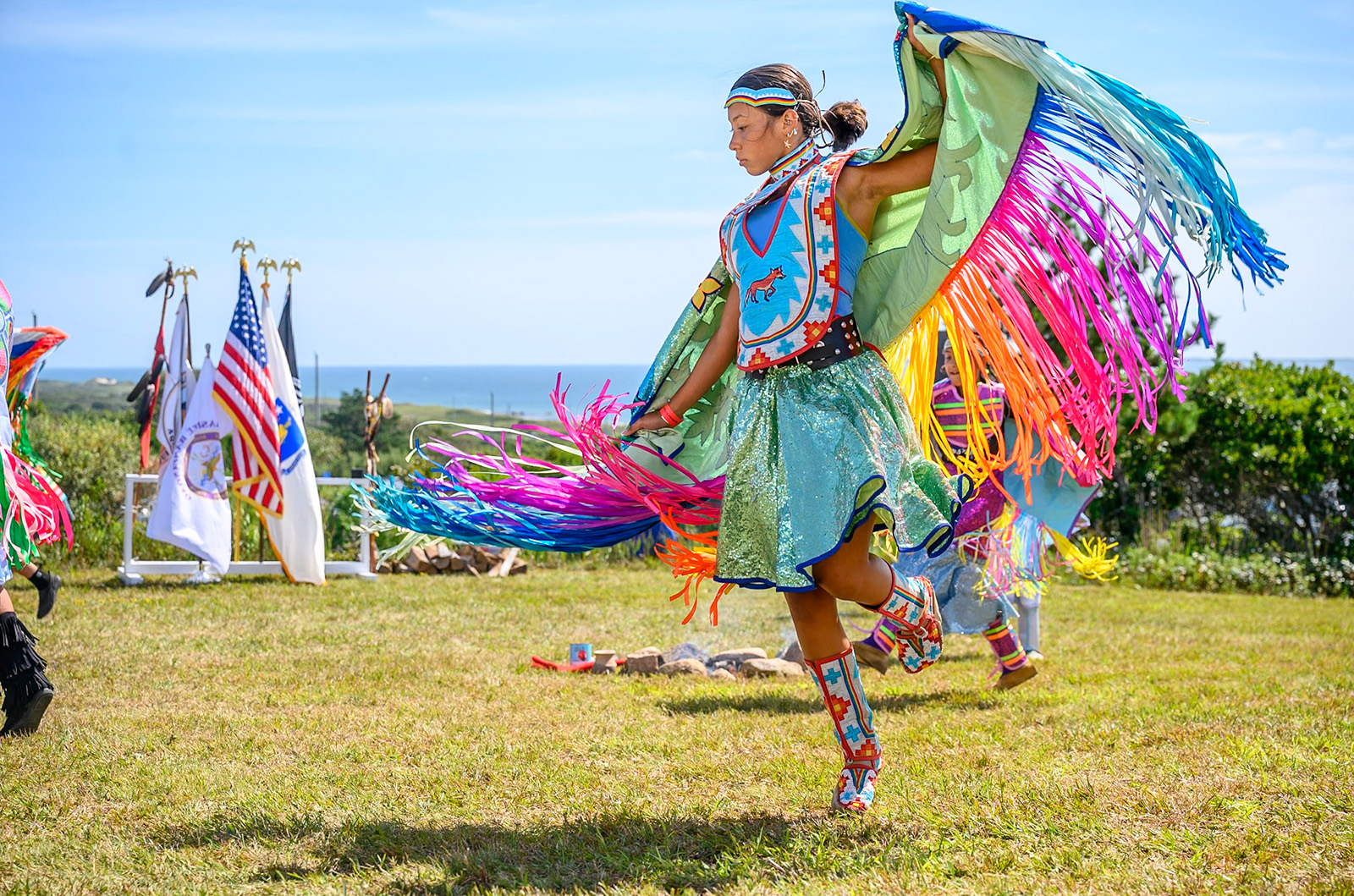
Large crowds of people gathered at the western-most tip of the Island over the weekend to participate in the Aquinnah Powwow, an annual event hosted by the Wampanoag Tribe of Gay Head (Aquinnah). At the Aquinnah circle, a grass stage area was flanked by a natural canvas, highlighting the local landscape.
Dozens of tribes were represented, including Wampanoag, Narragansett, Nipmuc, Ho-Chunk, Ojibwe and Saponi, among others.
On Saturday, before the first dance began, performers made last minute adjustments, braiding hair and adding decorative ornaments to head pieces. When the first group started to dance, a mixture of colors flickered and flashed as the performers stepped to the rhythm of the drums.
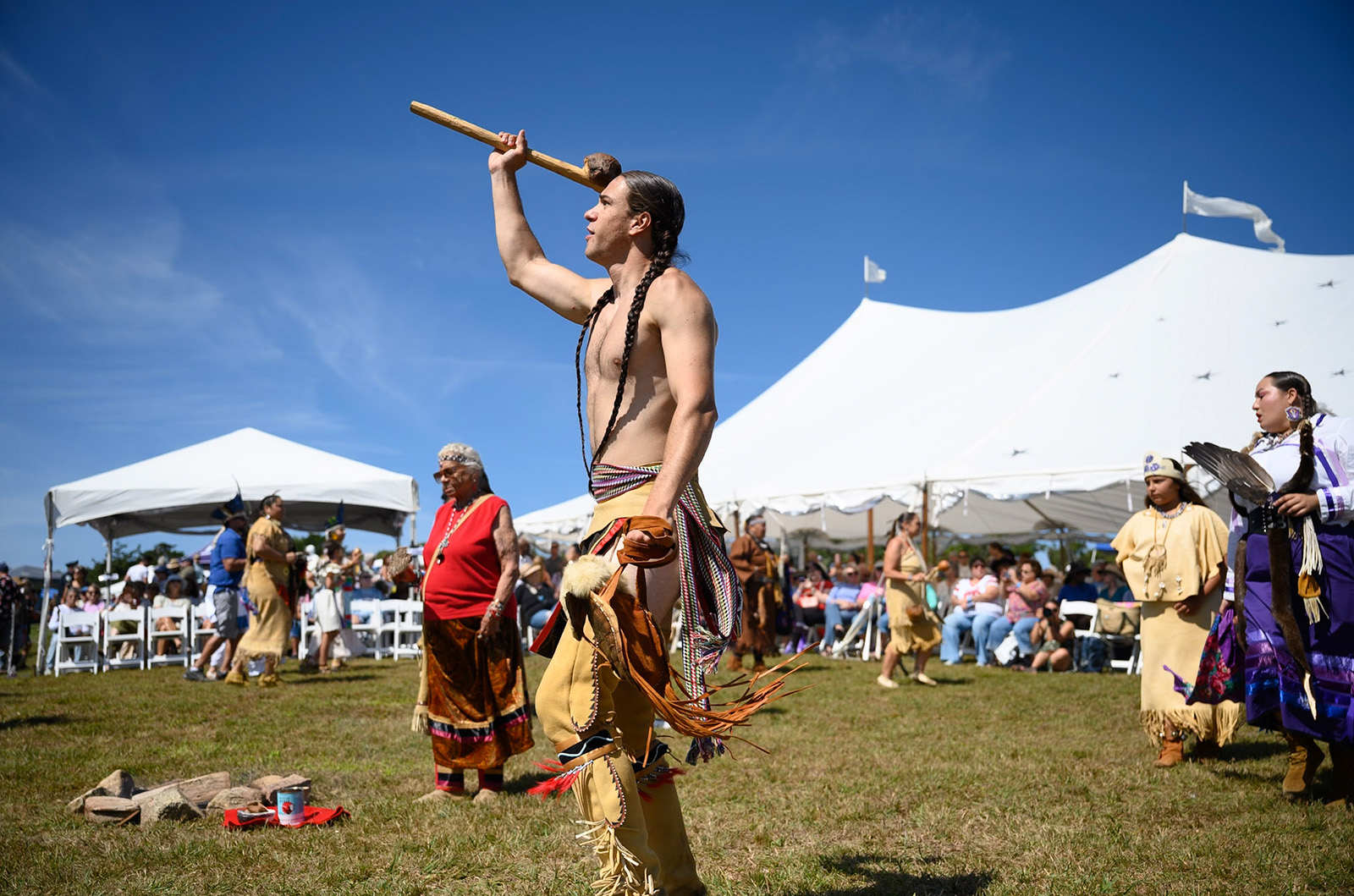
“The nature of powwows has changed in a way that is more accessible and educational,” said Justin Beatty, a member of the Ojibwe and Saponi tribes who has been the event’s emcee for the last 10 years. “We want people to come and experience and actually hear what these dances mean, why these things are important to us, why things are done a certain way, so they have a better understanding of who we are as Indigenous people and to bridge some of the gaps in knowledge.”
Throughout the day, honors were given as way to recognize those in attendance. A special recognition was given to Edith Andrews, the oldest living member of the Wampanoag Tribe of Gay Head (Aquinnah). There was also a dance which recognized both tribal and non-tribal community members who served in the armed forces or as first responders.
According to Mr. Beatty, indigenous culture and community is dynamic and always changing.
“The older generations are able to tell their stories a little bit more because they feel open and comfortable telling and they’ve seen an actual interest and concern from younger generations,” said Mr. Beatty.
The gathering at the cliffs has grown significantly over the years and for many it was their first time attending the powwow. Over 20 vendors offered visitors a chance to see various forms of indigenous art and food. Representatives of the Natural Resources Department were also present, providing insight into the efforts by the Aquinnah community to preserve and maintain the natural ecosystems present on the Island.
“The Wampanoag tribe has always been stewards of the land,” said Marcella Andrews, a lab analyst at the Natural Resources Department in Aquinnah. “I appreciate all of the historic knowledge that the tribe puts forward about how the environment changes seasonally, year to year, and what that means for the community and the Island as a whole.”
Dozens of songs were performed throughout the day, representing different themes and stories. For many, the powwow offers a way to honor the legacy of their families.
“We’ve been dancing since I was in diapers,” said David Greender, who works as a legislator for the Ho-Chunk Nation in Wisconsin. “We always say when we come out to dance, we’re here to make everybody happy. We’re dancing for our family. We’re dancing for all the people that were before us and all that are coming after.”
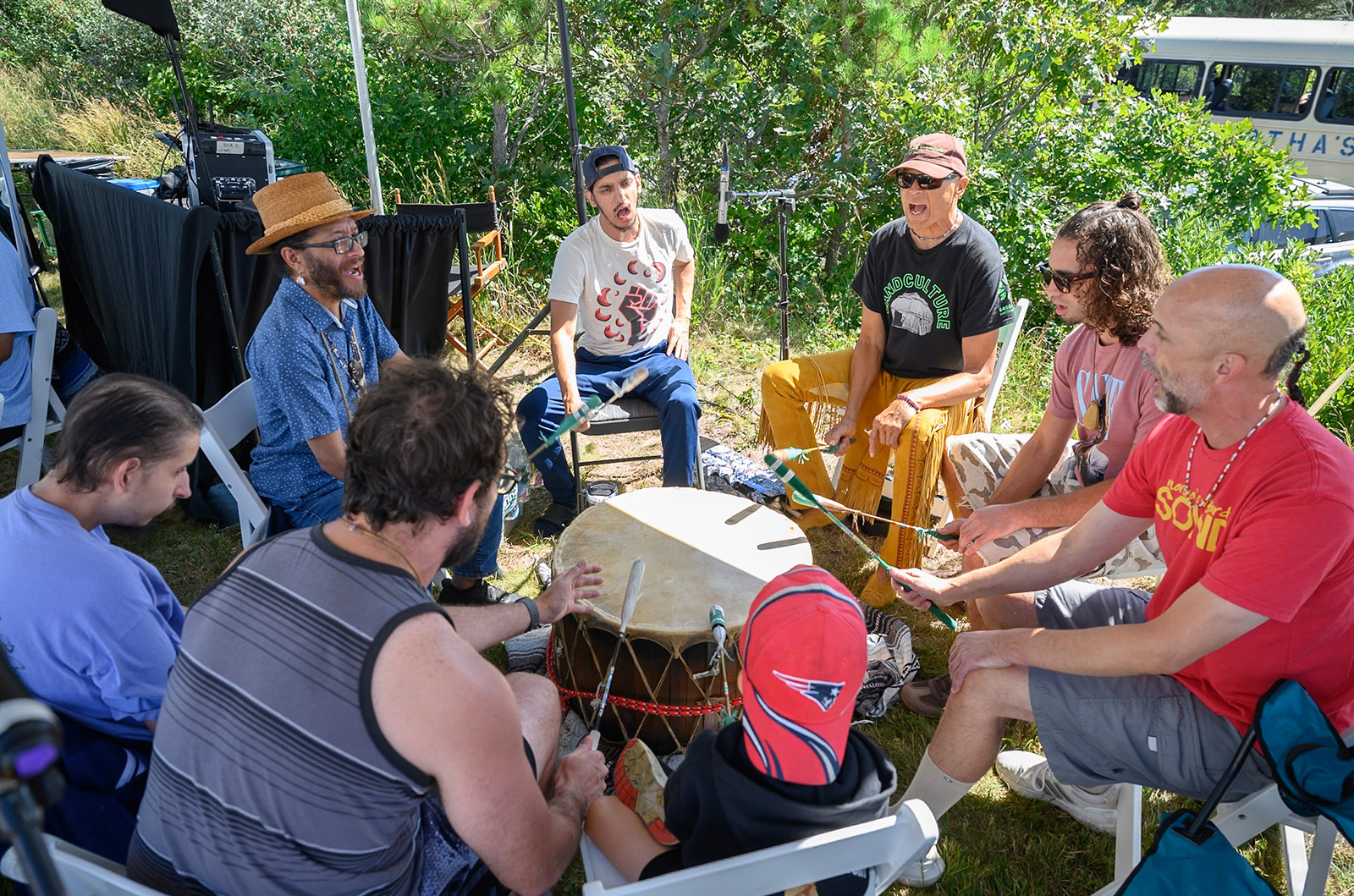
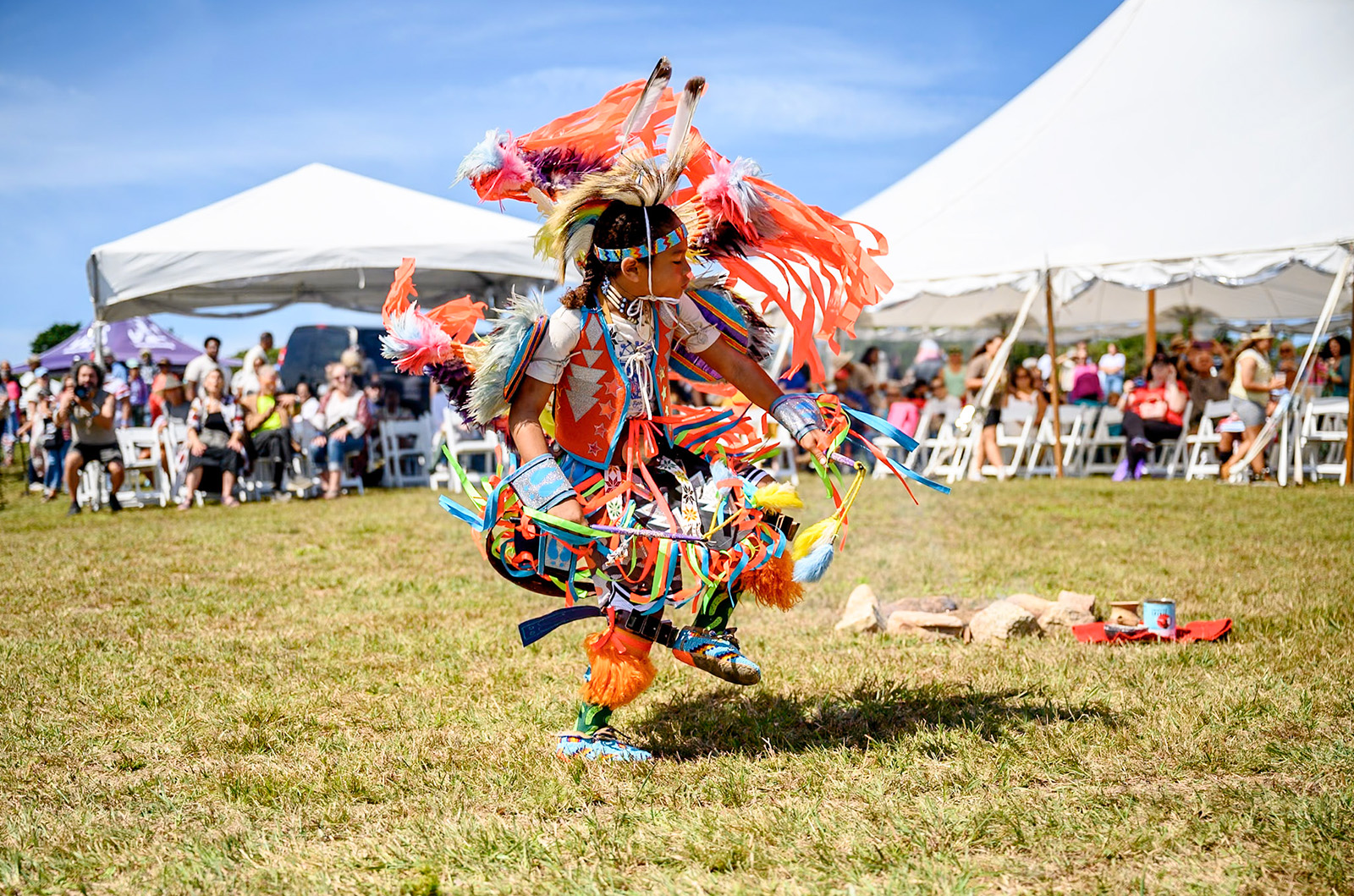
Quill Greender, Mr. Greender’s son, is a championship dancer and member of the Wampanoag and Ho-Chunk nations. During this year’s powwow he was offered an opportunity to perform a dance on his own while his father sat nearby playing a large drum with a small group.
When the rhythm of the drum beat started, Quill stepped onto the grass stage and began to dance, snapping the soles of his feet swiftly to the ground, jingling the bells tied around his ankles and hips.
Mr. Greender beamed while watching his son perform some of the same dances he did as a child.
“The only word is proud,” said Mr. Greender. “That’s it. Just proud. There’s nothing more.”





Comments
Comment policy »