
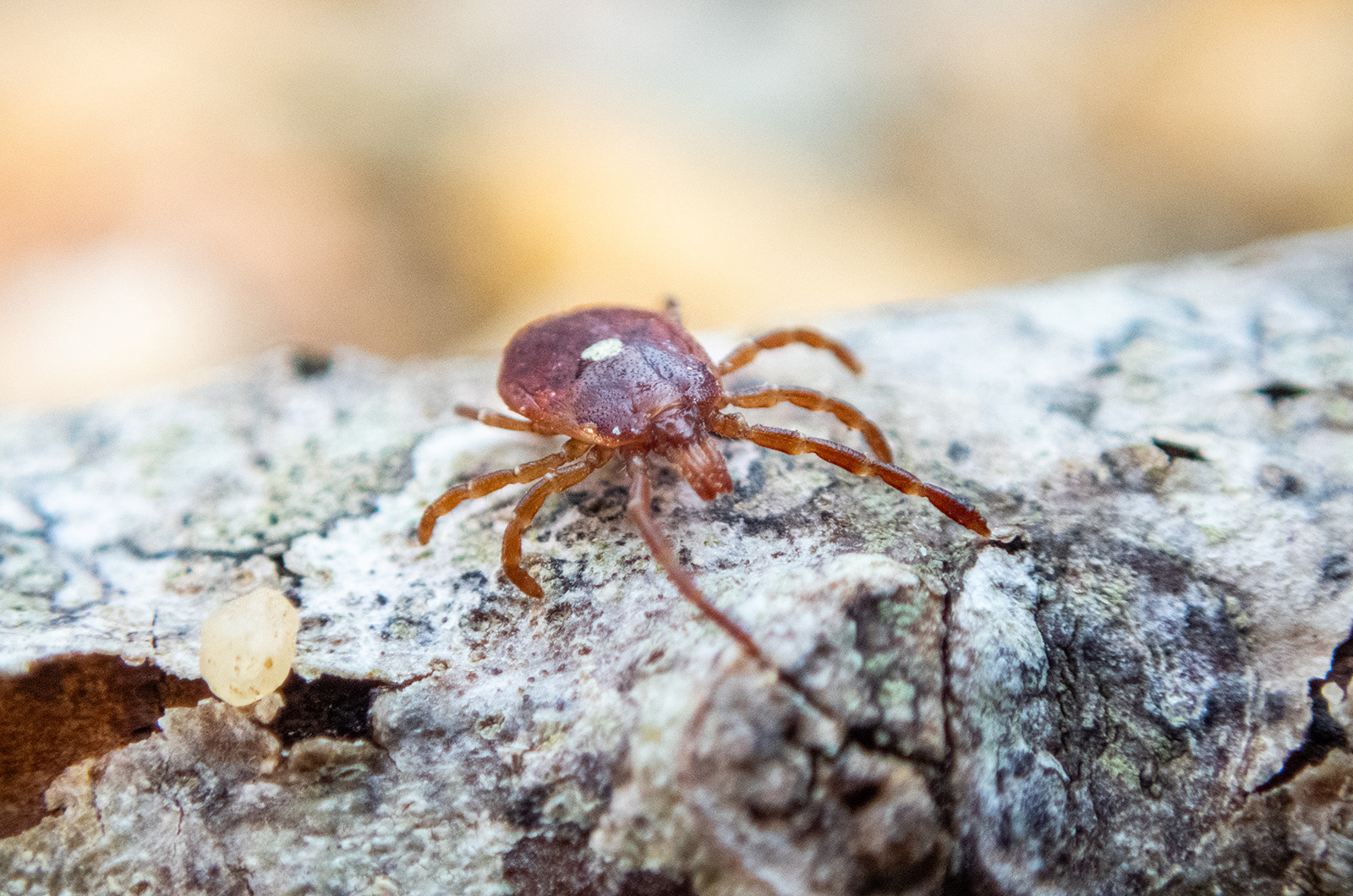
Whitney Ryan’s life has been plagued by ticks. She’s had Lyme and babesiosis, made numerous trips to the ER, undergone intravenous treatments and even had experimental procedures to try and deal with her ailments.
The situation has become so bad, that she is now planning a move off Island. To create some semblance of safety for herself and her family before that, Ms. Ryan has done what many Vineyarders do: turn to pesticide sprays to beat back ticks in their yards.
Ms. Ryan and a handful of her neighbors on Larsen Lane in Menemsha have regularly hired professionals to soak their lawns with a blend of essential oils and other ingredients with the goal of deterring and killing ticks.
“I am generally against all chemicals and treatments, but protecting myself and family in basic activities like walking from the house to the car until we move is a necessity for me,” she wrote in a letter last month to the town board of health and conservation commission.
Gardeners, tick experts, town officials and companies that do the spraying have all said that the rise of the lone star tick on Martha’s Vineyard, paired with the already high levels of Lyme disease, have pushed more and more homeowners like Ms. Ryan to turn to a variety of tick sprays.
The work is part of a growing industry on the Island, but the spraying in Menemsha, and the Island as a whole, is also contributing to rising concern about the safety of tick sprays, their potential to harm other animals and their effectiveness at killing ticks.
“It is becoming more common because of the tick problem,” Patrick Roden-Reynolds, the Island’s tick biologist, said of tick spraying. “I think people think there are no other options.”
No one central agency tracks how much spraying is done on the Vineyard, or is tasked with overseeing companies that use lower-grade chemicals. But there is some initial research on the phenomena here as it becomes more popular.
BiodiversityWorks is entering its second year of comparing lawns that are sprayed against untreated yards. The Island-based nonprofit hopes to see how ticks react to spraying, as well as other animals.
The work started last summer in response to inquiries from residents who were concerned about the overwhelming number of ticks on the Vineyard, but also wanted solutions that didn’t hurt the environment.
“The level of concern over ticks, you don’t have to be a genius to grasp the fact that it exploded on the Vineyard over the last two years,” said Matt Pelikan, the community naturalist with BiodiversityWorks.
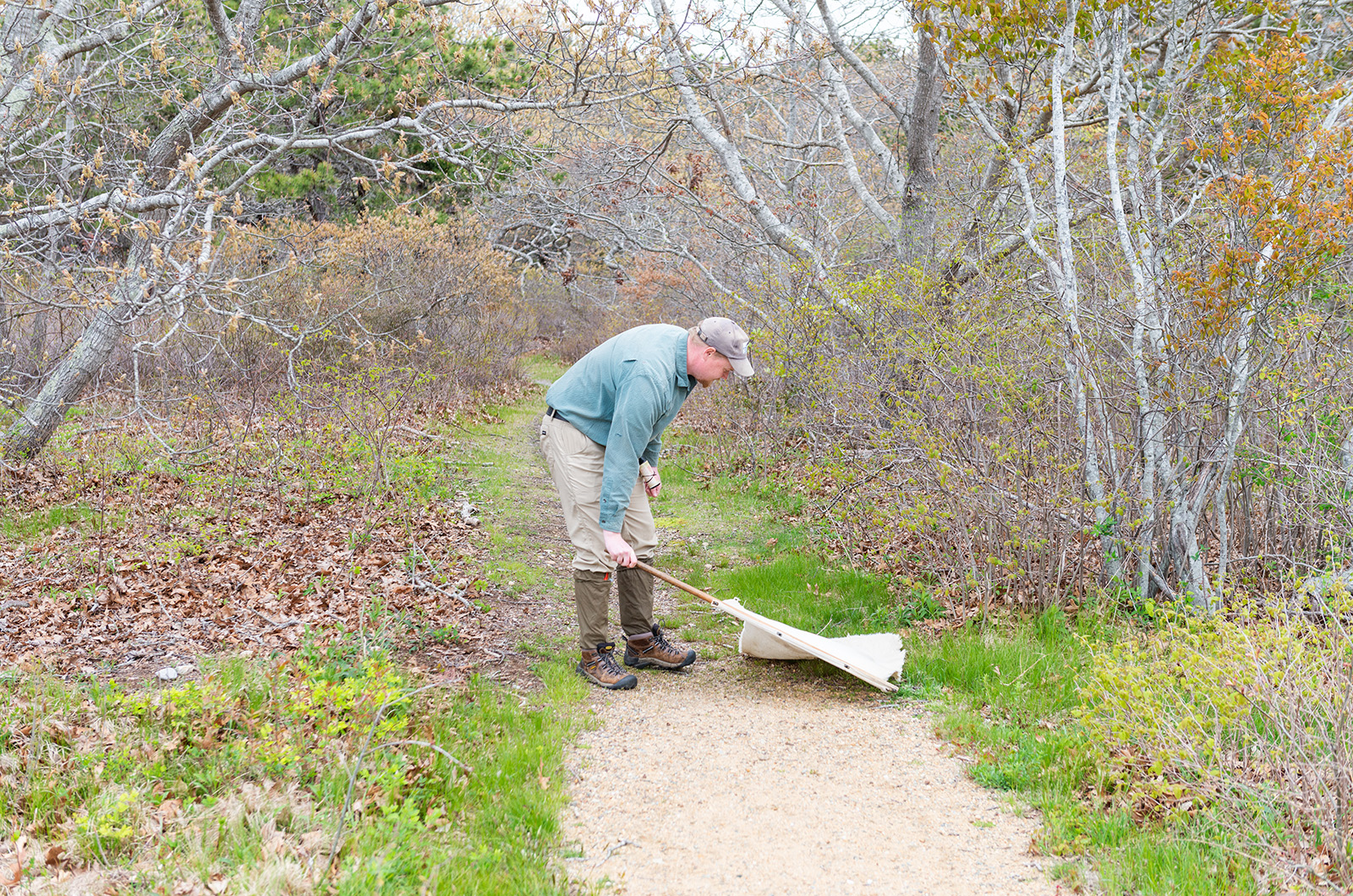
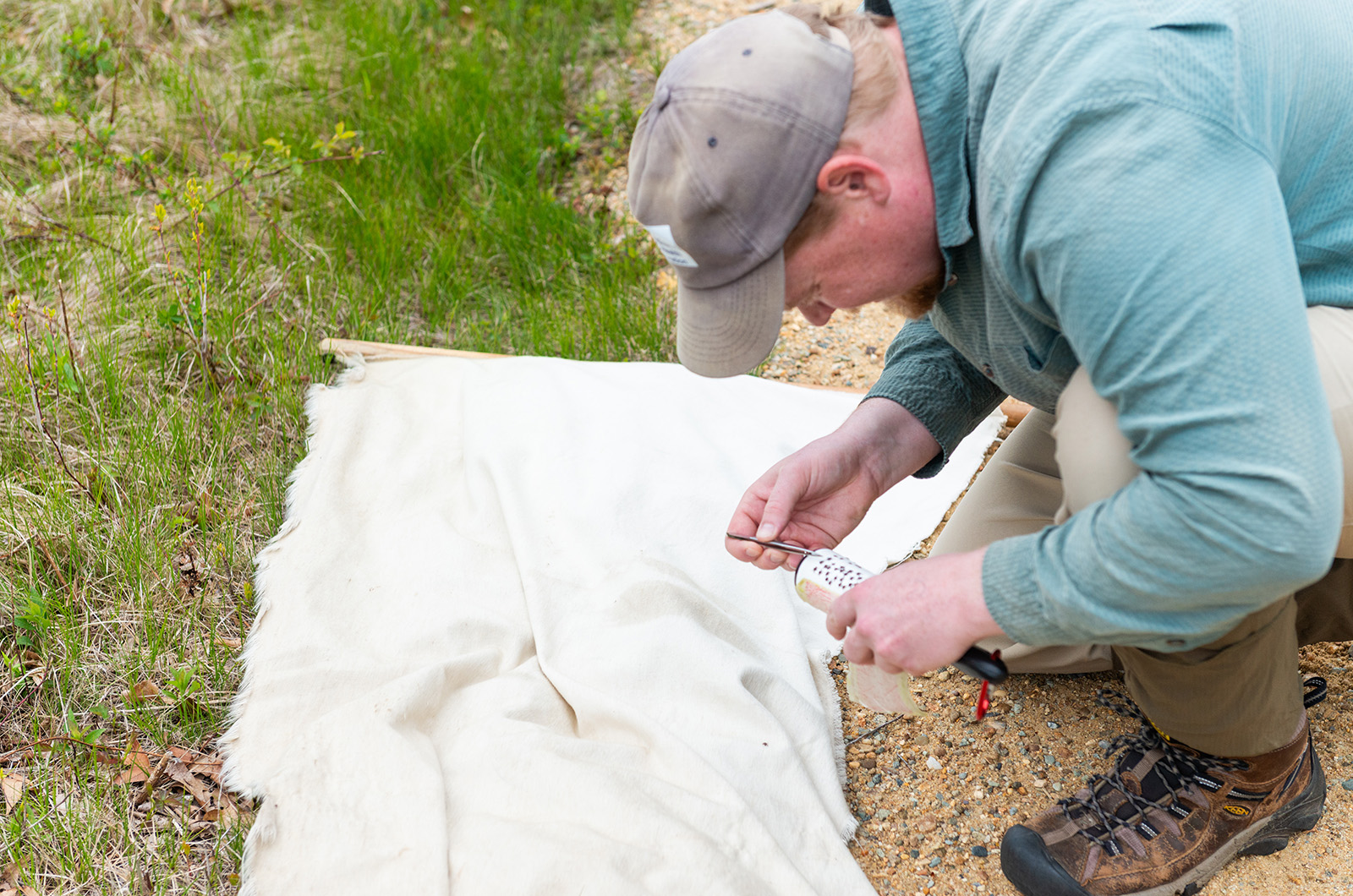
Mr. Pelikan has been surveying about 40 properties across the Island, half of them treated with essential oil sprays, the others untreated. The team drags sheets in different areas of the yard before and after treatments to count the number of ticks, and then compares them to the natural yards. Scientists also catalog other animals, such as pollinators, that are at the properties.
This work is the first of its kind on the Vineyard, and is hoped to help people make informed decisions about treatment options, Mr. Pelikan said.
“People value [the environment], you don’t want to do something to take care of your ticks that poisons your well water,” he said.
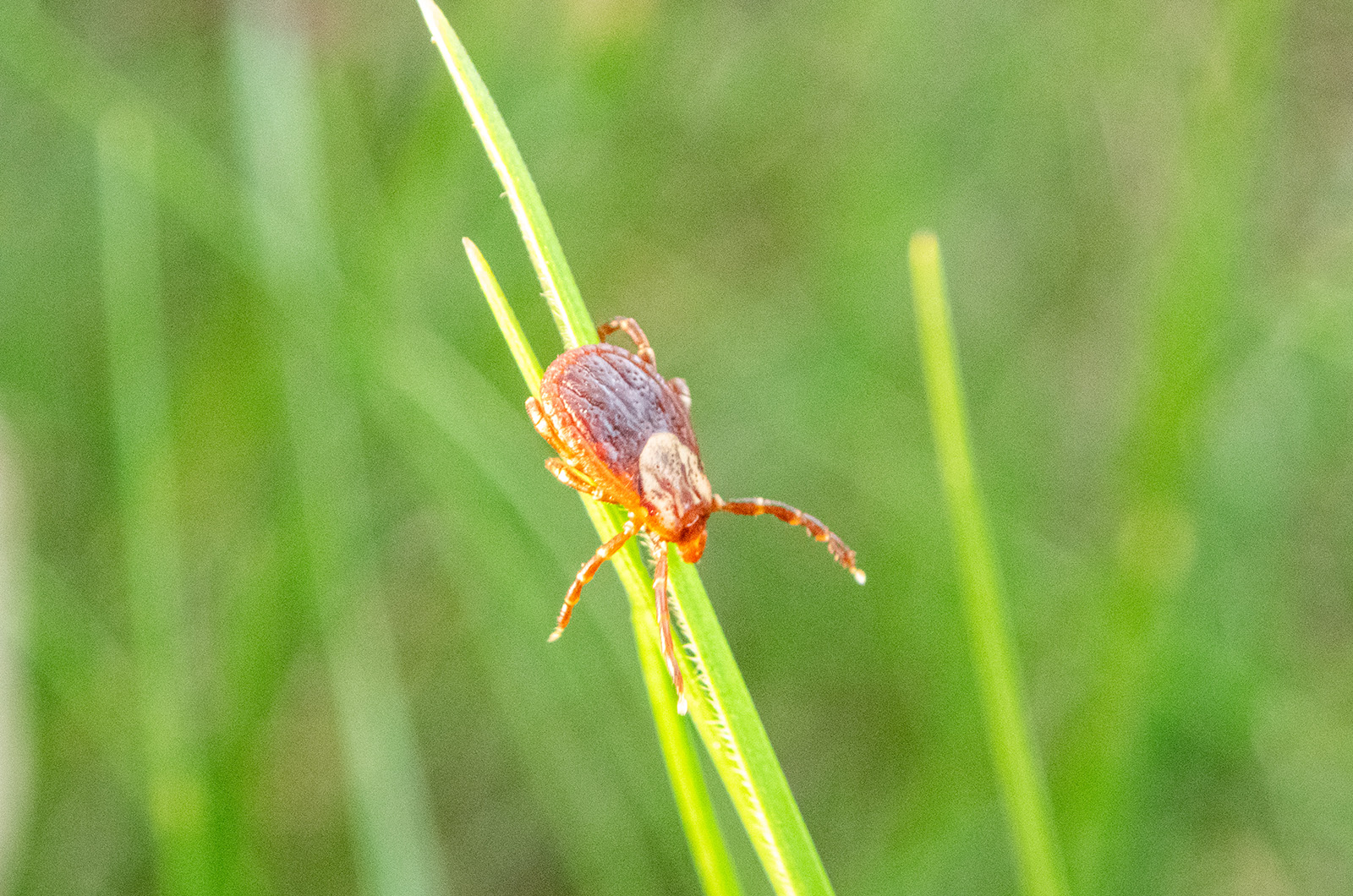
So far, the preliminary evidence shows that tick counts were consistently lower on treated properties, but never fully eliminated. Results for other species is extremely tentative, according to Mr. Pelikan, and subject to uncontrollable variables. But there was some anecdotal evidence of negative impacts on some species, such as spiders.
Other species, such as grasshoppers, seemed unaffected, and the spraying may only have effects on animals that come into direct contact with the oils.
Mr. Pelikan’s study is based on research done in Vermont and led by Jason Hill, an ecologist at the Vermont Center for Ecostudies. The Vermont research looked at 200 different properties and found that tick spraying reduced ticks by about 70 per cent.
But, on average, about a third of the butterflies and moths at the properties also died, and the sprays can affect nearby lawns and areas.
“There’s no magic chemical that only kills ticks yet,” Mr. Hill said.
The Vineyard study is focusing on companies that advertise the use of organic products. Some, such as Oh Deer, use sprays made of essential oils, while others use synthetic pesticides.
Mario Spindola, the owner of Oh Deer’s Vineyard franchise, said his spray consists of lemongrass oil, geraniol, castor oil, cedarwood oil and coconut oil soap, mixed with water, soap and a fatty acid that is a stabilizing agent.
The ingredients in essential-oil sprays are all categorized as minimum risk pesticides by the federal Environmental Protection Agency and are exempt from various testing and review.
“Generally, these products do not have a toxic effect on invertebrates as compared to synthetic pyrethroid-based tick treatments,” Mr. Roden-Reynolds wrote to the town of Chilmark after being queried on the subject.
The company sprays about 100 lawns a week for 28 weeks of the year, with each home usually on a two- to three-week spraying cycle.
When Mr. Spindola started the company in 2014, it was just him, a pickup truck and a trailer. Now the company has a fleet of trucks and several employees.
“The demand has definitely gone up,” he said. “There’s a lot of other businesses doing it.”
Many calls for service come from people who fear for their safety, or have already contracted a tick-borne illness.
“Most of the calls are actually people who have been affected by a tick disease, whether it be a pet or a family member,” Mr. Spindola said.
Spraying normally takes place at the lawn edges, brush lines, along stone walls, around patios, under decks, at gardens and in shaded areas. Mr. Spindola said that the cocktail sprayed on lawns is strong enough to kill a tick when it is being sprayed, and when it dries it becomes a repellent.
“It doesn’t keep on killing after we spray,” he said. He claimed that pollinators can later land on the foliage and there are no known effects on other animals.
Concerns over spraying have bubbled over the years and recently resurfaced in Chilmark. Nisa Counter made complaints over the spraying at the homes on Larsen Lane in Menemsha last month, and both the town’s board of health and conservation are considering the issue.
The town recommended that Oh Deer, the company that has been doing most of the spraying on the road, halt its work there while the town investigates.
The board held a meeting on spraying Wednesday evening which drew about 20 people.
Some, like Ms. Counter, said they have had allergic reactions to the tick spraying. Her lips go numb and she is forced to leave the area when the work starts.

Charlie Shipway said his throat starts to close up when spraying occurs, forcing him to use his EpiPen, and board of health chair Katie Carroll said she gets an anaphylactic reaction.
Others stood by the need for spraying. Residents said that family members wouldn’t visit them if they didn’t spray their yards, and others said that they continue to see pollinators.
Sheila Muldaur said she keeps a bee hive at her property and the bees have not been affected.
After nearly an hour of discussion, the board decided to send a letter to the spraying companies to ask for better communication, consider best practices and to confirm licensure from the state.
“What we can look at is how to prevent nuisances,” said Drew Belsky, a board member and health agent for Tisbury.
Mr. Spindola at Oh Deer told the Gazette he understands the concerns.
“They are valid questions to ask,” he said. “We live here and work here, and nobody wants to harm the Island’s environment.”
Last week, the conservation commission said it was interested in gathering more information on whether spraying could be detrimental to the wetland areas that the commission oversees and decided to create a committee to look at the issue.
“I think it’s an important enough issue that we should try to reach out to scientists, to the shellfish warden, to Nantucket, which probably has a similar dilemma as we have, and just try to get some more technical information about what the effect is,” said Sarah Khedouri, the chair of the commission.
Many homeowners, citing the increase of alpha-gal cases and other extraordinary high rates of tick diseases on the Island, have defended the spraying, saying they felt they needed it to continue enjoying their homes.
“I don’t see how, particularly in this day and age when the whole Island is worried about ticks, you can tell somebody they can’t try to take care of themselves on their own property,” Debbie Hancock, another Larsen Lane resident, told the conservation commission.
Oh Deer, biologists and tick experts have warned that tick spraying does not preclude the need for other personal tick protections, and said they try to hammer that message home. Mr. Roden-Reynolds worried that some people who do spray can get complacent when they go outside, forgoing the other precautions such as wearing permethrin-treated clothing and conducting regular tick checks.
Mr. Pelikan said he understands people’s desire to spray lawns, but the community needs to consider the overall effects.
“There is a tendency for people to want a simple solution. I understand that. There’s hope if we spray our yard, we will be 100 per cent safe from ticks,” he said. “The community is going to need to be patient and accept the fact that there is never going to be a single silver bullet.”



Comments (18)
Comments
Comment policy »