
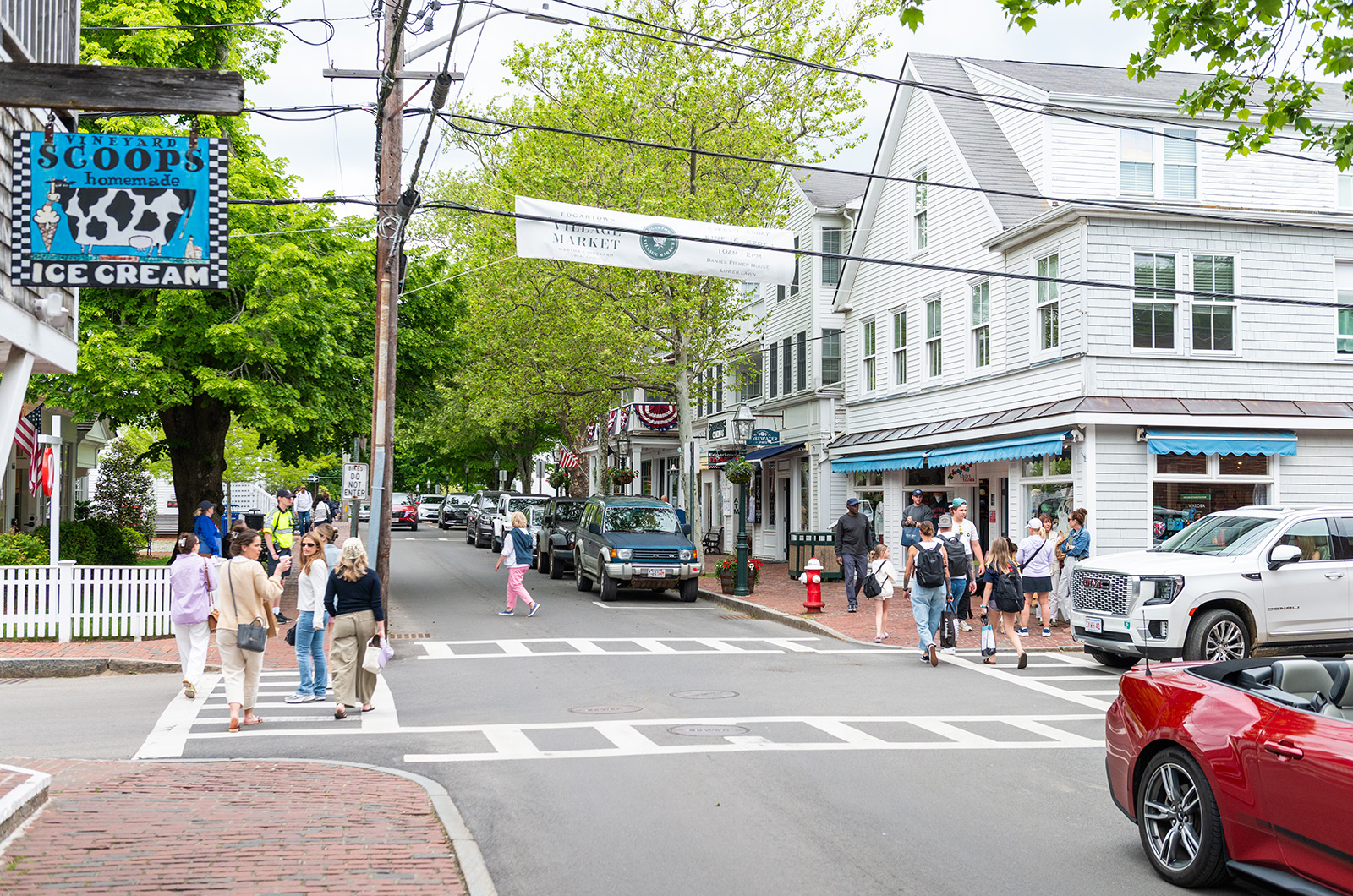
Long-simmering tensions over the future of retail shopping in downtown Edgartown boiled over this week after an Amazon subsidiary applied to host a pop-up event later this month.
The Edgartown Board of Trade and several business owners have decried the Edgartown select board’s approval of a three-day license for Shop Bop, an online clothing retailer that was acquired by the Jeff Bezos’ behemoth in 2006.
Shopkeepers in the downtown area fear that this is the next step in the corporatization of the Island shopping hub, following the arrival of several national brand stores and the proliferation of pop-ups held by off-Island companies in recent years.
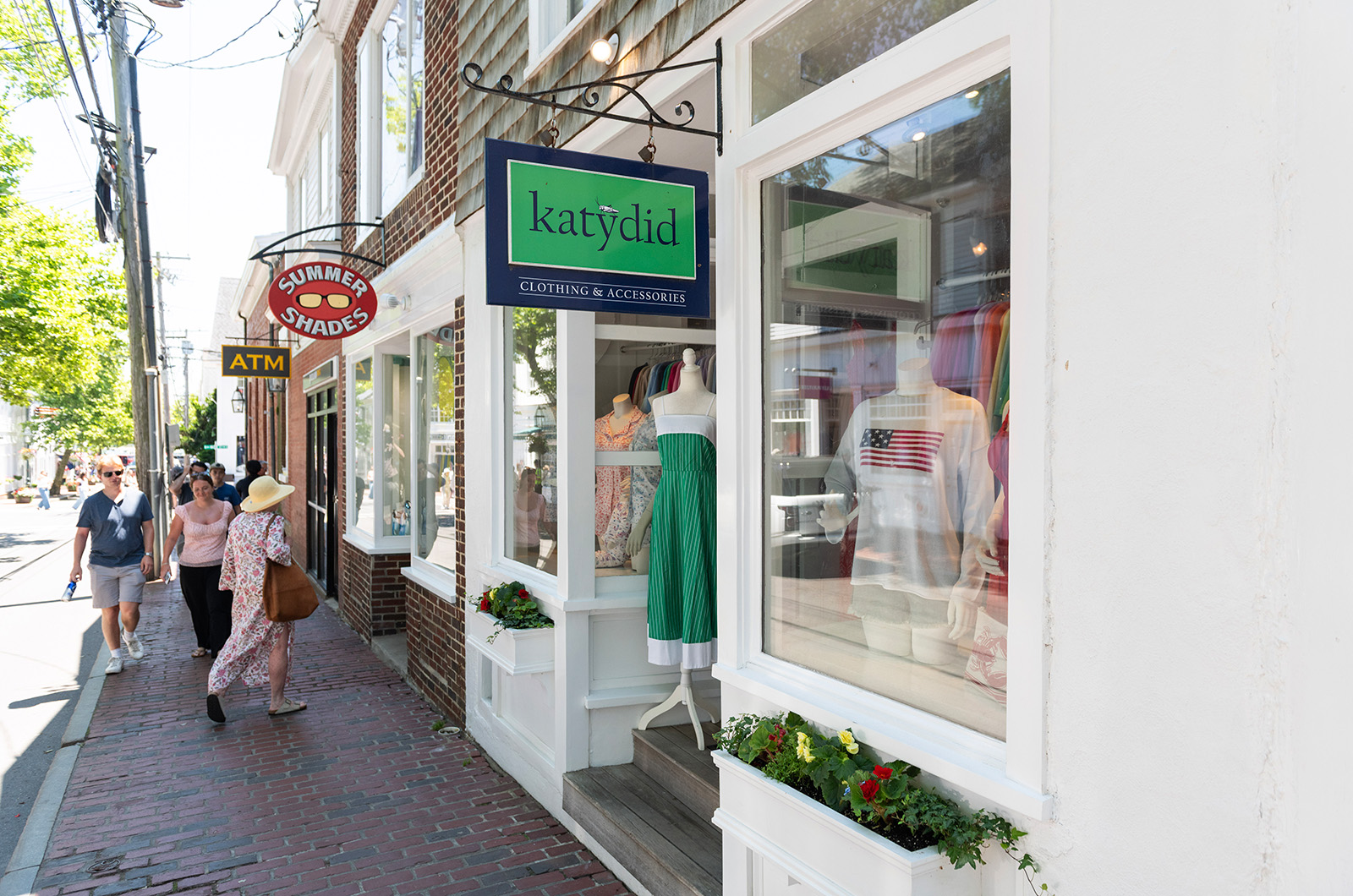
“We’re trying to keep Edgartown the cute, quaint town that it is, and it’s turning into a corporate nightmare,” said Kate Walpole, the owner of the Katydid boutique on Main street.

Defenders argue that pop-ups can bring more customers into Edgartown who will then shop and eat at the other, year-round businesses.
Erin Ready, the executive director of the Edgartown Board of Trade, said that she’s heard concerns from shop owners for the last couple years, who have seen brands such as Roller Rabbit, LoveShackFancy, J. Crew and others hold pop-up events. Other owners are in favor, though, prompting the business group to seek out a compromise.
“As brands come in to take advantage of our strong summer economy, we are trying to find the best way to manage that,” Ms. Ready said.
Over the last two years, business leaders have largely discussed the issue among themselves, but debate came into town hall on Monday when the select board was considering the license for Shop Bop. The company, which has held other pop-ups this year in Charleston and Nashville, asked to sell clothing from several different brands from July 17 to 19 at the Vineyard Dream Realty building on 22 Winter street.
Shop Bop brand activations and partnerships team leader Kate Boyle told the select board that she hoped to make a positive impact in town and help other businesses.
Building owner Anne Hajjar, who along with her husband Charles, has several hotels and other businesses on the Island, said this could help sleepy Winter street attract customers after several other nearby stores have closed.
“It will just bring people into Edgartown who are then going to go to the other shops to shop, they are going to go to the other restaurants to buy coffee or lunch,” she said.
While Ms. Hajjar struck a hopeful tone, her neighbor Annette Luna, who with her husband Jaime owns the Dune men’s clothing store on Winter street and Boneyard on Main street, said that if the town continues to allow these types of stores, it could extinguish the charm that brings people into Edgartown in the first place.
Though Shop Bop was the latest and most concerning addition for her, Ms. Luna and the board of trade said they worried the most about how downtown Edgartown will look in the next five to 10 years if nothing is changed.

They fear increased corporatization could result in making Edgartown identical to other resort communities, such as Newport, Sag Harbor and Palm Beach.
Ms. Luna and others also believed that these larger companies use these pop-up or seasonal stores as advertising for the brands with little need to make money, cutting into the already short high season.
“Amazon will be fine,” she said. “This is our livelihood. If you have a bad summer, you have a bad year.”
Shopowners also said they work diligently to sell different brands in their own stores, creating a sense of teamwork these corporations don’t follow. If Katydid, for instance, carries one brand, the Sole boutique across the street will not seek out those same products, Ms. Walpole and Sole owner Ronni Hennessy told the Gazette in a joint interview.
“We all see brands that we’d love to carry, but once we hear that someone in town... is carrying that brand, we respect that,” said Ms. Hennessy. “So we search for something else, but this is just a total disregard for any of that.”
In a letter to the select board, Sea Legs owner Grace Romanowsky said that Shop Bop sells several brands and products that Edgartown boutiques have curated and invested in.
“If we want our locally owned businesses to survive, we must continue to stand behind them,” she wrote. “The increasing presence of corporate pop-up shops threatens an already fragile retail environment.”
The select board was split on the Shop Bop vote; Art Smadbeck and Alex Morrison voted in favor and Julia Tarka voted against.
Ms. Tarka, the owner of Rosewater, didn’t believe that Amazon was worth welcoming to town.
“The value of Edgartown district lies in its authenticity,” she said. “It is the result of countless small business owners taking risks, weathering difficulties and reinvesting into this community year after year. That character deserves thoughtful protection. I don’t feel that Amazon matches that same character that folks have worked towards.”
Mr. Smadbeck said the board had little choice but to approve the application because the town has few restrictions on the types of pop-ups that are allowed.
“Our job is to look and see, impartially, at a request for any kind of license,” he said.
All three members seemed in agreement that the topic is something that the town should be looking at with the board of trade this winter. Mr. Morrison said that some businesses may welcome the pop-ups and think they are beneficial.
“Is there a balance? There absolutely is a balance between pop-ups that come in and take the gravy,” he said. “I also look at what the bottom line would be for a business and where you’d see a disruption, and actually income, if a pop-up were to come here.”
“Because if someone’s going to come to their pop-up, they might also go to your store and several other stores and go to a restaurant for dinner,” he added.
Though there is a popular belief that chains aren’t allowed on Martha’s Vineyard due to the famous fights over Dunkin Donuts and McDonalds in decades past, they have been here for years in other capacities. Stop & Shop has two grocery stores and a pharmacy, there are Shell gas stations, and a Dairy Queen sits on Upper Main street in Edgartown to quench the town’s thirst for ice cream.
A Lululemon resides in the heart of downtown Edgartown year-round; local brands Black Dog and Vineyard Vines have also gone national and have several storefronts on the Island.
For pop-up and other big brand seasonal businesses, restrictions depend largely on where they are looking to set up shop, said Edgartown town administrator James Hagerty.
Any business looking to sell their wares in town needs to obtain a vendor license under the town regulations, which in Shop Bop’s case is a transient license. Enforcement authority also exists through zoning.
If a pop-up operates in a hotel that isn’t authorized for retail sales, it could require a special permit. If proper permits aren’t in hand, it could become a zoning issue enforced by the town’s building inspector and carry a $300 per day fine, according to Mr. Hagerty. But a brand selling clothing in a building zoned for retail would be allowed.
The Martha’s Vineyard Commission does require review for any “formula retail” businesses that it defines as a franchise. Having standardized menus, logos and other features that are used at 10 or more locations worldwide are hallmarks of a formula business under the regulations.
Many of the pop-up events take place without the proper notification to the town, according to Mr. Hagerty, and several business owners talked about brands breaking rules and then leaving town free of consequences.
Despite the allegations of misdeeds, it is difficult for the town to stop these from coming in since there are no rules on the books.
“[A]bsent a finding that an application is contrary to the public good (which is a high threshold), the Town does not have a bylaw/policy basis to deny a legally compliant transient vendor’s license. Without a codified policy, any decision to deny risks being arbitrary and would expose the Town to liability under constitutional and equal protection laws,” Mr. Hagerty said.
If the business community feels stronger regulations are needed, Mr. Hagerty believed the first standard to decide is where should the line be drawn.
“Is it based on the brand itself, how long the pop-up would operate, the number of brick-and-mortar locations elsewhere, market capitalization of the parent company, or something else?” he said. “Those are policy decisions, and they should be shaped by the business community’s input rather than unilaterally by the Town.”
The pop-up phenomenon on the Vineyard largely seems contained to Edgartown, though other branded events have taken place in other towns.
Martha’s Vineyard Chamber of Commerce executive director Erica Ashton said the chamber doesn’t take positions on individual permitting or regulatory matters, but felt that these pop-ups and other collaborations with brands, often called activations in the industry, can help drive visitors and support business.
“Martha’s Vineyard has long been a destination that blends tradition with entrepreneurship and creativity,” she said. “When activations are conducted in accordance with local regulations, they can complement the Island’s business community by encouraging visitors to stay longer, explore more and support local establishments throughout their visit.”
For a glimpse of how Edgartown could take on big chains, a shopper can look across the Muskeget Channel. Nantucket voters in 2006 overwhelmingly approved a bylaw that excludes chain stores in its downtown area.
The first time it was enforced was in 2025 when Nantucket blocked trendy pajama brand Roller Rabbit from operating a store on Centre street. But that didn’t stop the brand from still making its way downtown.
A year after the enforcement order, the brand came back into compliance with the rules after changing the concept of the store to bring in other brands and items that Roller Rabbit’s other stores don’t have, according to a May 2026 article from the Nantucket Current.
Back on the Vineyard, high rents and building owners looking to put someone into their vacant properties for a few weeks a year have also been cited by business owners as contributors to the rise of pop-ups.
“We have tons of overhead and tariffs now, and we have a day-to-day struggle as it is,” Ms. Walpole said.
Mr. Hagerty, the town administrator, said he plans to meet with business officials later this month, and Ms. Ready with the board of trade said members are looking for a way to strike a balance so both owners and the people who stand to benefit from pop-ups can find a way forward.
“Nothing is set in stone,” she said. “We just need to start looking at things thoughtfully.”
For Ms. Luna, the co-owner of Dune and Boneyard, the solution needs to prioritize the small, year-round business owners.
“The reason big businesses come into town is the charm that small businesses have created,” she said. “They are going to benefit from the work we do every day of the year.”






Comments (5)
Comments
Comment policy »