
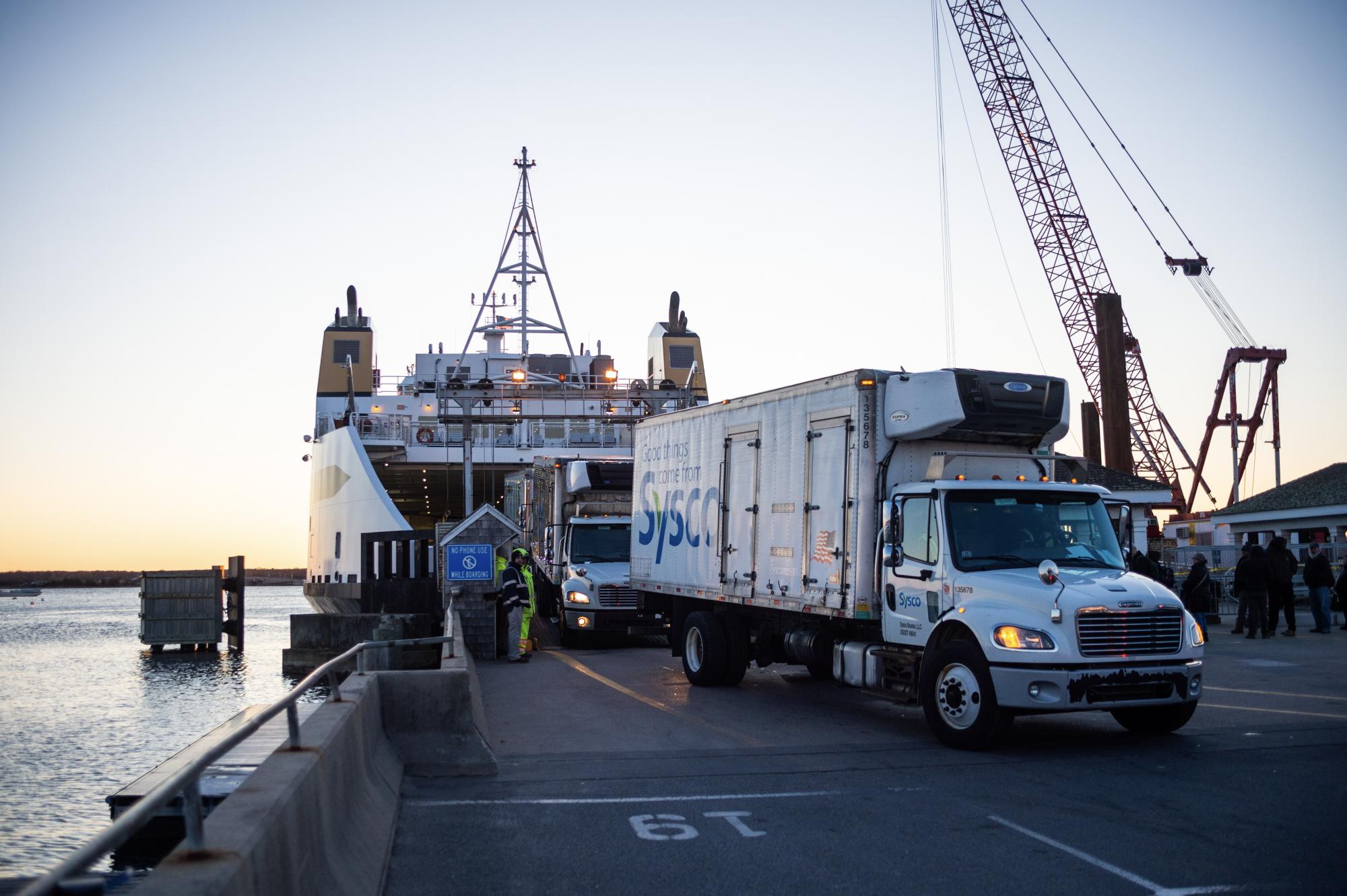
A new study from the Martha’s Vineyard Commission is highlighting some of the weak links in the supply chain that brings the Island food, medicine and other essentials.
Dependent almost entirely on marine transportation and small operators, the supply chain has many vulnerabilities and could face even more threats with sea level rise. Islanders may see more disruption to their daily lives if aging infrastructure and protocols aren’t bolstered in the coming years, the report, published in late June, found.
After the region received a grant from the state Office of Coastal Zone Management, the study was undertaken this spring by the commission and the towns of Gosnold and Nantucket, with help from several consultants.
What the researchers found is that the Vineyard has a limited supply of stored food and relies heavily on just-in-time deliveries aboard the Steamship Authority. If ferry service is cut off for even a brief window, shortages of food and other supplies could take a toll on residents.
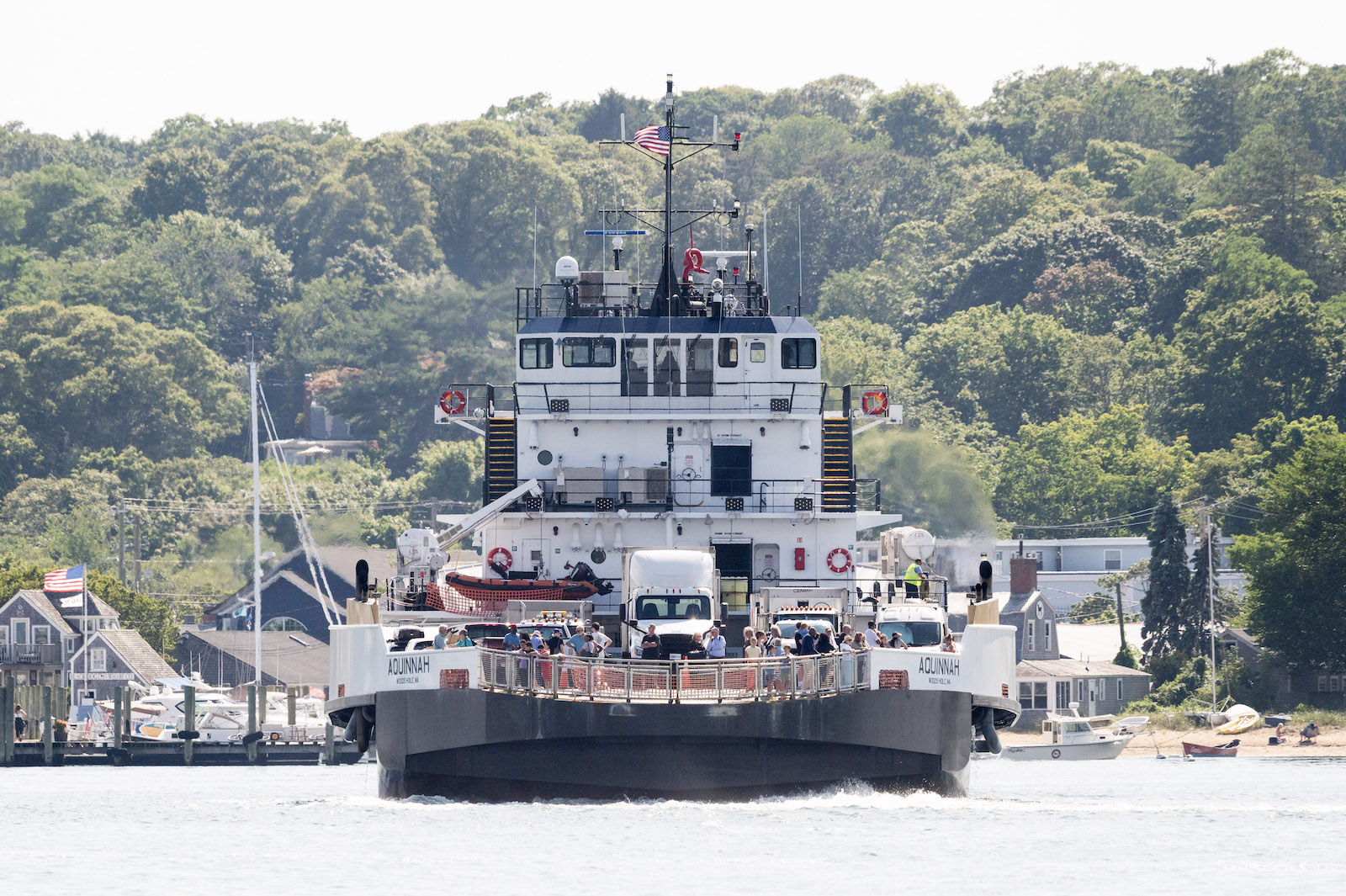
Islanders got a taste of the problem this winter, when strong storms cut off ferry service.
The Vineyard has been able to stave off any major issues for decades by a strong coordination system, according to the study. But that system leans heavily on institutional knowledge, and one of the main things officials hope to do is memorialize that knowledge and build contingencies for the future.
“One of the takeaways was informal coordination has worked, but it might not be something we want to do forever,” said Sakiko Isomichi, the MVC’s climate resilience planner, who helped with the study. “We need to develop that kind of system.”
For the study, the consultants talked to Debby Packer at RM Packer Company, the main fuel and barge company on the Island, as well as the Steamship Authority, Cronig’s Market and Stop & Shop.
All stressed that there are pinch points that were susceptible to bottlenecks. Almost all of the supplies that come to the Vineyard arrive via the Steamship Authority, supported by barge operators and other small carriers. In the off-season, the Island is entirely dependent on goods, and oftentimes workers, flowing through Vineyard Haven harbor.
But the terminal in Vineyard Haven is facing an increased flood risk in the coming years, which could disrupt operations as soon as 2050.
Off-Island infrastructure could also have ripple effects. The New Bedford hurricane barrier, which encloses the Whaling City’s harbor when the neighboring Fairhaven waterfront begins to flood, shuts about 17 times per year on average.
But it is expected to close more often as sea levels rise, cutting off barge traffic.
“Is there a threshold where it has a major impact on how we do our economy here?” Ms. Isomichi said.
It’s these single points of failure, among other issues that could hinder the Island in the future, the study noted.
The Steamship Authority said storms like the ones this past winter can create a series of back-ups. Cancelled trips push freight into the already booked slots for the next day, and grocery shelves on the Islands can reflect the delays in just a couple of days.
Cronig’s told the consultants that they have enough food for three days, and rely on two drivers who live off-Island and need to take the early morning ferries over each day.
Ms. Packer with RM Packer told consultants that succession planning is also a concern and the lack of affordable housing is a growing risk to crew retention.
Ms. Isomichi has been going to the town select boards in the last several weeks to discuss the study and to get input for a proposed second phase of research.
West Tisbury select board member Jess Miller worried about health care and other frontline workers on the Island.
“I know so much of the hospital staff commutes daily… If we were in an emergency situation, those are people that I would want to prioritize,” she said at a July meeting.
Emergency managers have been considering a lot of the same issues, according to Tim Carroll, the Chilmark town administrator and emergency management coordinator.
“The transportation of foodstuffs, fuel, heating oil, generators, supplies, propane… all of that is not stockpiled on Martha’s Vineyard for a number of days,” he said last month.
The loss of a ferry terminal in a storm is one of the biggest concerns.
“The long and the short of it is, if the Steamship Authority docks are damaged, we have to come up with another alternative, and that means landing barges and having things containerized so that they come over on tractor trailers or container boxes that we can offload,” Mr. Carroll said.
Some town officials worried that this work was rehashing things already known, and would result in money spent on a study that would then sit on a shelf.
“What’s the purpose of the studies?” said Bill Cleary, a member of the Oak Bluffs select board, at a meeting earlier this month. “Maybe I’m misunderstanding, but I’m not sure that we need to know how vulnerable we are. I think we know that.”
Ms. Isomichi said that this work can help officials with the state better understand the needs when it comes to doling out funding. There are also data gaps, such as elevation data around the Island, that could help improve planning in the future.
Fellow select board member Dion Alley was also skeptical.
“What problems are we trying to solve,” he said at the meeting. “Because at some point in time, Mother Nature’s taking this Island back. I’m sorry, hate to say it, but there will be a day where that will be it. There’ll be one person left on Peaked Hill. And he’ll get in his rowboat and that will be the end of the Island. So, how much are we going to spend, right?”
In an interview with the Gazette, Ms. Isomichi said that the commission hopes to get more funding from the state to take on a second phase study that will look at flood vulnerability and take on an economic analysis and identify the priority adaptation projects.
Oak Bluffs select board member Emma Green-Beach acknowledged that doing this work may seem to be documenting a well-known issue, but getting this in writing is essential to memorializing the institutional knowledge and making a case for money.
“It feels like things that we know,” she said. “But if it’s not written down, as we’re learning about in so many other ways…it doesn’t count.”




Comments
Comment policy »