

Aquinnah town and tribal leaders vowed this month to rekindle discussions on a proposal from the Wampanoag Tribe of Gay Head (Aquinnah) to acquire 51 acres of town-owned land.
The select board voted on May 6 to initiate conversations around the topic, including the potential of creating a committee of tribal members and town residents to consider various options, such as co-stewardship between the tribe and the town.
“This is about putting something together that will work,” said select board chair Juli Vanderhoop at the meeting. “That’s the question at the table.”
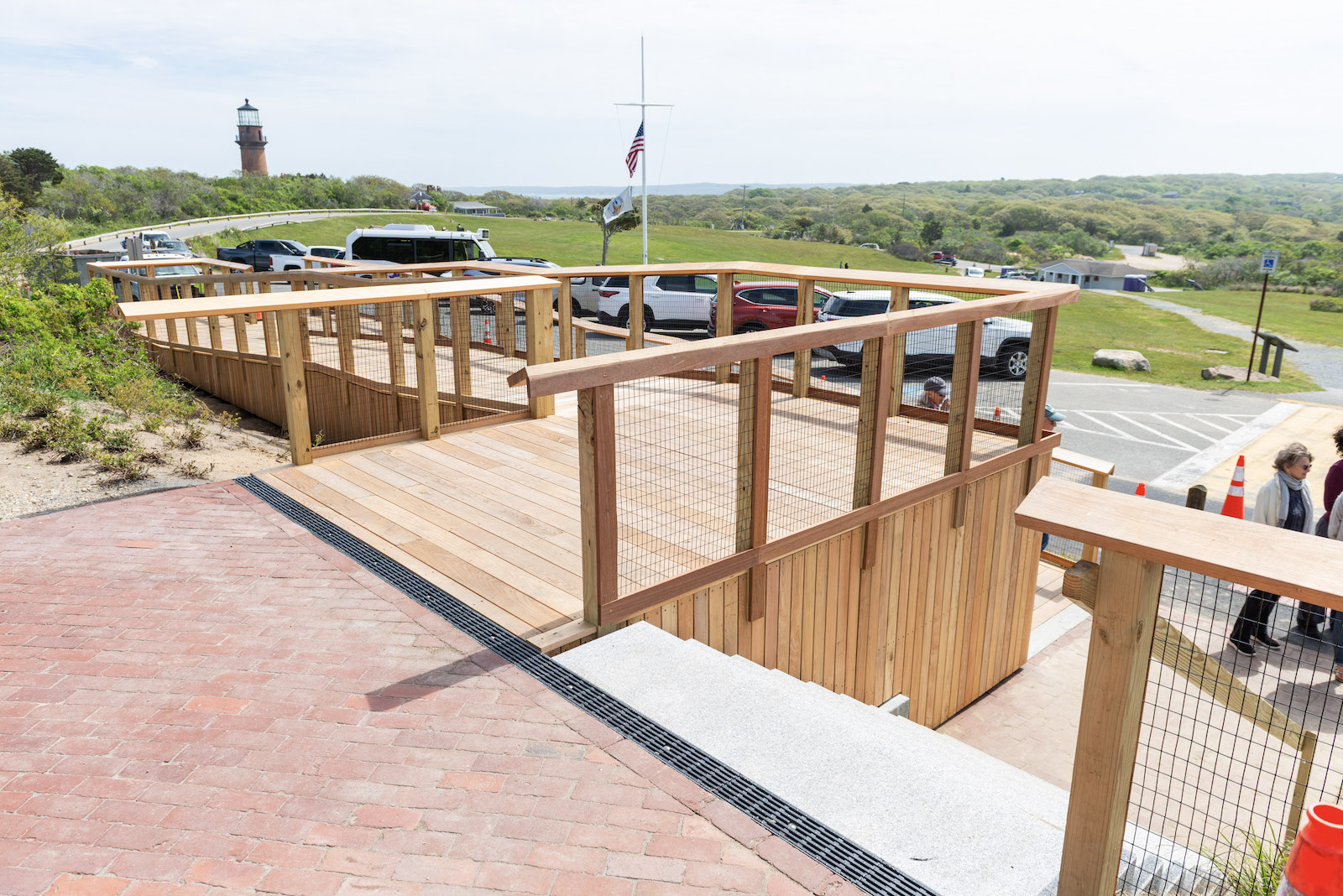
The Wampanoag Tribe of Gay Head (Aquinnah) tribal council raised the prospect of acquiring the land, a large portion of which is around the Aquinnah Circle, earlier this spring in the weeks ahead of the annual town meeting.
The council asked that there be an article placed on the warrant but the select board denied the request, saying it needed more time to consider a warrant article before putting it to the voters.
The 24 parcels of land initially requested by the tribal council included the land the cliff shops are on, the Vanderhoop homestead, the Circle North properties, a town parking lot and the land where the Gay Head Lighthouse and Lighthouse Park stand. Other pieces of land near tribal housing and West Basin were also included.
Wampanoag Tribe of Gay Head chairman Kevin Devine previously told the Gazette that the warrant article was meant to simply start the conversation about the properties. Mr. Devine, who was elected as the tribe chairman in November, said he wants to establish better communications between the tribal and town governments.
“We just need to get to the table and negotiate things and start working toward each other’s goals and visions,” said Mr. Devine in an interview with the Gazette last week.
The land transfer drew some support from community members at the May 6 select board meeting.
A letter submitted to the select board by Darrill Bazzy and Mitzi Pratt presented ideas for consideration by the board “to establish a process to advance the tribal request in an informed and thoughtful manner.”
“In summary, we feel that as important as the question of land reparation is, it is equally important that we establish a process and a structure to rebuild and reinforce institutional trust, respect and cooperation between town and tribe,” read a portion of the letter. “What we established for this current movement can and should become a model for the months, years and decades ahead.”
Even if town leaders do decide to transfer the land to the tribe, the process wouldn’t be simple. For a municipality to sell land, it needs to go through an evaluation of each individual property, and go through a bidding process, Aquinnah town officials have previously said.
The select board also raised the 1983 settlement between the tribe and Massachusetts, which establishes regulations of land ownership between the tribe and the town. Since the agreement was later implemented by Congress under the Indian Claims Settlement Act of 1987, in the same year the tribe received official recognition by the United States government, select board member Tom Murphy said the process to transfer land from the town to the tribe is lengthy and could even need an act of Congress.
Mr. Devine suggested a co-stewardship model over the land which could streamline the process and open up new tribal funding sources.
“A majority of our tribal members live in Aquinnah, so if services are being provided to tribal members I can get funding for certain things,” Mr. Devine said. “That can solidify reasons for me and for us as a tribe to be able to provide certain things for tribal members and help the town.”






Comments (1)
Comments
Comment policy »