
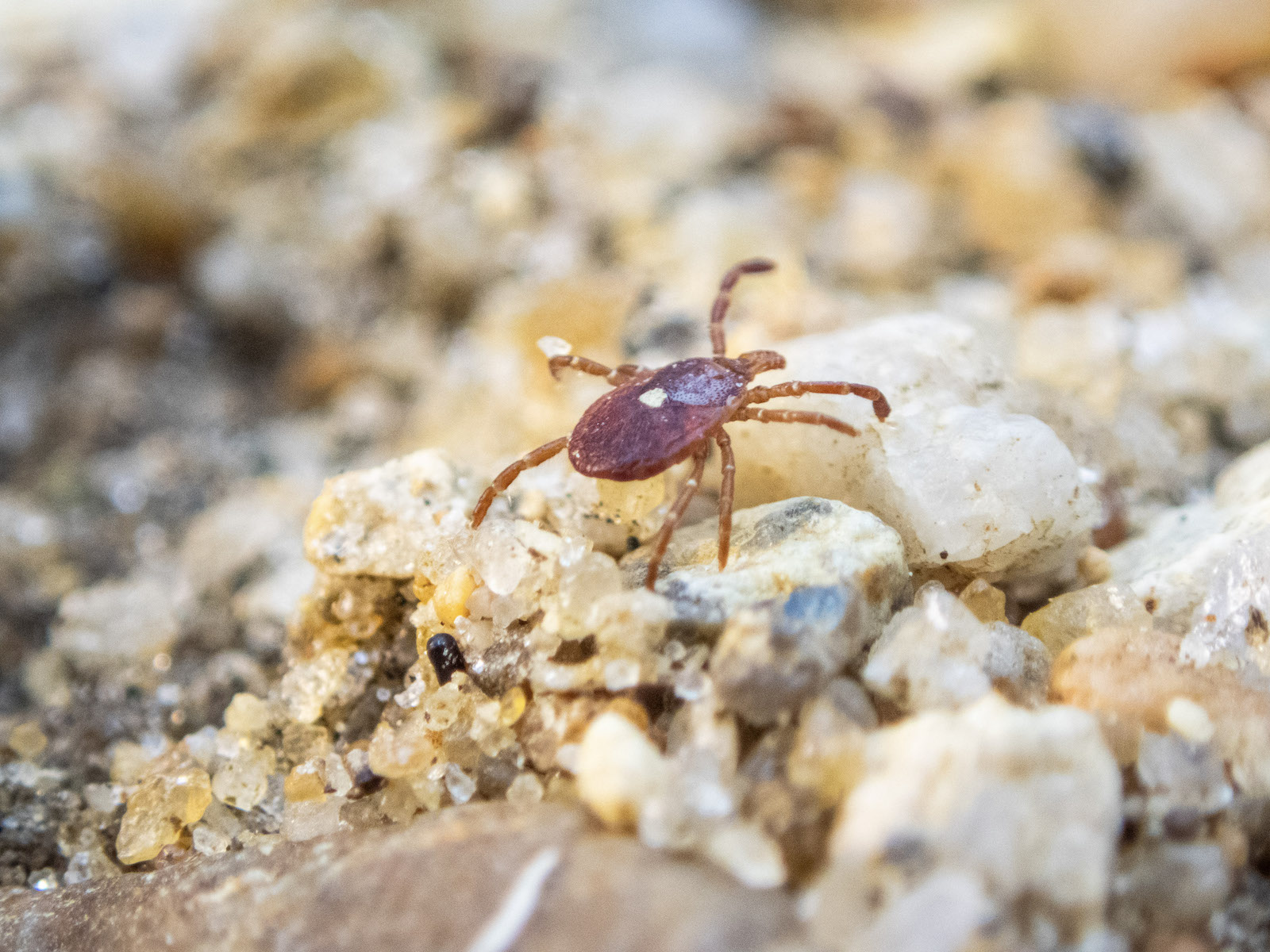
Aubrey Stimola Ryan spends all day talking about ticks. The physician’s assistant at Martha’s Vineyard Hospital sees a constant stream of patients come through the emergency room with tick-related ailments: bites, rashes, a host of symptoms of alpha-gal and Lyme disease.
With rates of tick-borne illness on the Vineyard rising, most of the conversations she has about ticks, both in and out of work, are colored by fear.
Friends of hers are becoming wary of visiting the Island, and a tick expert booked to speak to Islanders about alpha-gal hesitated to come ashore for fear of being bitten. Occasionally, her patients, many of whom have homes here and have set down roots, tell her they want to leave Martha’s Vineyard completely.
“Maybe it’s in the heat of the moment, but they’ll say to me, I can’t take this anymore,” she said. “To say you want to sell your home and leave a place, I think speaks volumes about the level of fear and anxiety.”
For Ms. Stimola Ryan, and many other Island experts, the best way to combat this fear is with information. There are the tried-and-true tick bite prevention methods, such as permethrin and tucking pants into socks. There’s the conventional wisdom about staying out of tall grasses and on marked paths.
“It’s balancing out making sure information is out there for people, but also not wanting to frighten them off,” she said. “It sort of reminds me of the Jaws scenario.”
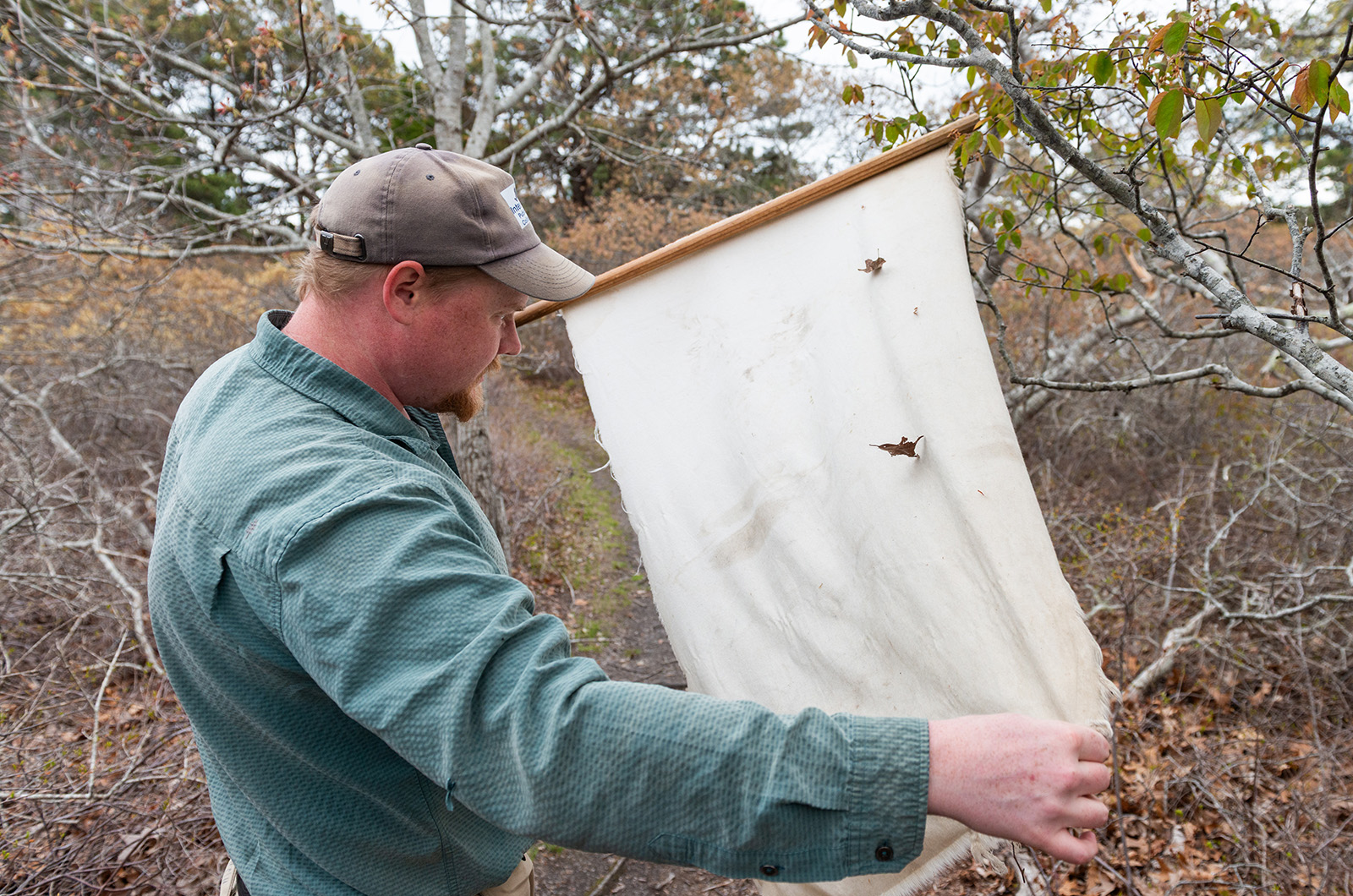
For stakeholders in the Island’s economy — from food and hospitality to recreation — striking this balance is something of a highwire act. Falling too far to one side means tourists and residents alike don’t have the information they need to stay safe. Falling too far to the other creates an Island economy and community controlled by fear.
“We need people to be here, and we need to have an economy that’s strong,” Ms. Stimola Ryan said. “When people are afraid to come to a place for things like this, it impacts us on every level.”
Essentially, the question transcending Island industries is this: How does one protect customers without scaring them away?
“Because of our tourist situation... it hits a little bit differently here,” Ms. Stimola Ryan said.
This question persists as the Island’s tick problem becomes a national spectacle. The New York Times published an article on the rise of alpha-gal on the Vineyard last August. And in recent months, the Island’s ticks have caught the attention of CNN, the Boston Globe and U.S. Secretary of Health and Human Services Robert F. Kennedy Jr.
After the New York Times article was published, Erica Ashton, executive director of the Martha’s Vineyard Chamber of Commerce, received a handful of calls from concerned travel agents, wondering if the Island was still a safe destination for their clients. A tour company from the U.K. wondered if it should cancel its next trip completely.
In response, the chamber of commerce launched a tick awareness page on its website, advising visitors on how to avoid bites and how to respond if bitten. The site urges frequent tick checks after time spent outdoors, as well as the use of tick repellent and full-coverage clothing. It also includes instructions on tick removal and how to monitor symptoms.

At the bottom of the page is the chamber’s overarching message: “With awareness and basic precautions, visitors can confidently explore the Island and make the most of their time here.”
“Ticks are a huge concern. We’re taking this seriously as a community,” Ms. Ashton told the Gazette. “But we don’t want to make people think that this is not a safe place to come to.”
But assuaging tourists’ tick-related fears is increasingly falling on the shoulders of the business owners.
Mark Snider, who owns the Winnetu Hotel in Edgartown, confirmed that Ms. Ashton’s tales of fielding fearful tick-related phone calls are not unique.
“You do get people who raise the question, but it’s a small minority,” Mr. Snider said. “I think they presume, and we want them to presume, that a responsible property is taking care of its facilities.”
At Mr. Snider’s hotel in Katama, responding to ticks largely comes down to groundskeeping. He keeps grasses on his property mowed low and deploys tick tubes, which dispense permethrin-treated cotton to mice that use it to line their nests, killing any ticks that bite them.

If guests have questions about how to keep themselves safe when exploring the Island, he and his staff have information at the ready.
“We’re trying not to make it into a concern, and we want to make sure that we’re doing everything we can so people are comfortable,” he said. “Sometimes, as Franklin Roosevelt said, the only thing we have to fear is fear itself.”
In the outdoor recreation and education space, fighting fear with tick bite prevention and education is nothing new, said Suzan Bellincampi, Islands director at Mass Audubon.
At her office at Felix Neck Wildlife Sanctuary, Ms. Bellincampi explained that while the rapid rise of the lone star tick adds a new layer to the challenge of teaching tick safety, the fundamentals of staying protected outdoors remain the same.
“Before ticks, it was mosquitoes,” she said. “We’ve been teaching people how to be in nature safely for our whole history.”
For Ms. Bellincampi, the goal is to make tick-bite prevention approachable for Felix Neck visitors of all ages, including the young kids who attend its Fern & Feather nature camp.

Tick identification cards and fact sheets are available in the Felix Neck bathrooms and at the front desk. The Felix Neck gift shop also sells tick repellent and tick gaiters — stockings fashioned over the ankles and calves to cover exposed skin and ward off the arachnids with permethrin.
Camp counselors are trained extensively on teaching young campers to identify ticks and check themselves and their friends. They even teach campers a version of the Irish folk song Rattlin’ Bog designed to instruct on how tick-borne illnesses transmit.
“We want people to find joy [and] pleasure in being outdoors. That said, there’s things that we do every day to protect ourselves,” she said. “We wear sunscreen, right?”
Keeping the Island economy resilient against ticks doesn’t only come down to bite prevention. Increasingly, and particularly for Island restaurateurs, it means catering to alpha-gal syndrome.
Transmitted by the bite of a lone star tick, alpha-gal syndrome presents as an allergy to mammalian food products. The common denominator is a red meat allergy, often (but not always) accompanied by an allergy to dairy.
Allergic reactions can vary widely. One alpha-gal sufferer may experience mild digestive discomfort after eating a hamburger, while another might go into anaphylactic shock. Cross-contamination is a concern for many people with the allergy. Some react to just the fumes of red meat or dairy cooking.
The rise in alpha-gal on the Vineyard has been cause for concern among the Island’s food service professionals, whose livelihoods depend on serving meals that are both delicious and safe to consume.
Last month, Island tick experts, health workers and restaurant professionals converged at Oak Bluffs town hall to discuss best practices for catering to alpha-gal, from cleaning kitchens and altering dishes to labeling menus.
Among them was Everett Whiting, the chef and owner at The Fish House in Edgartown, which doubles as a fish and meat market and a takeout spot for fried seafood and poke bowls.
At the panel, Mr. Whiting emphasized the importance of labeling menus, avoiding cross-contamination and eliminating mammalian products from kitchens when possible.
“This has become very serious,” Mr. Whiting said.
In a later interview, Mr. Whiting said he’s purchased a new set of pans strictly for preparing alpha-gal-safe orders and ensures his staff are educated on serving customers with the condition.
“You need to treat it like any other allergy, even though it’s not on the major allergen list,” he said. “It’s real
ly just training people and getting people aware of what they’re dealing with.”
He’s added a few new alpha-gal friendly menu options, like a chicken sandwich that’s grilled instead of fried. But because his menu does not change much from year to year and it offered several non-mammalian options to begin with, keeping his kitchen alpha-gal friendly is mostly a matter of educating his staff on food prep protocol.
“If I was in a more fine dining setting, that answer would be completely different,” he said. “I’d be constantly looking for new ways to do what I did before.”
Such has been the case for Ben DeForest, chef-owner at Red Cat Kitchen in Oak Bluffs.
Mr. DeForest and Red Cat general manager Timothy Lee spent the winter reformulating their menu to rely as little as possible on mammalian products. Now, customers can ask for an allergen-friendly version of the menu that highlights which dishes don’t contain mammalian ingredients or can be modified.
“It must be traumatic enough to never be able to eat ice cream anymore, and then to feel alienated within the dining experience out in a public forum must just magnify that difficulty even further,” Mr. DeForest said.
To make certain changes, he and Mr. Lee had to get creative. While Red Cat used to soak its fried chicken in buttermilk before frying, they now use a dijon mustard base to eliminate dairy. The restaurant has even managed to pull off an alpha-gal-friendly clam chowder, completely dairy free and thickened with instant potato flakes.

Mr. DeForest said his servers are trained to ask customers specifically about alpha-gal. His kitchen has also long had protocols in place to prevent cross-contamination, like color-coded cutting boards.
“We want people to feel comfortable and not not feel funny [or] have to have some big discussion tableside with their server about having this illness,” he said.
At The Fish House, the fact that even the best-laid alpha-gal safety protocols can go awry weighs on Mr. Whiting.
“There’s always potential for human error, for accidents to happen,” he said. “I don’t want anybody to take their dining experience and turn it into anaphylactic shock.”
And when it comes to ingredients, making alpha-gal-friendly changes is not always financially feasible on the scale at which restaurants operate, Mr. Whiting said.
He said customers have clamored for a dairy-free version of “the green sauce,” the restaurant’s signature, sour cream-based dipping sauce. He’s made it before at home for his fiancée, who has alpha-gal, using dairy-free sour cream.
But he can’t find the dairy-free sour cream in the quantity necessary to make five gallons of the sauce at a time. And even if he could, making two versions of the same sauce would be time consuming, not to mention costly.
“I’m not going to switch the whole thing and make the sauce more expensive for everyone else,” he said. “I don’t even want to know what a gallon of that dairy-free sour cream will cost.”
With these factors in mind, how far to go in accommodating alpha-gal is a question every chef and restaurant owner must decide for themselves. Even then, there are limits.
“I want to accommodate everyone, but you can’t, so you learn how to say no,” Mr. Whiting said.
But there are some new market niches Mr. Whiting is hoping to enter to better assist people with alpha-gal. He’s been thinking about stocking his meat case with ostrich and emu, two poultries that mimic red meat’s depth of flavor.
Unsurprisingly, these meats are expensive, and difficult to source on a commercial scale. But Mr. Whiting sees them as promising options.
“That is definitely something that I think we’ll see a rise of in the future, people offering that kind of stuff more,” he said. “I would like to, I just haven’t found a viable source of it yet.”
Island tick biologist Patrick Roden-Reynolds is impressed by how the Island’s restaurant industry has adapted to the growing need for alpha-gal-friendly dining options.
“In the last few years, it’s been exciting to see some of the restaurants catch on and start to make those changes on their own,” Mr. Roden-Reynolds said.
But the best thing one can do, whether visiting the Island or living here, is take active steps to prevent being bitten. His recommendations include wearing permethrin-treated clothing, staying on paths when visiting wooded areas and checking for ticks after being outside.
Navigating it is possible, and Mr. Roden-Reynolds is proof. Despite chasing ticks for a living, he’s only had two bites over the past five years.
“When I’m doing a lot of my tick prevention talks, I really try to focus on cautious awareness of the tick problem... over fear and paranoia,” he said.
Ms. Stimola Ryan, who also spends much of her time outdoors, agreed.
“It’s not foolproof, but I think it’s manageable,” she said.
Experiencing the public’s fear and lack of knowledge led Ms. Stimola Ryan to start teaming up with Island experts, including Mr. Roden-Reynolds and Island tick epidemiologist Lea Hamner, to host public talks on tick safety.
In Mr. Roden-Reynolds’s experience, fear run amok morphs quickly into hopelessness, which in turn hinders people’s ability to take the precautions that can keep them safe.
Rejecting that hopelessness, he said, is the way forward, both for individuals and a thriving Island economy.
“Yes, we’ve got a problem here, but it’s something you can deal with and have power over,” he said.





Comments (55)
Pages
Comments
Comment policy »