
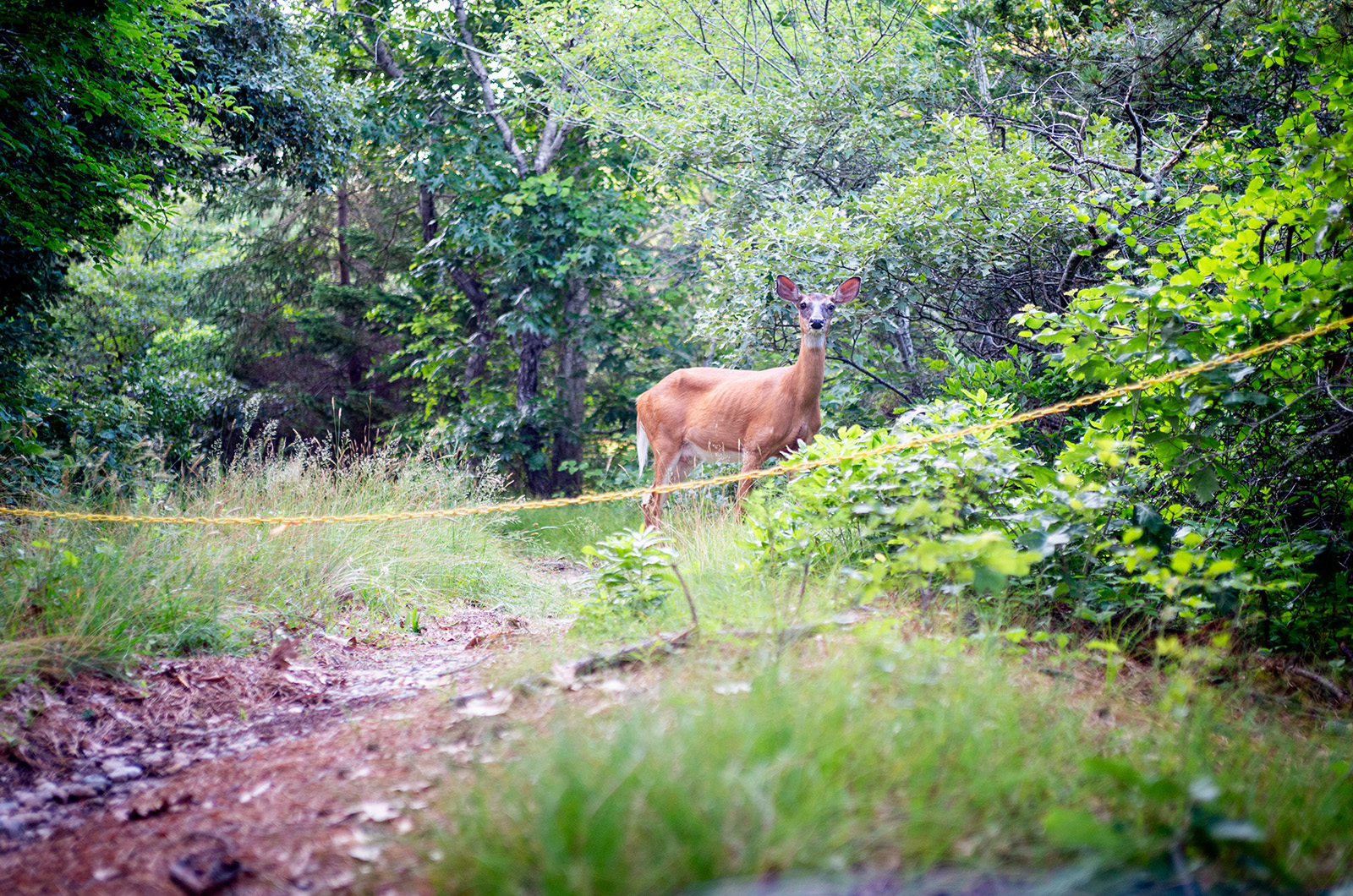
Chappaquiddick has been ground zero on Martha’s Vineyard for ticks and tick-borne illnesses.
Now, as the problem continues to grow across the entire Island, some of the region’s top tick scientists hope to turn the sandy spit into a living laboratory that can be part of the solution.
Vineyard tick biologist Patrick Roden-Reynolds came before the Edgartown board of health Tuesday to tell members about the Chappy project being developed by the New England Center of Excellence in Vector-borne Diseases, or NEWVEC for short.
A coalition of researchers from across the northeast, the team is working to test out different medications on deer that would make them resistant to ticks — similar to medications available for pets. The hope is that if oral medications administered through bait or other topical treatments can prevent ticks from biting deer, then the archanids’ major food source would be cut off.
NEWVEC is planning to test the efficacy of the drugs in the fall on a captive herd at the UMass Amherst campus, before potentially deploying the medications on Chappy in the spring of 2027.
Stephen Rich, the executive director at NEWVEC and a professor at UMass, said that his team has been working with the Chappaquiddick community for months, and believes the island is the perfect place to try out methods that could end up helping communities across the country.
Not only is the tick problem acute there – a survey on one Chappy lawn this week turned up more than 100 ticks – but it is a contained place with a large population of deer. Residents have also been asking to participate in something in order to relieve the scourge that has plagued the island for decades.
“I’ve never in all my years seen this level of buy in and community cooperation on Chappy,” Mr. Rich said in an interview this week.
Members of the Edgartown board of health were heartened that action was being taken to supplement the efforts of Tick Free MV and the state, who have been trying to increase deer hunting on the Island and across Massachusetts.
“I think culling the herd will help,” said Candace Nichols. “I don’t think it’s an end all, and I think this is a first step of hopefully a lot of different things that can happen to try and lessen [Lyme disease and alpha-gal syndrome].”
Though there will likely be several levels of permitting involved in pulling together a project like this, Mr. Rich said the state is interested and his group has funding from the Centers for Disease Control and Prevention to do this sort of work.
Chappaquiddick has a history of being involved in tick research. More than a decade ago, scientists tested out four-posters there. The mechanisms attract deer with bait and then apply a pesticide designed to kill ticks via paint rollers as they walk past.
But such methods had drawbacks as other species would use up some of the pesticide applications when they came across the bait. This new proposal would be much more targeted, according to Mr. Rich, though the exact medications and methods are still being hashed out.
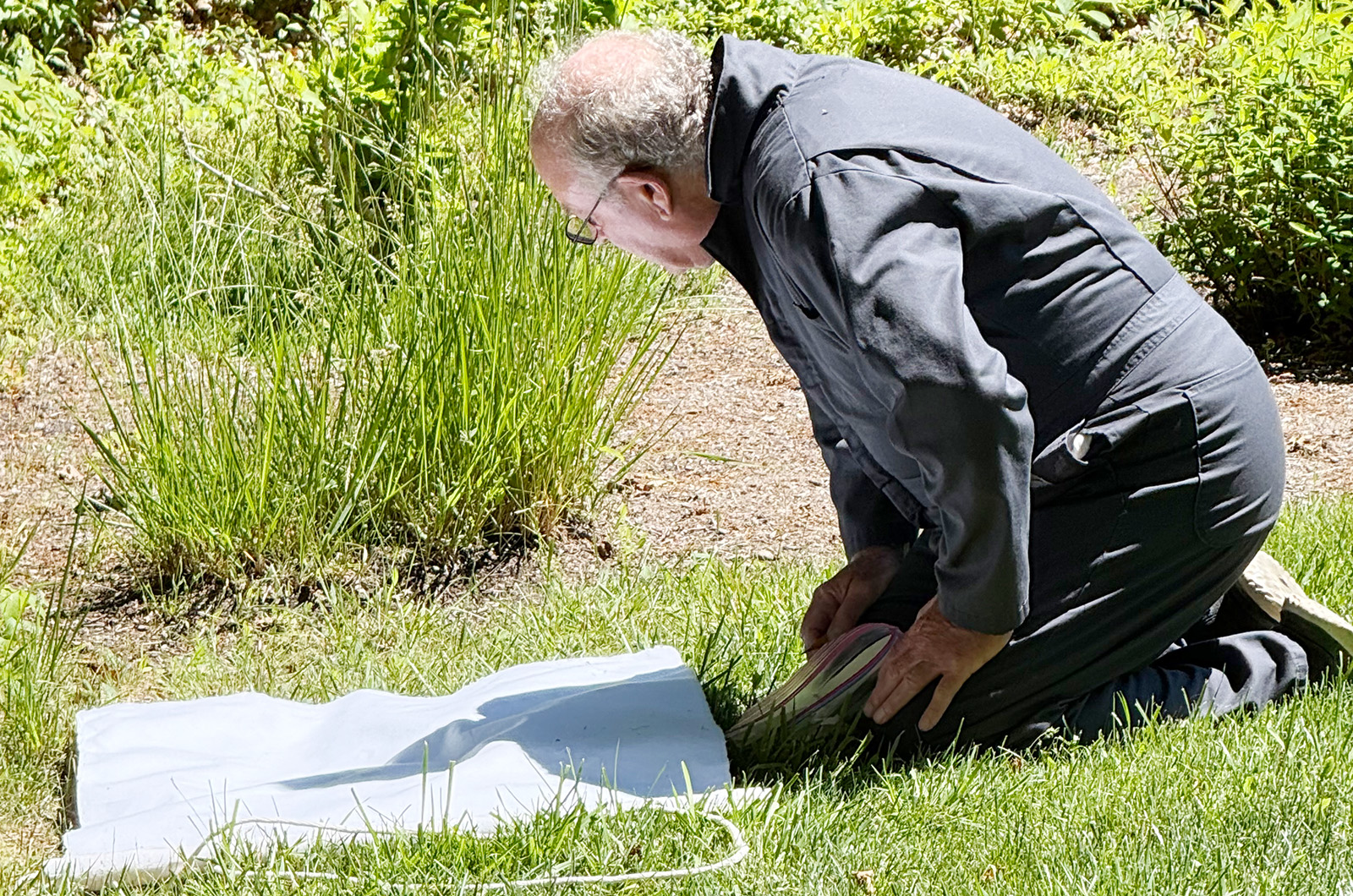
Some of the groundwork for the research is already being laid on Chappaquiddick. Residents on Chappy have been instructed on how to survey their lawns for ticks with felt flags, just like Mr. Roden-Reynolds does at yards across the Vineyard.
Their baseline surveys now, and continued surveys into the future, will show if the deer treatments are working.
Alan Feldman, a Chappy resident and leader of the Chappaquiddick Island Association’s environmental committee, has been working with NEWVEC and other leading researchers to get them to look at the tick problem there.
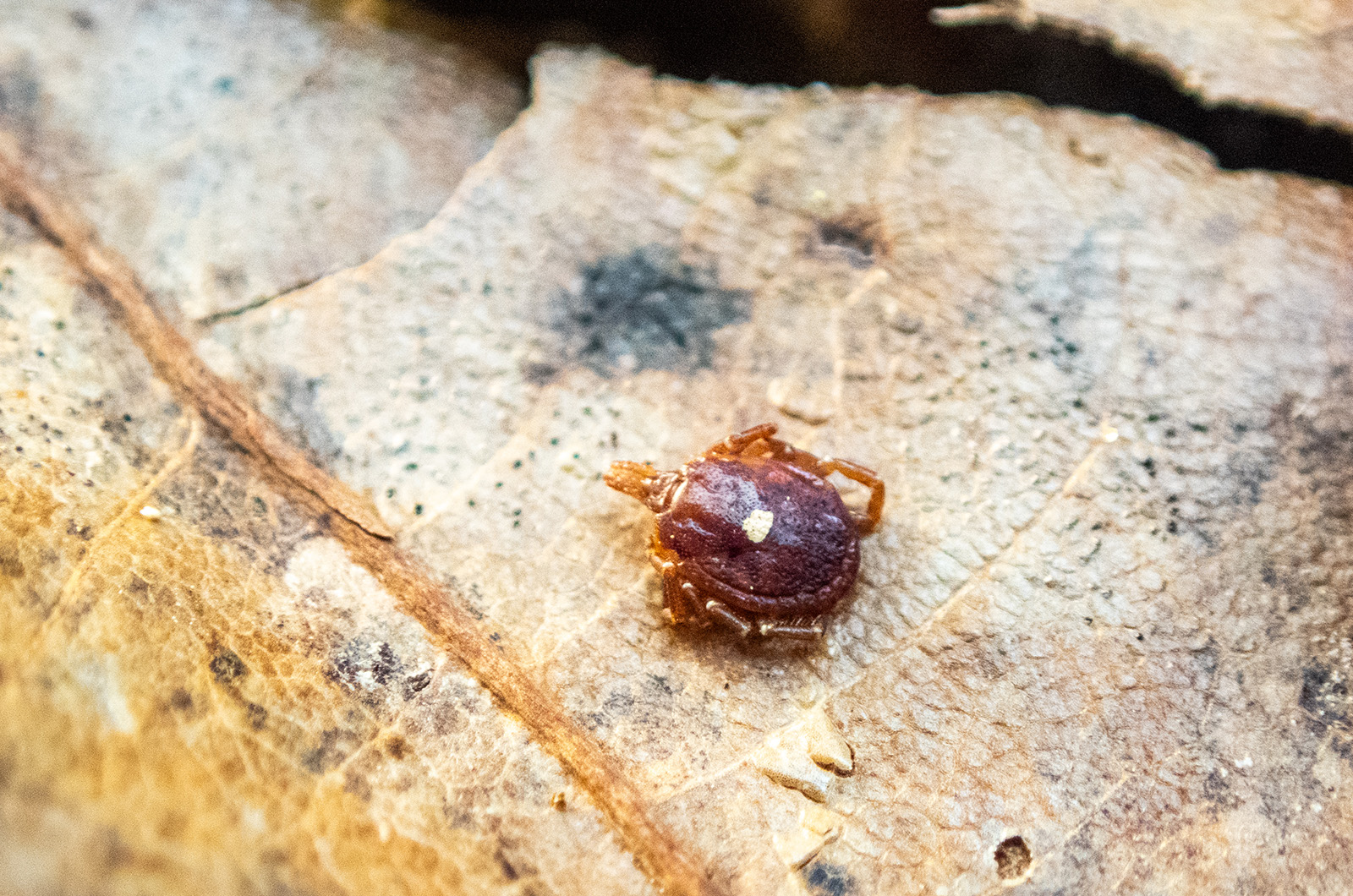
Chappaquiddick was one of the first places on the Vineyard to see lone star ticks, which pass on alpha-gal syndrome and other ailments. The species has since spread to all six towns, and cases of alpha-gal have skyrocketed in the last six years.
Chappy residents were among the early adopters of permethrin and other safety measures, after even trips to the mailbox resulted in ticks.
“There’s nobody who is unaffected by ticks,” Mr. Feldman said in an interview.
Just this week, Mr. Feldman helped show about 10 homeowners how to “flag” their lawns. About nine properties got the same lesson earlier this month, and Mr. Roden-Reynolds does several other surveys on Chappaquiddick. Having all of these different properties surveying for ticks will create a broader base of data, and also brings residents into the science.
“They feel like they’ve got a piece in this, they are part of the process,” said Mr. Feldman.

The work on Chappy will likely take several years and change along the way.
“This will be a multi-year effort,” said Mr. Rich. “We will try things, tweak things and keep working to make them work.”
It will also feed into a larger body of work, known as Project Artemis, which is testing similar medications on other animals, such as rodents, in other parts of the northeast. But for now, Chappaquiddick and its residents are ready to be laboratory, data collectors and test subjects in the battle against ticks.
“We are not solving this problem tomorrow, but we can say we are actively working on it,” Mr. Feldman said. “We think we are at that beginning place. The problem is bad, but we are going to get some answers [from] the research that is being done.”




Comments
Comment policy »