
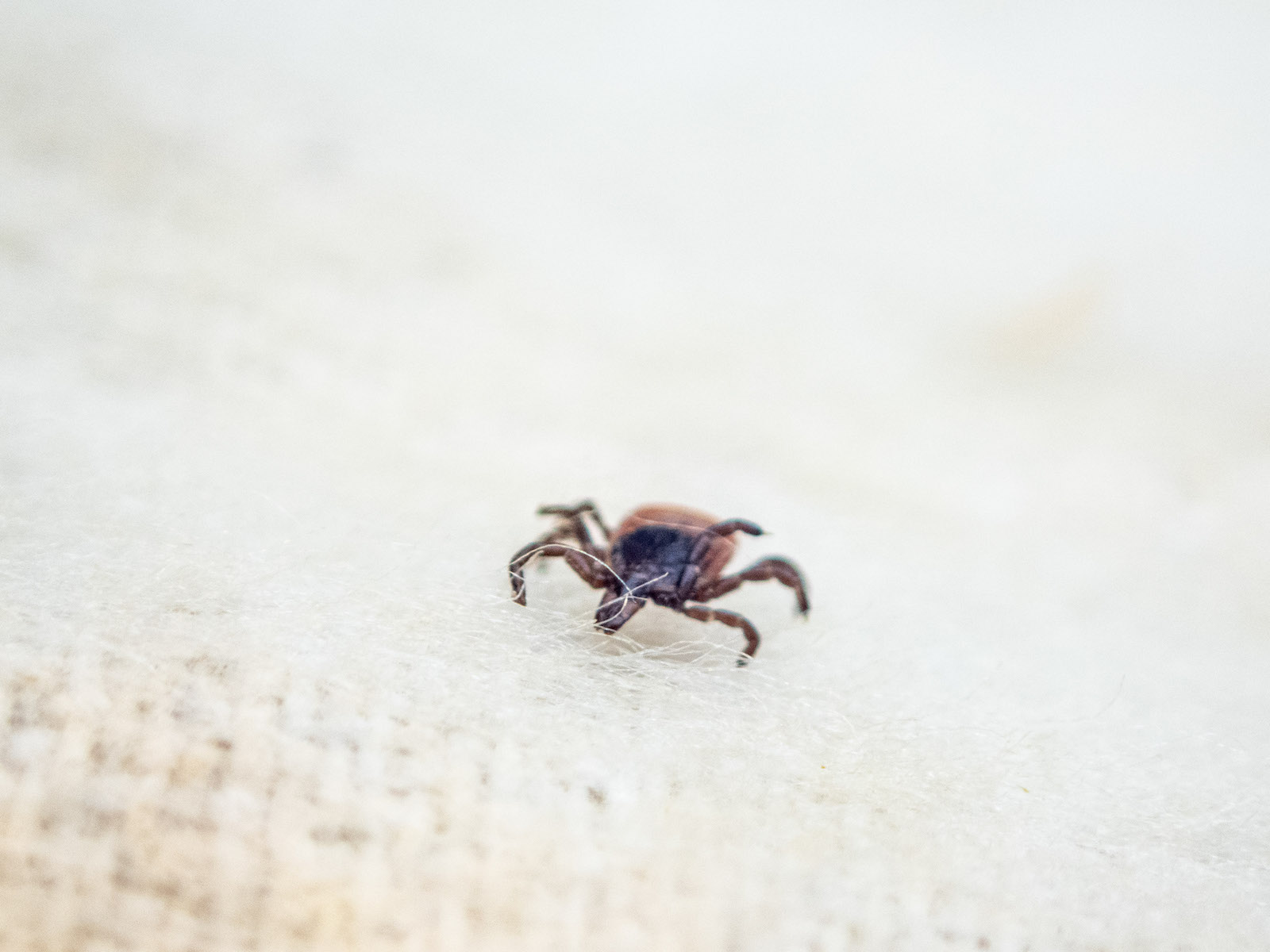
Researchers are turning to Martha’s Vineyard and other New England areas that have been hit hard with Lyme disease in order to better understand why some people experience symptoms of the tick-borne illness long after treatment.
Tufts University is leading the five-year study and hopes to follow more than 1,000 patients to learn why some can recover quickly from Lyme while others can suffer aches, brain fog, rashes and chronic tiredness for months or years.
Martha’s Vineyard has had some of the highest rates of Lyme disease in Massachusetts, a statistic that is attributed to the Island’s large number of deer ticks. The infection spreads by the bite of a tick, and, if left untreated, can attack joints, the heart and the nervous system.
The first cases of Lyme in the U.S. were found in Lyme, Conn., in a cluster of children and adults who were experiencing uncommon arthritic symptoms in 1975. In the decades since, the disease has been treatable, often with the powerful antibiotic doxycycline.
But for some patients, the symptoms persist, with no real explanation why.
“We don’t really have any idea,” said Dr. Linden Hu, an infectious disease specialist at Tufts who is helping lead the research. “We had the same hypotheses we had 30 years ago with no clear [answer].”
There are theories, though. Some believe it is caused by a persistent infection, while others think there is the potential for genetic differences triggering different responses. Still others argue that the lingering symptoms are caused by an autoimmune response.
“Many of them have some evidence but none have enough to have a smoking gun say that’s the absolute cause of these symptoms,” Dr. Hu said.
The Tufts-led study, now in its second year, aims to gather more evidence by testing many more patients than any of the previous studies.
So far, about 90 patients have been monitored by the researchers, and 35 people have enrolled for the next round. In all, Dr. Hu is aiming for 1,200 or more participants.
Martha’s Vineyard Hospital, Martha’s Vineyard Medical and Island Health Care have been some of the top recruitment areas for the study, according to Dr. Hu, and he said his team is looking for more patients on the Vineyard.
People are recruited when they have the tell-tale rash – one of the earliest signs of Lyme disease. The researchers then collect skin, blood, urine and stool samples.
Those samples are taken one month after diagnosis, and then again at three months, six months and a year and a half.
The goal is to not only get a solid sample of how many people experience Lyme disease after treatment, but to also help develop better tests for Lyme disease and support future cures.
So far, about 17 per cent of patients in the study have had severe symptoms post treatment and about 25 per cent had had mild symptoms at the six-month mark.
By studying people from the first sign of infection to more than a year later, scientists hope to find differences between people who recover quickly and those that don’t, potential co-infections, signs of inflammation and other markers.
The Lyme research is being done with the help of Northwestern University, MaineHealth and Massachusetts General Hospital, and is being conducted at 20 different sites in New England.
The Vineyard has been of interest to scientists involved in tick research in recent years due to its prevalence of disease. Lyme vaccine trials were held here in 2022 and 2023, before they were scuttled due to issues with the company administering them.
New England researchers have also investigated the efficacy of tick-spraying lawns on the Vineyard, and looked into the driver of ticks contracting Lyme in the first place.
Martha’s Vineyard Hospital will add to the body of research when it embarks on a new study similar to the Tufts research. The hospital’s study will be conducted on a smaller-scale and will follow Islanders with alpha-gal syndrome, an allergy to mammalian products caused by the bite of a lone star tick.
Hospital president Claire Seguin told the Gazette that the hospital will follow patients who have been diagnosed with the tick-borne allergy through the course of their illness to better understand how the ailment works.
“Nobody knows anything right now, like why some people get it, why some people don’t,” Ms. Seguin said.
When the hospital did a community health survey in 2025, one of the biggest concerns the Island voiced was the prevalence of ticks and the diseases they can transmit. Scientists hope that they can get people answers, and use the high Island rates to find a solution.
“It’s a long course, but I think this is the first step toward getting us answers,” Dr. Hu said.





Comments
Comment policy »